1. Canada to Nepal Shipping: Plan the Complete Journey
Canada to Nepal shipping connects an overseas supplier with a landlocked destination. Air cargo needs a workable flight and transfer plan; sea cargo normally needs an Indian gateway followed by customs transit and inland transport to Nepal. A freight price covering one leg is not necessarily a warehouse-delivery price.
This guide covers commercial cargo in both directions: Canadian machinery, components and other accepted products moving to Nepal, and Nepali textiles, carpets, crafts or other approved goods moving to Canada. The examples are planning categories rather than a ranking of current trade volumes.
Start with the goods, final packed dimensions and weights, collection address, delivery address, ready date and required delivery window. Then compare freight options, document responsibilities and the total cost through the agreed endpoint.
Shipping between Canada and Nepal? Sea Sky Cargo can review your cargo details, route and quotation scope before booking. Request a shipment review.
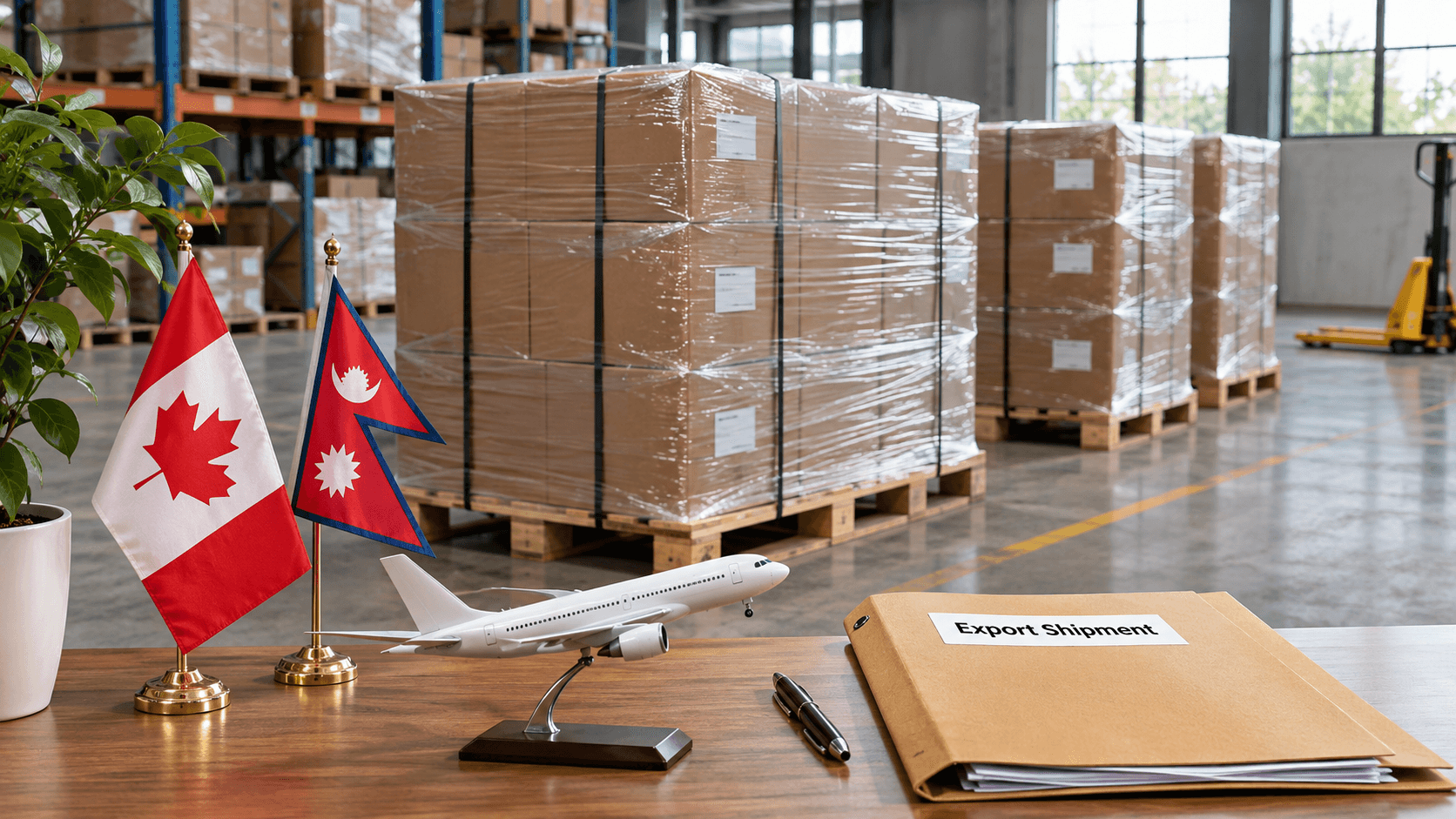
2. Products and Shipment Details to Review
Cargo type affects acceptance, packaging, permits and transport. Goods that appear similar on an invoice may contain very different regulated components.
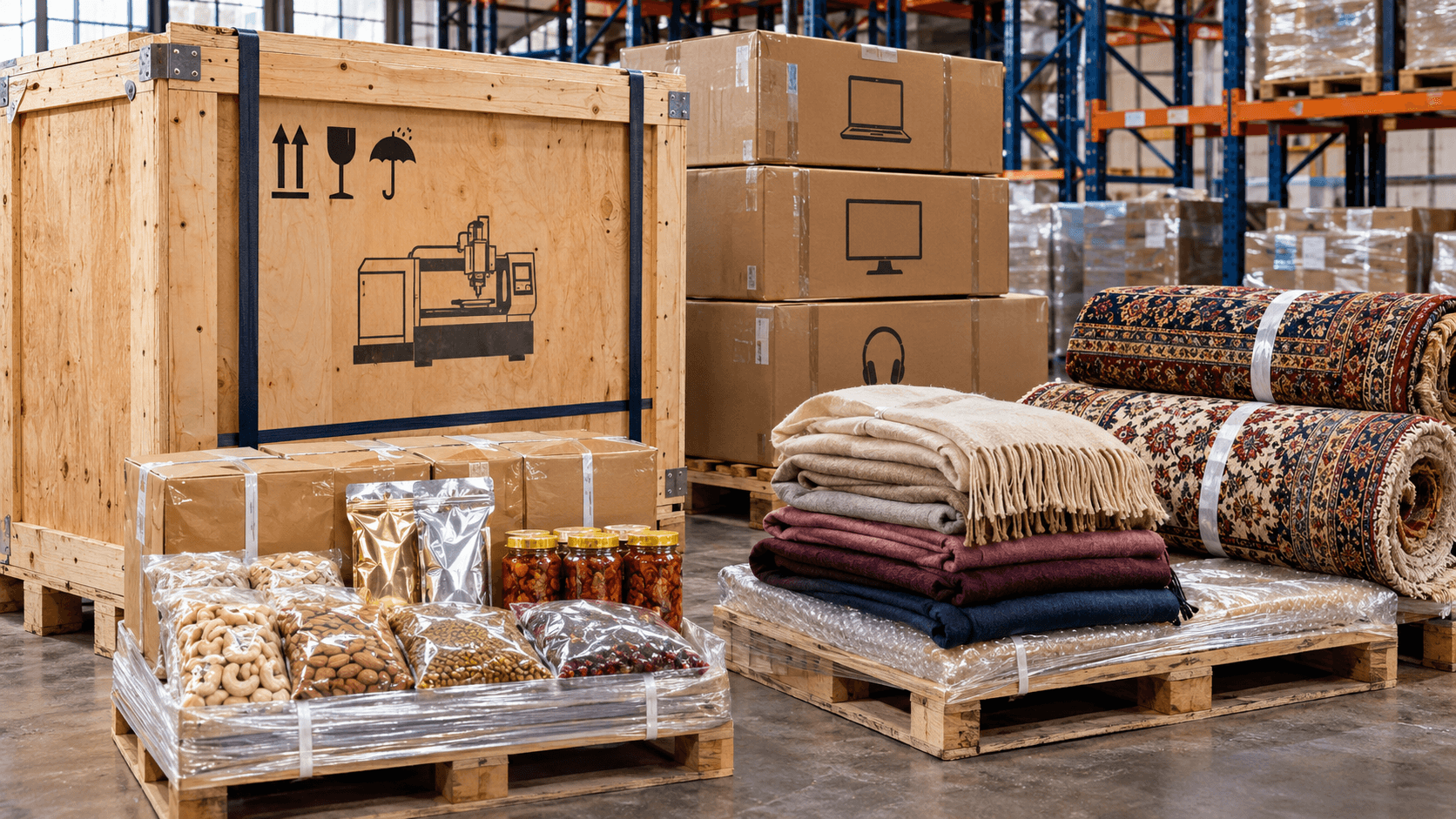
Canada to Nepal
- Machinery and industrial equipment: provide purpose, model, serial details where relevant, dimensions and lifting information.
- Electronics and telecom products: identify batteries, wireless functions and technical specifications.
- Food and specialty products: identify ingredients, processing, origin, shelf life and storage requirements.
- Wood products and building materials: identify species, treatment and packaging compliance where applicable.
- Medical devices, pharmaceuticals and chemicals: confirm product registration, permits and carrier acceptance before pickup.
Nepal to Canada
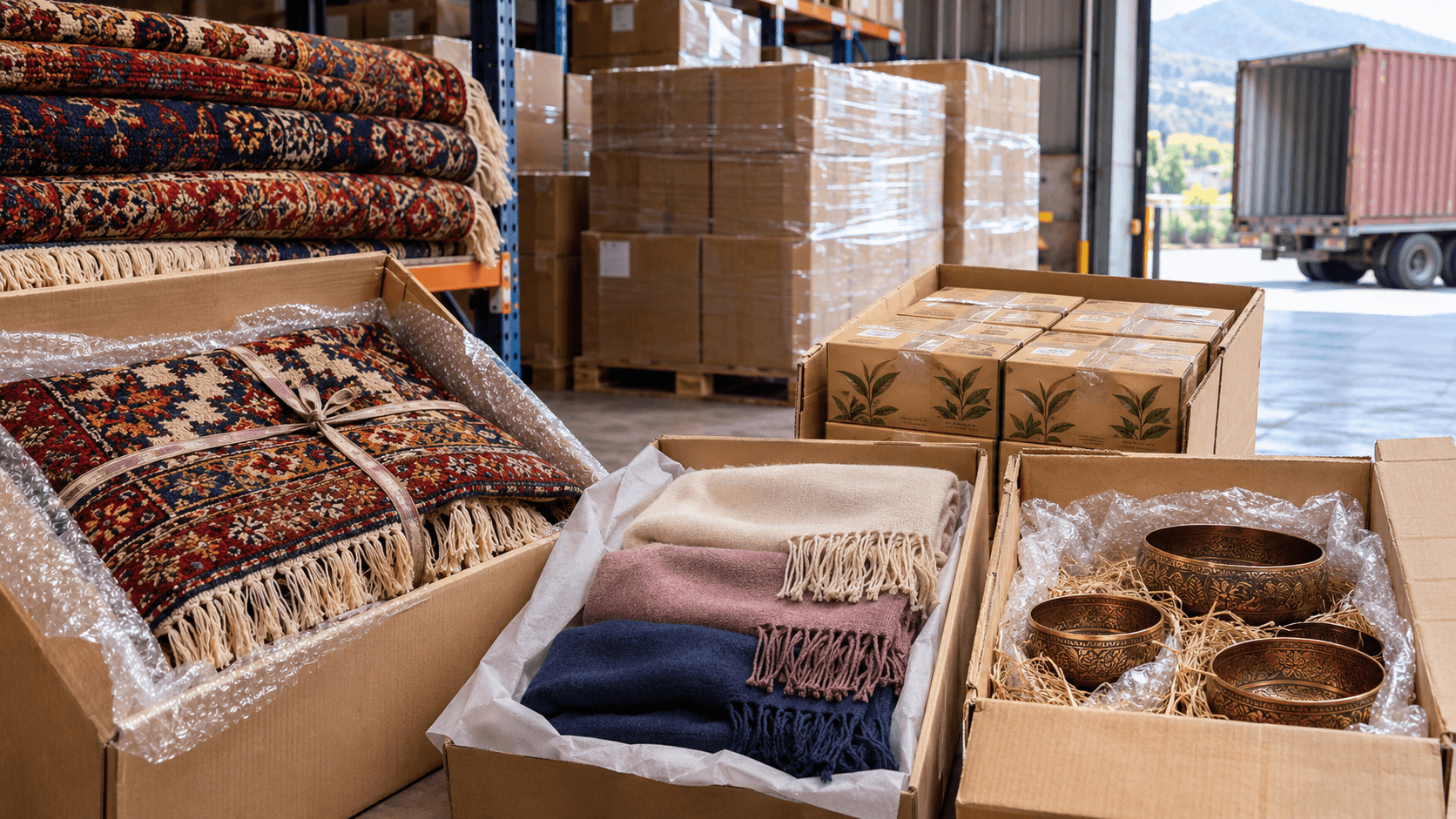
- Pashmina, garments and textiles: provide fibre composition, intended use and labelling information.
- Carpets and rugs: measure the final rolled or baled packages and protect against moisture.
- Handicrafts and artwork: identify materials, age and any cultural-property or wildlife concerns.
- Tea, coffee, spices and herbs: identify the botanical or product details, processing and intended use for import review.
A courier parcel, commercial air-freight shipment and full-container movement have different service and clearance arrangements. Describe the actual business transaction rather than using a generic label such as gift or sample to bypass requirements.
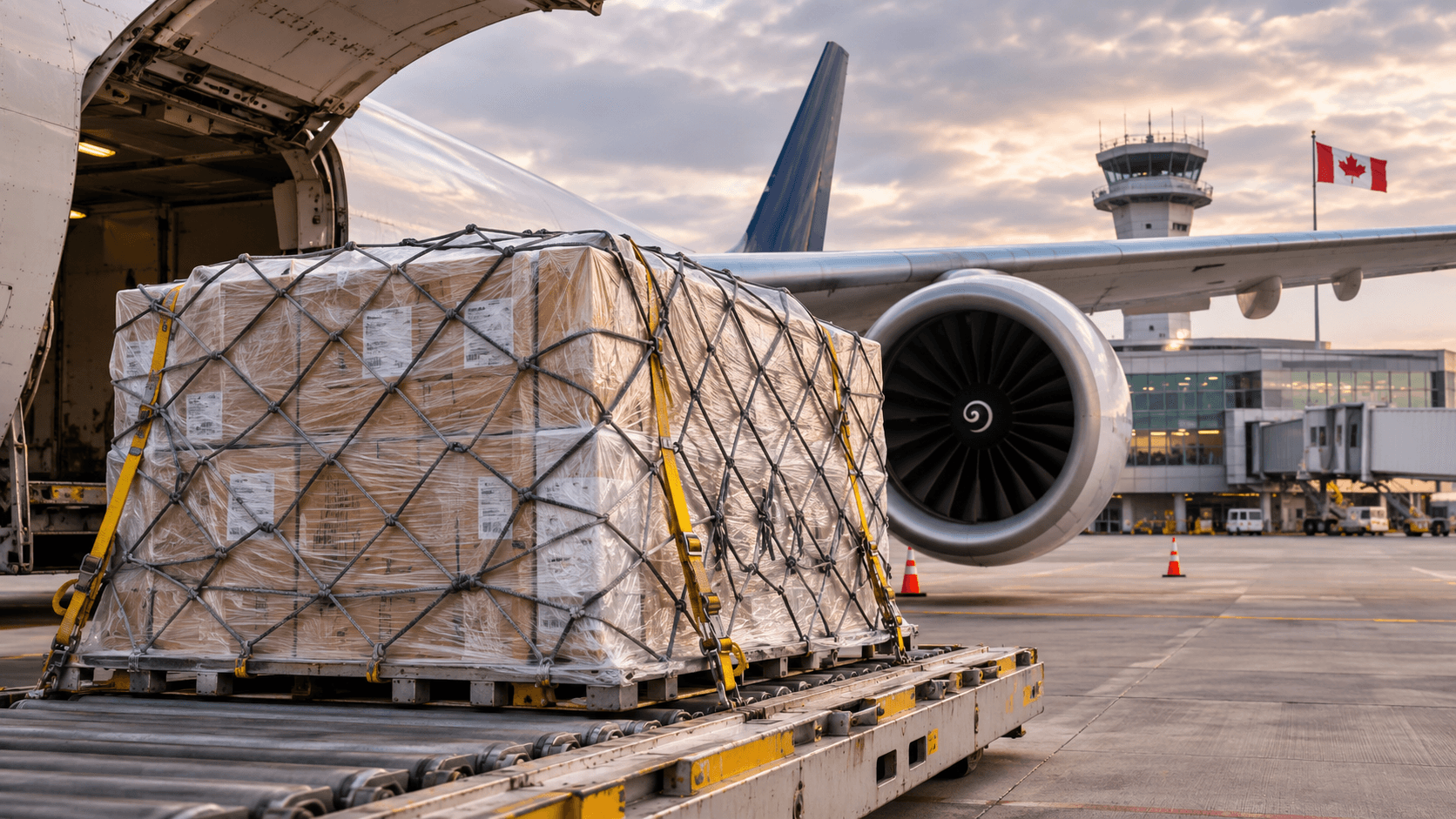
3. Air Freight from Canada to Nepal
Air freight is worth comparing for urgent stock, samples, high-value goods and shipments whose size and handling needs fit the available service. There is no universal weight threshold below which air is best. Compare the chargeable weight, cargo value, urgency and final delivery cost.
Canadian collection may feed airports such as Toronto, Vancouver or Montreal. Kathmandu-bound cargo may connect through an overseas hub. Do not assume a direct flight, a particular connection or guaranteed space from a general route description. A US gateway adds a cross-border movement and possible transit formalities, so it should be explicitly included in the plan rather than treated as a default.
- Confirm pickup, export preparation and origin airport handling.
- Check each package against the aircraft and cargo-door constraints on every sector.
- Confirm restricted-goods, screening and temperature requirements.
- Coordinate Nepal import-file readiness before arrival.
- Arrange collection and final delivery after the required releases.
Air cargo may be rated on the higher of actual gross and volumetric weight, subject to the service rules. Use final packed measurements, including skids and projections. Read the aircraft container and pallet guide for fit limitations and the air freight service page for coordination scope.
A general 7–14 day door-to-door estimate should not be treated as a current lane commitment. Ask for a dated shipment-specific estimate showing collection, booking, flight connections, clearance and final delivery, plus the assumptions that could change it.
4. Sea Freight from Canada to Nepal
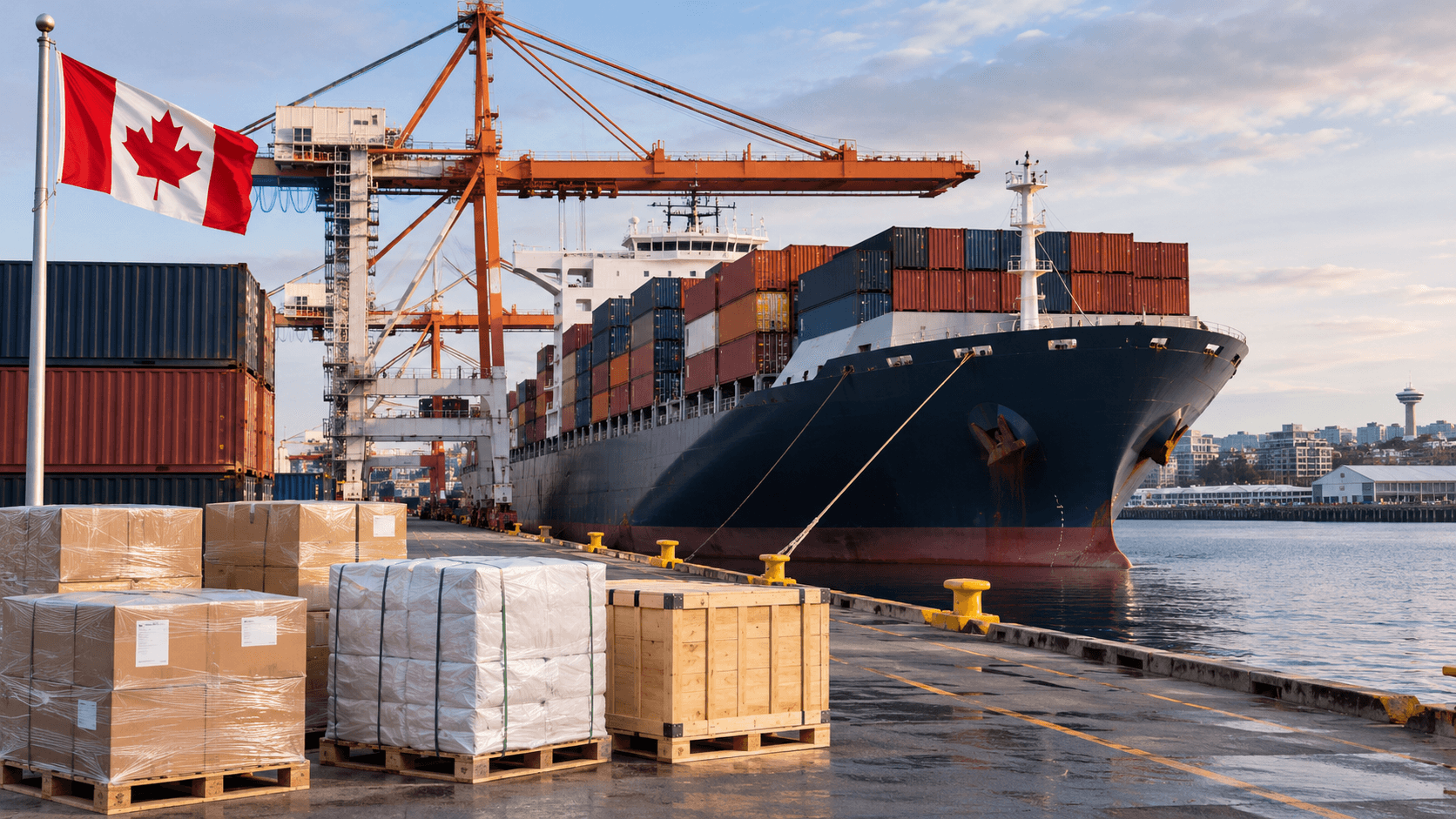
Sea freight can suit larger, heavier or less urgent cargo when the full route is commercially workable. A container voyage ends at a seaport; Nepal delivery requires further transport and customs coordination.
Vancouver, Montreal and Halifax are potential Canadian gateways to review against the supplier location, carrier network and sailing available. A routing can involve transshipment. The closest origin port is not always the lowest complete delivery cost.
For Nepal transit, Kolkata/Haldia and Visakhapatnam are gateways described by the Consulate General of Nepal in Kolkata. Confirm the gateway, accepted transit procedure and inland service for the actual booking. Do not assume a Canadian port has a direct sailing to the selected Indian gateway.
Mundra should not be presented as an interchangeable standard Nepal-transit gateway without a verified, shipment-specific legal and operational arrangement. The quoted route must identify the actual port, border or inland terminal, authorized transit process and responsible parties.
Review ocean freight together with origin handling, destination release, transit, rail or road movement, Nepal clearance, warehouse delivery, unloading and empty-container return. Ocean freight services and the port-to-door guide explain the broader chain.
5. How Indian-Port Transit Connects to Nepal Delivery
The Embassy of India commerce brief identifies the revised Treaty of Transit signed in June 2023. The 1999 reference in older material should not be used as the sole description of the current framework.
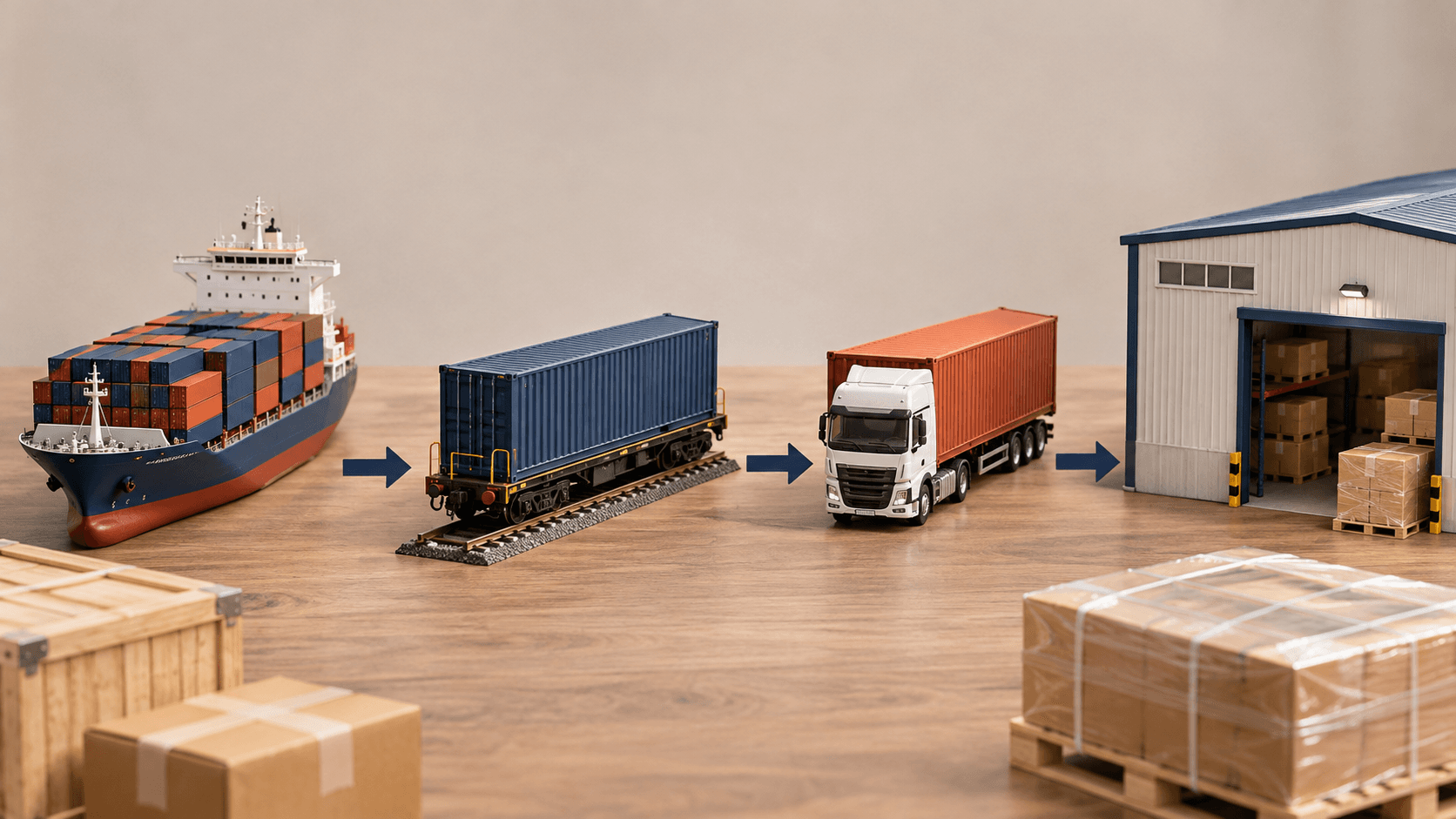
- Collect and pack cargo in Canada; prepare the export and commercial file.
- Tender the cargo to the booked origin terminal or consolidator.
- Complete the ocean movement and any transshipment to the agreed Indian gateway.
- Coordinate carrier release, port handling and the applicable India transit requirements.
- Move by the booked rail or road service to the agreed Nepal receiving point.
- Complete Nepal customs and carrier/terminal release requirements.
- Collect cargo for final warehouse or site delivery.
Birgunj ICD at Sirsiya is rail-linked through Raxaul. The road-border facilities are distinct: not every truck moving through Birgunj reports to the rail ICD. Specify the exact receiving and clearance facility rather than writing only Birgunj.
CTD and related electronic records, tracking or seal requirements depend on the applicable procedure. Confirm who prepares the file, obtains the required references and closes the transit movement. See the Customs Transit Declaration guide.
Port arrival, inland departure, Nepal arrival, customs release and final delivery are separate milestones. An arrival notice is not permission to collect. Document errors, missed connections, congestion and weather can affect different stages independently.
6. LCL vs FCL: Compare the Whole Cost
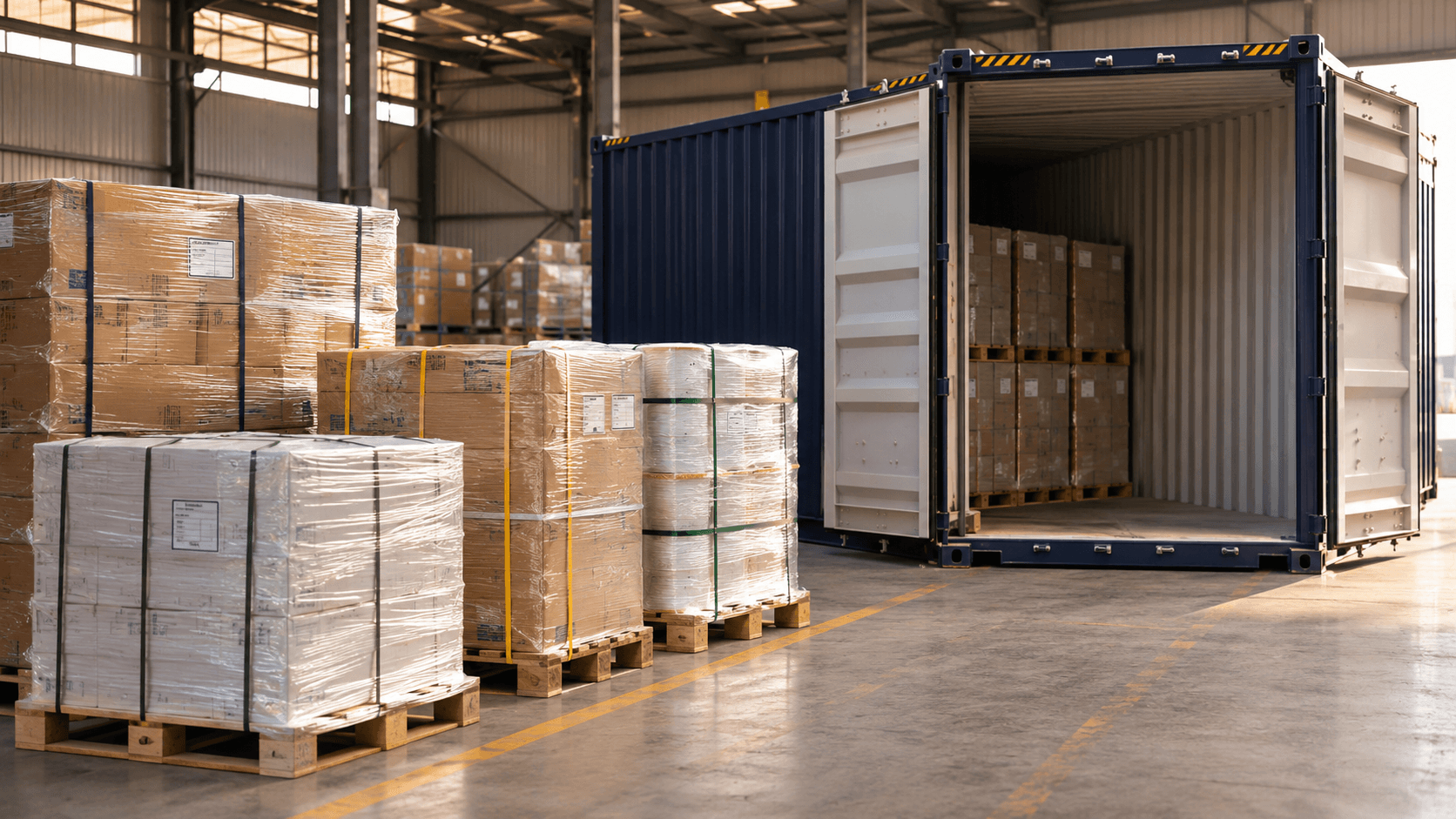
LCL shares container space; FCL books a full-container movement. Neither has a universal break-even volume. Density, package shape, consolidation points, destination handling and inland transport can change the comparison. Do not assume LCL always breaks down at Birgunj or is charged only per cubic metre. Confirm where the cargo is consolidated and deconsolidated, what minimums apply and how the shared inland movement is arranged. FCL can reduce some package handling but does not guarantee faster customs clearance or full control over every transport step. Confirm seals, inspections, free time, unloading equipment and the empty-return location. Ask for comparable LCL and FCL offers where the volume or cargo characteristics make both plausible. Normalize to the same delivery address and include all handling. The freight consolidation guide and demurrage and detention guide help identify additional charges.
| Question | LCL | FCL |
|---|---|---|
| Space and handling | Shared space with consolidation and breakdown steps | Dedicated container booking; cargo may still be inspected or handled |
| Rating | Often weight-or-measure with minimums and local charges | Container freight plus applicable route and handling charges |
| Destination planning | Confirm deconsolidation point and package release | Confirm unloading and empty-container return |
| Timing | May depend on consolidation and onward departure | Depends on equipment, carrier, transit and release readiness |
7. Documents for Both Directions
Build the file around the goods and the actual countries of export, transit and import. The list below is a review checklist, not a statement that every certificate is mandatory.
- Commercial invoice with detailed goods description, parties, quantities, values, currency and agreed Incoterm.
- Packing list with package marks, contents, counts, weights and final dimensions.
- Bill of lading or air waybill and relevant release instructions.
- Importer/exporter registration and authorization details required for the respective country.
- Origin evidence where required or used for a tariff claim.
- Insurance documents where insurance is arranged.
- Product permits, technical information, health or phytosanitary documents where required.
- Applicable export, transit and import declarations.
Canadian Export Reporting Is on the Canada-to-Nepal Leg
The CBSA export reporting service provides electronic reporting through CERS. Do not place a Canadian B13A export declaration on the document list for cargo entering Canada from Nepal. Confirm the reporting requirement, exemptions, filing method and deadline with the Canadian exporter or reporting representative before departure. Controlled goods can require additional permits.
Canadian Commercial Import Setup for Nepal-to-Canada Cargo
The CBSA business import setup guide explains the business number/import program account and CARM registration process. Identify the actual Canadian importer, broker delegation and payment/security arrangement before the goods leave Nepal. A non-resident importer needs its own appropriate setup; using an overseas supplier does not eliminate importer responsibilities.
For Nepal, confirm importer registration, EXIM and tax details as applicable, product approvals and the authorization needed by the appointed customs representative. An Indian BIS reference is not a universal Nepal electronics approval. Identify the actual Nepal regulator and product-specific standard or permit.
Check names, values, package counts and weights across documents. The freight-forwarding documents guide covers the common file.

Check the Documents Before Cargo Moves
Send the invoice, packing details, route and importer information for a shipment review.
8. Customs, Taxes and Landed-Cost Planning
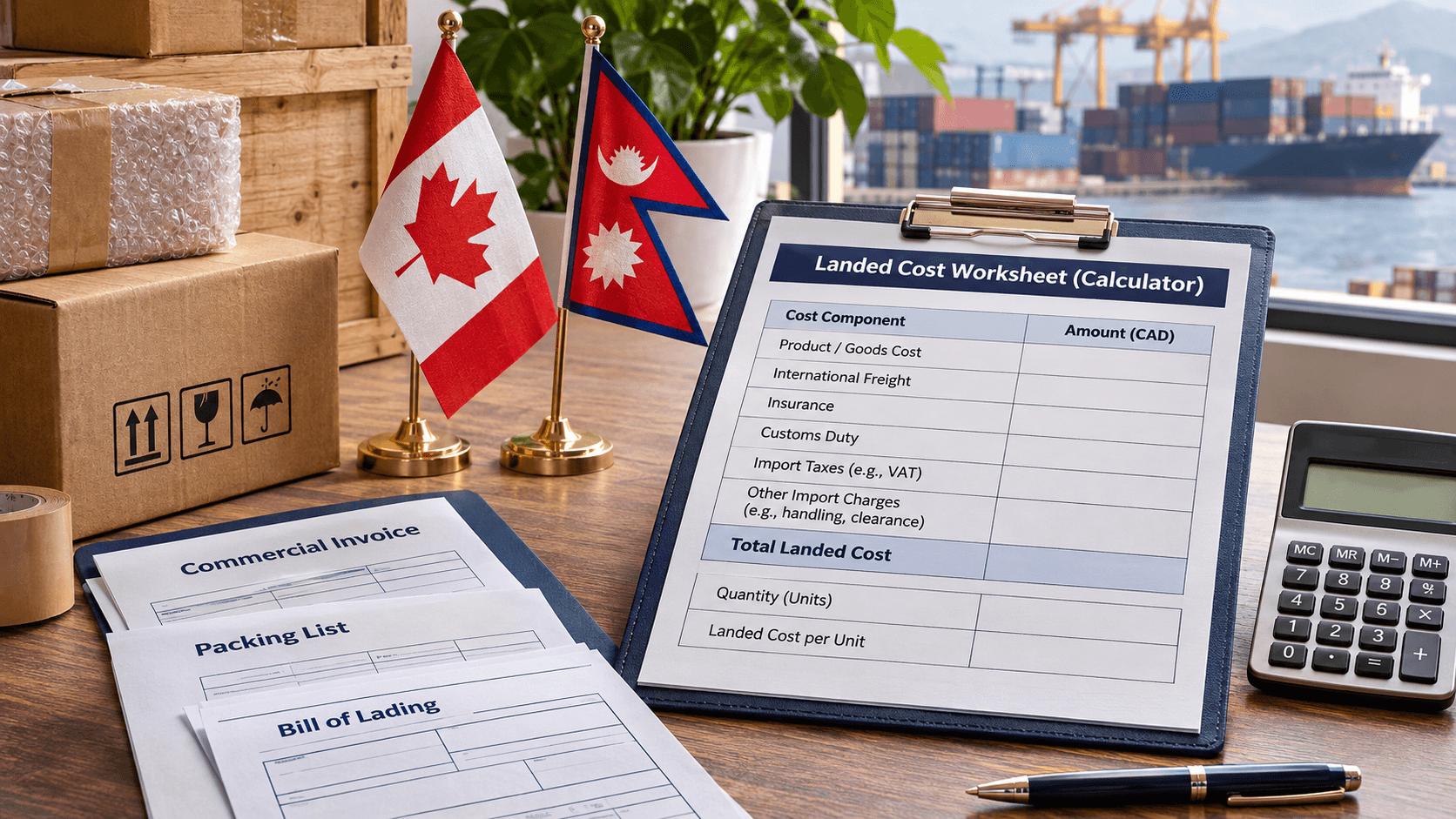
Classify the actual goods and confirm origin and customs value before applying a tariff. The supplier’s shipping term does not fix the HS code, duty rate or legally assessed tax base. Imports into Nepal Use the current Nepal tariff and tax rules for the full product classification. Applicable duty, VAT, excise and other levies can differ by goods and exemptions. Avoid a generic duty range or a simplified CIF-plus-duty formula as a complete tax calculation. Obtain a product-specific assessment estimate from the customs representative. Imports into Canada Determine the applicable Canadian tariff classification and tariff treatment from origin evidence and current eligibility. CUSMA does not automatically give Nepal-origin goods preferential duty simply because they arrive in Canada or transit another country. Check any relevant developing-country preference and its product, origin and documentary conditions rather than assuming all Nepali textiles or crafts are duty-free. Canadian import GST, exemptions and any provincial or subsequent-sale tax obligations need a transaction-specific review. Do not use the destination province’s retail HST rate as a universal commercial border-tax formula. Use a product-specific worksheet instead of assuming a standard tax bill for pashmina or other textiles. Gift and low-value relief are separate rules with eligibility conditions. A commercial shipment should not be described as a gift, and no universal higher commercial threshold should be assumed for Nepal-origin cargo. Use the Nepal landed-cost guide and Incoterms comparison to separate supplier price from excluded logistics costs. Avoid double-counting freight or insurance already included in the offer. Check the current Canadian tariff and CBSA guidance on claiming LDCT treatment for any preferential claim. Country eligibility alone does not establish that the actual goods satisfy the origin and documentary requirements. The Canada Revenue Agency import-tax guidance distinguishes GST or the federal part of HST on imports from other provincial obligations. Have the importer or adviser confirm the applicable treatment and any recovery conditions.
| Worksheet Line | What to Confirm |
|---|---|
| Goods and origin | Actual product, HS classification and supporting origin records |
| Customs value | Applicable valuation method and required adjustments |
| Import levies | Product-specific duty, tax, excise and relief eligibility |
| Transport and handling | Included and excluded origin, freight, transit and destination costs |
| Receiving costs | Delivery, unloading, equipment and container return |
| Uncertainty | Identified allowances, currency assumptions and quote validity |
9. Transit-Time and Freight-Cost Questions
There is no single door-to-door time for this lane. Canadian pickup distance, booking readiness, flight or vessel connections, transit services, customs and final delivery all affect elapsed time. Confirm whether an estimate runs from pickup, terminal acceptance, departure or another milestone.
Broad sea-freight estimates such as 45–70 days are not current sailing commitments. Use a dated routing proposal with the expected departure, transshipment, Indian-port arrival, inland movement and clearance assumptions. Add a business buffer appropriate to the uncertainty rather than treating a range as a guaranteed deadline.
- Air: actual and volumetric weight, cargo fit, flight capacity, screening and special handling.
- Sea: container or LCL rating, equipment, transshipment and destination handling.
- India transit: declaration, handling, rail or road service and receiving facility.
- Nepal/Canada destination: broker services, applicable government charges, delivery and unloading.
- Variable costs: storage, vehicle waiting, re-measurement, repacking, demurrage or detention when incurred.
- Insurance: insured journey, goods, value, coverage and deductible; request an actual premium rather than applying a generic percentage.
Request an itemized quote identifying confirmed, estimated, excluded and payable-at-actual-cost lines. Ask what happens if cargo dimensions change or the booked connection is missed. Use the freight quote guide for a line-by-line review.

10. Restricted Goods and Packaging
Review the product before booking. Carrier acceptance, transport safety, customs admissibility and product-market approval are different checks.
For Canada, use CFIA’s Automated Import Reference System for regulated food, plant and animal commodities. Requirements depend on the exact product, origin, destination and use. A phytosanitary certificate is not a blanket document that makes every agricultural product admissible.
For Nepal, confirm the appropriate authority for the goods. Drug products, food, telecom equipment, plants, animal products and chemicals can have different registration, permit or technical requirements. Avoid treating all machinery or electronics as subject to one generic import licence.
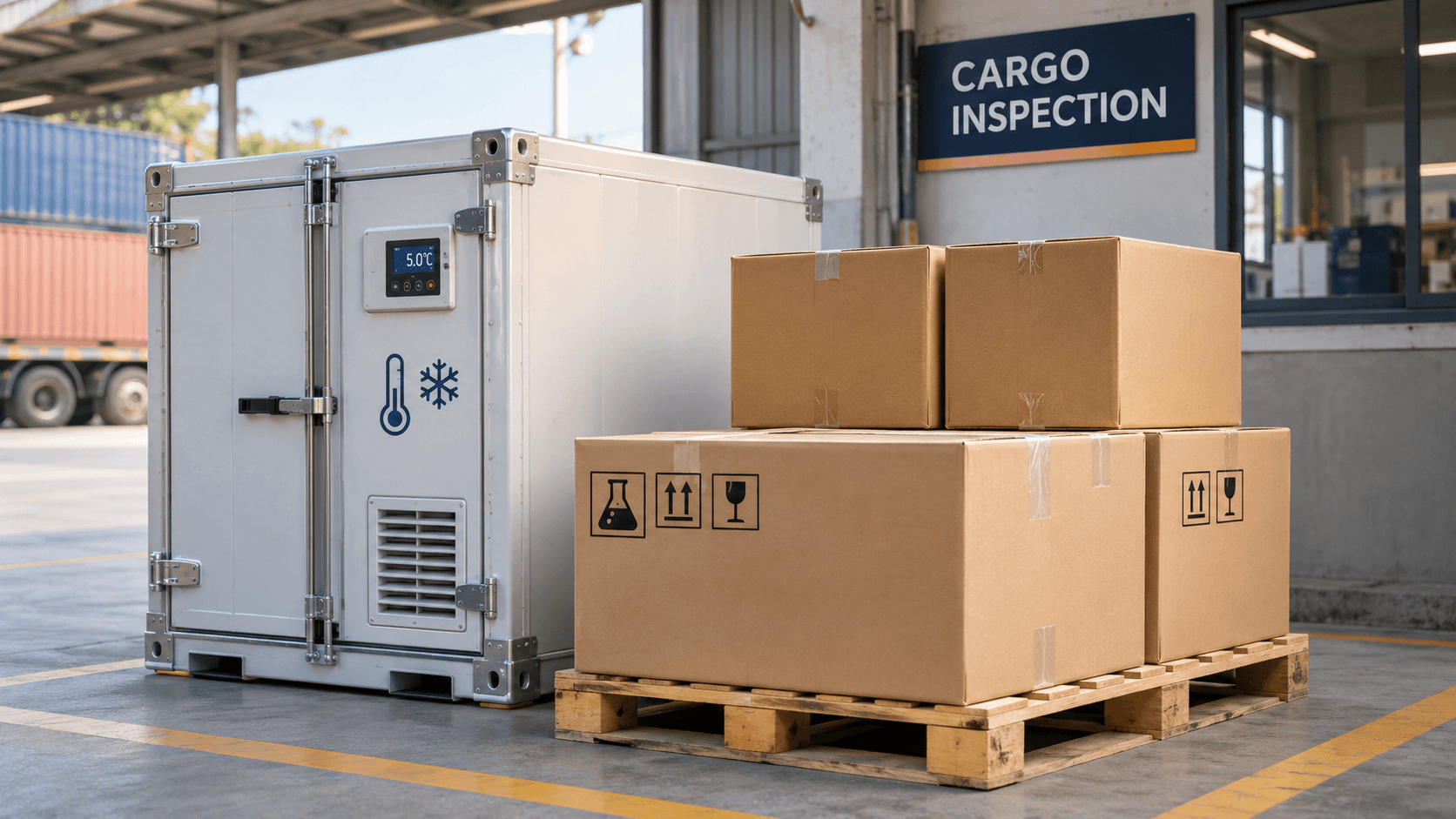
- Declare batteries, aerosols, liquids, chemicals and dry ice for dangerous-goods review.
- Check food ingredients, shelf life, temperature limits and labelling.
- Identify wood species, treatment and wood-packaging compliance where relevant.
- Review antiques, cultural artifacts and wildlife-derived materials before export from Nepal.
- Pack fragile crafts, rolled rugs and machinery for the actual handling cycle and moisture exposure.
Sea Sky Cargo can coordinate information for the appointed carrier, broker or specialist. Acceptance and permits must be confirmed by the responsible parties; generic descriptions such as parts are not a substitute for product facts.
11. Preparing Nepal-to-Canada Commercial Exports
Pashmina, carpets, crafts, tea and other products can be evaluated as potential commercial shipments, but a product example is not evidence of current demand or a guaranteed market opportunity. Confirm buyer specifications and Canadian import requirements before production or dispatch.
- Agree the buyer, importer and delivery term in writing.
- Confirm fibre content, composition, intended use and required labels.
- Identify product origin accurately and retain evidence for any tariff claim.
- For crafts, record the material and whether age or cultural-property restrictions require review.
- For food and plants, resolve CFIA and other applicable requirements before pickup.
- Prepare Nepal export formalities and commercial documents consistently.
- Protect the cargo and confirm Canadian clearance, receiving and final delivery arrangements.
A buyer’s request for organic, handmade or pashmina labelling should be backed by the appropriate product facts and certification where required. Freight booking does not establish that a marketing claim is lawful or accepted by the buyer.
12. How Sea Sky Cargo Can Coordinate the Shipment
Sea Sky Cargo can review the route and coordinate agreed freight and destination tasks with the relevant partners. Confirm the service scope and the appointed party for each customs function in the quotation.
- Review Canadian pickup and Nepal delivery locations or the reverse movement.
- Compare feasible air and sea arrangements from the cargo profile.
- Coordinate booking requests and handling information.
- Review invoice, packing-list and transport-document consistency.
- Coordinate the selected Indian-port transit and Nepal receiving point where applicable.
- Support customs-file preparation through the appointed representatives.
- Plan collection, final delivery and unloading requirements.
- Provide milestone updates under the agreed communication arrangement.
Do not assume a dedicated account manager, real-time tracking product, guaranteed space or universal delivery coverage unless it is part of the actual service agreement. Carrier capacity and operational decisions remain with the operators; customs and other authorities retain their regulatory decisions.
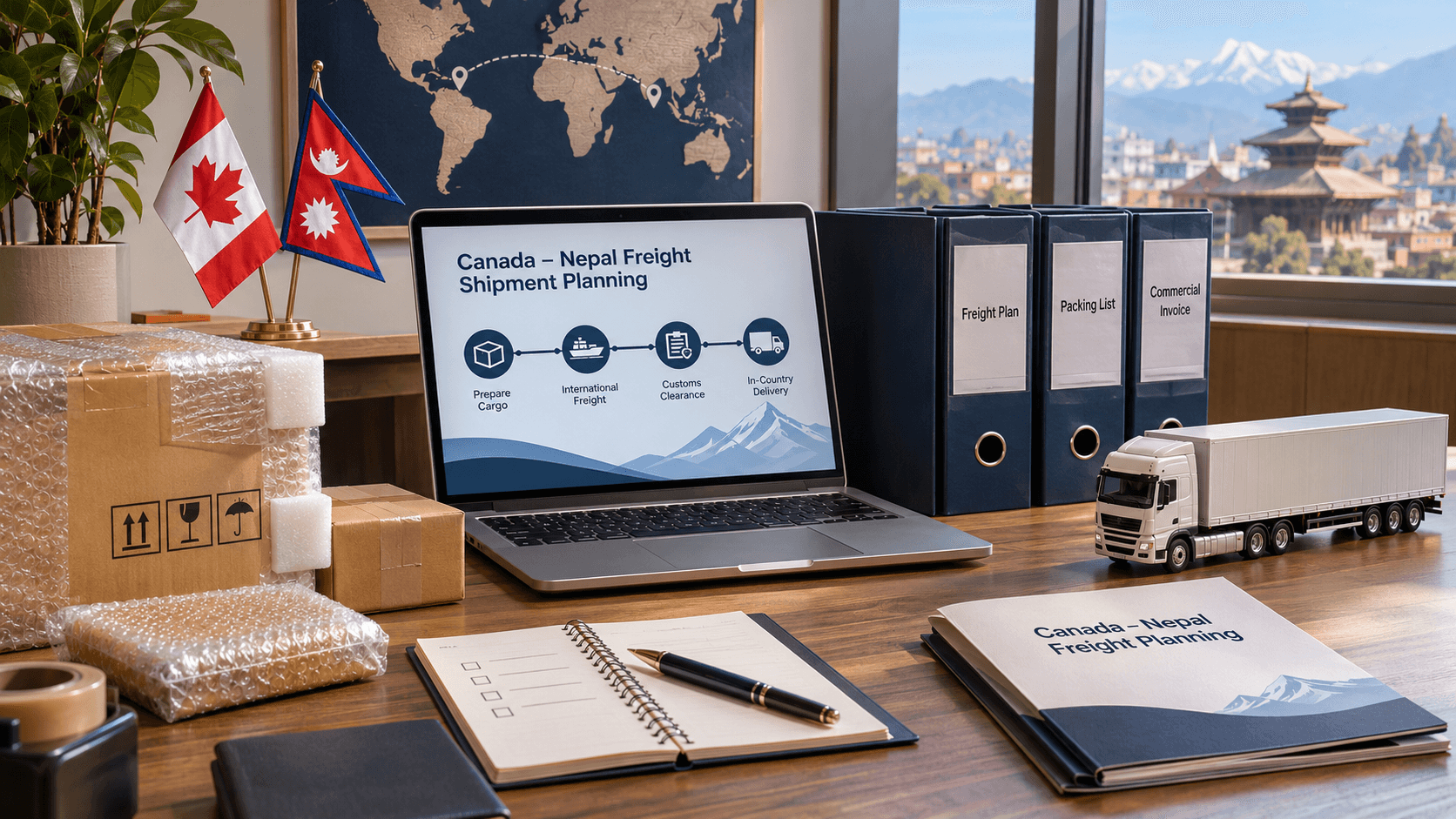
Send the commodity, origin, destination, package count, packed dimensions and gross weight per piece, ready date, invoice value, permit status and any battery, liquid, temperature or handling restrictions. For heavy or irregular goods, include photographs and lifting information.
Shipping cargo between Canada and Nepal? Sea Sky Cargo can compare routes, review your documents and coordinate the agreed clearance and delivery steps. Request your shipment review. See freight forwarding in Nepal for wider service context.
13. Frequently Asked Questions
Is there direct sea freight to Nepal? Nepal is landlocked. A sea booking for Nepal normally combines an ocean gateway with inland transit and Nepal clearance; confirm the exact contracted route.
Is air freight always best below 500 kg? No. Compare chargeable weight, package dimensions, urgency, value, cargo restrictions and the complete delivery cost.
Which Indian port should Canadian cargo use? Review the actual carrier routing and accepted Nepal-transit arrangement. Kolkata/Haldia and Visakhapatnam are established options to investigate, not guarantees of a particular sailing or inland service.
Does every shipment need a full container? No. LCL may suit smaller consignments, but minimums, handling and inland costs matter. Compare LCL and FCL where both are practical.
Is B13A required for goods shipped from Nepal into Canada? Do not put a Canadian export declaration on the Canadian import leg. Canadian export reporting concerns goods leaving Canada; check current CERS requirements for Canada-to-Nepal cargo.
Are Nepali products automatically duty-free in Canada? No. Classification, origin, applicable tariff treatment and supporting evidence determine eligibility. CUSMA does not automatically cover Nepal-origin goods.
Can the guide guarantee transit time or customs tax? No. Obtain a dated shipment-specific routing estimate and product-specific tax review. Carrier operations and authority decisions can change the outcome.
What should I send for a quote? Provide collection and delivery addresses, commodity, package count, final dimensions and weights, ready date, value, document status and special-handling details.
Plan Your Canada–Nepal Shipment
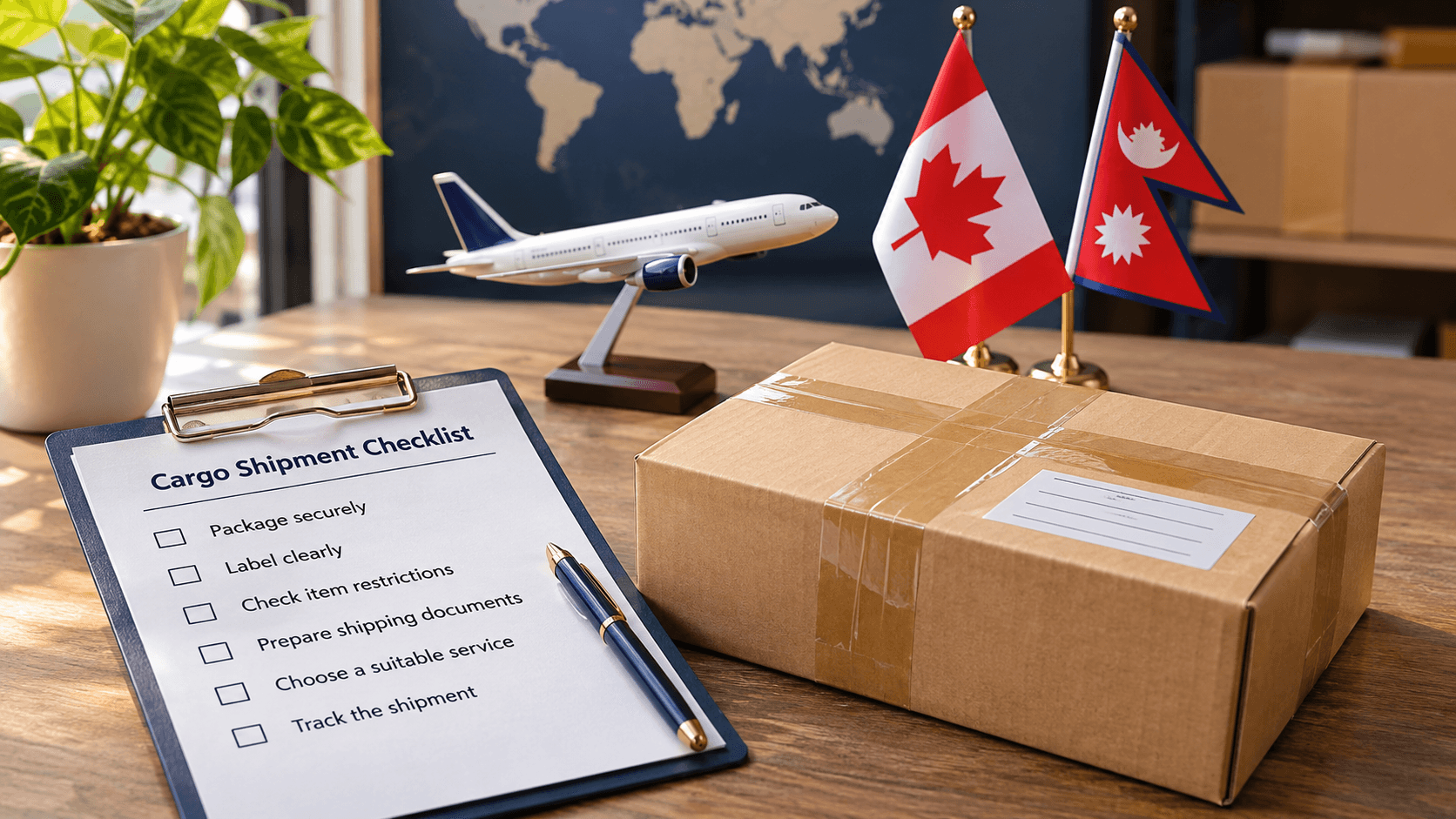
Share packed cargo details, addresses and timing requirements to compare feasible freight options.
Related posts
1970-01-01
Sea + Air Freight: How SeaSky Helps Businesses Ship Smarter
2026-10-30
Incoterms for Nepal Importers: The Hidden Costs Behind EXW, FOB, CIF and DDP

2026-10-27
Customs Transit Declaration for Nepal Cargo via India: Documents, Birgunj ICD and Delay Prevention

2026-10-27