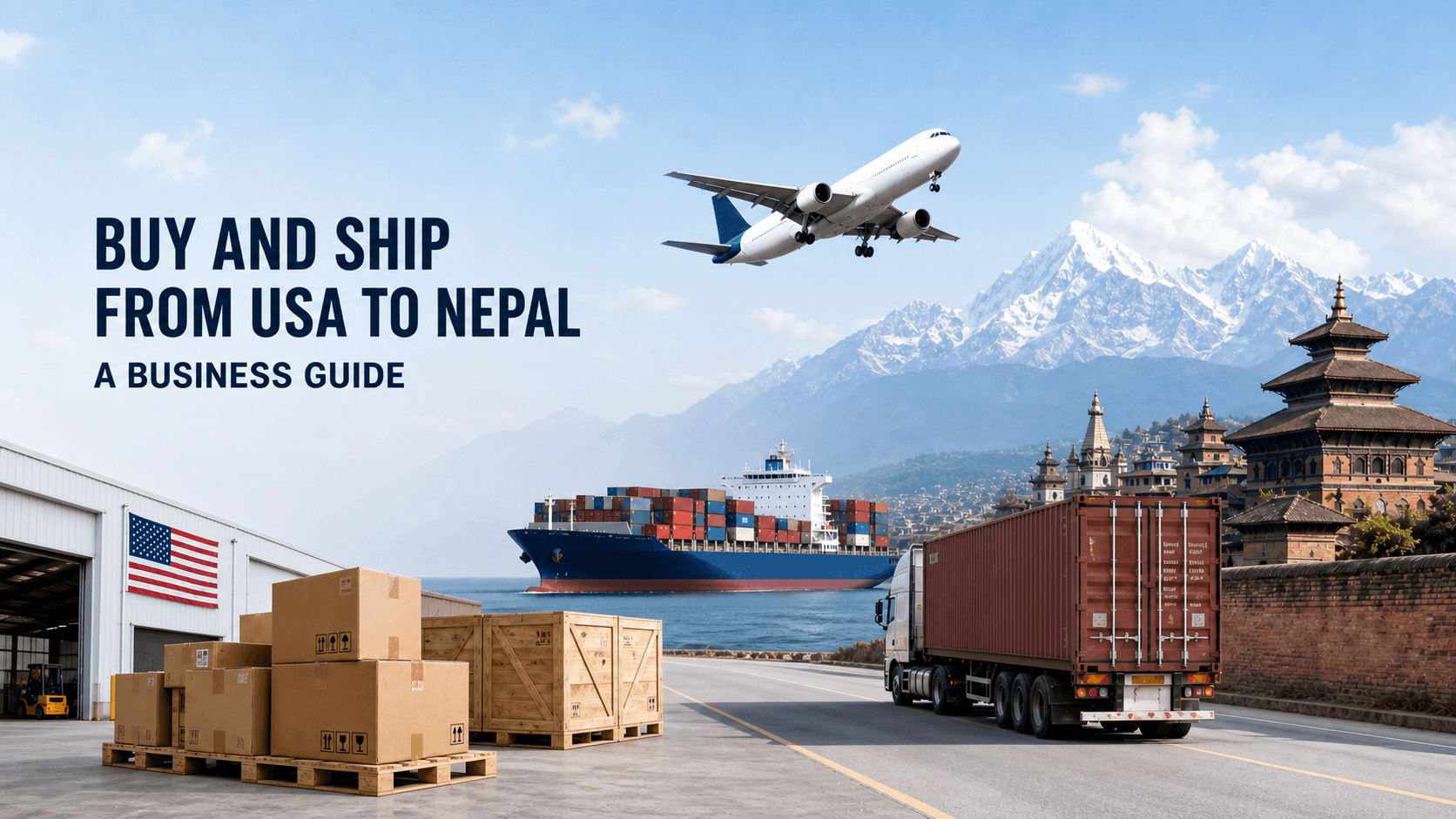
What does buy and ship from the US to Nepal mean for a business?
When a business searches buy and ship from US to Nepal, it usually has two connected jobs: purchasing the right goods from an American supplier and moving those goods through a compliant international freight route. The purchase decision, export handoff, transport documents, Nepal import setup and final delivery all have to describe the same transaction. This is different from personal parcel forwarding. Commercial orders may involve pallets, machinery, replacement parts, wholesale inventory, laboratory equipment, electronics, medical supplies or several supplier orders combined into one shipment. The importer needs to know who sells the goods, who picks them up, who acts as the US exporter, who files any required export information and who clears them in Nepal. Sea Sky Cargo can coordinate the logistics around a confirmed purchase: supplier pickup, warehouse consolidation, air or ocean freight, Nepal customs support and delivery as defined in the quote. The Nepal business normally contracts with and pays the supplier directly unless a separate purchasing arrangement has been agreed in writing.
| Commercial responsibility | Question to settle before ordering |
|---|---|
| Product purchase | Who is the seller, what is being supplied and what warranty or inspection applies? |
| US origin handoff | Will the supplier deliver to a warehouse, or is pickup required? |
| Export compliance | Who is the US principal party and who will classify and file the export when required? |
| Nepal import | Is the buyer ready with EXIM, banking, permits, classification and customs documents? |
| Final delivery | Does the quote end at the airport, dry port, customs point or the buyer's warehouse? |

Start with the supplier, product and purchase terms
A freight quote cannot repair a weak purchase agreement. Before you buy from the US and ship to Nepal, confirm the supplier's legal name and address, product model, country of origin, unit quantity, value, lead time, packed weight, dimensions and warranty terms. Ask whether the quoted product is new, used, refurbished, restricted, hazardous or temperature-sensitive.
Request a pro forma invoice and agree the Incoterm and named place. EXW can leave the Nepal buyer responsible from the supplier's premises. FCA can create a cleaner handoff to the nominated carrier at an agreed point. FOB applies to an ocean-port handoff, while CIF includes freight and insurance to a named destination port but not every inland or customs cost. Do not accept a three-letter Incoterm without the exact location and version.
- Supplier legal name, collection address and contact person
- Precise product description, model, material and intended use
- Country of manufacture and any serial numbers
- Unit price, total value, currency and payment schedule
- Packed carton or crate count, weight and dimensions
- Dangerous-goods, battery, chemical or temperature details
- Incoterm with the named handoff location
- Cargo-ready date and collection restrictions
- Inspection, warranty and damage-claim procedure
For a first order, a sample or smaller pilot shipment can test product quality, packaging and customs readiness before working capital is committed to a full container or large airfreight movement.

Air freight or ocean freight from the USA to Nepal?
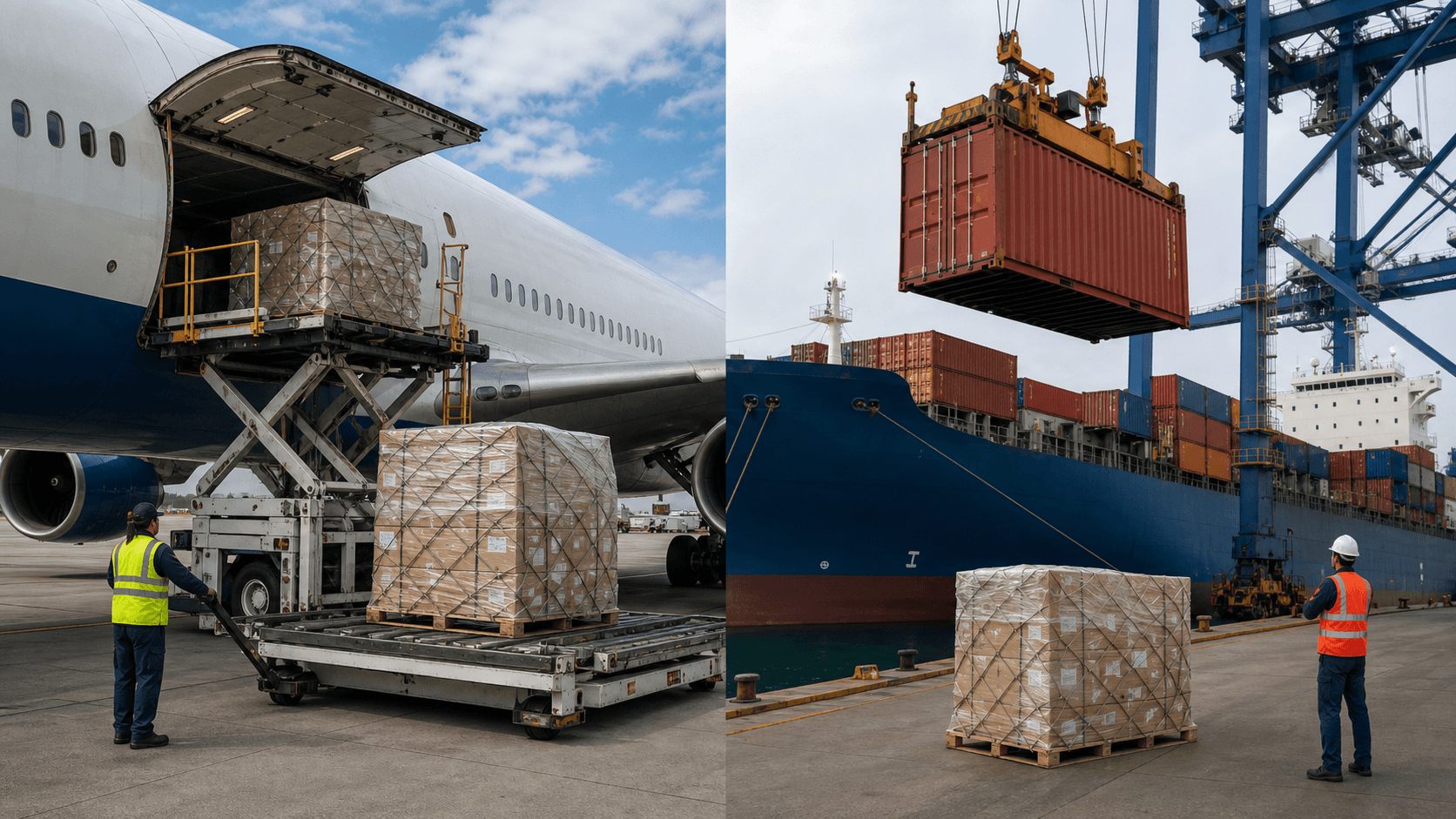
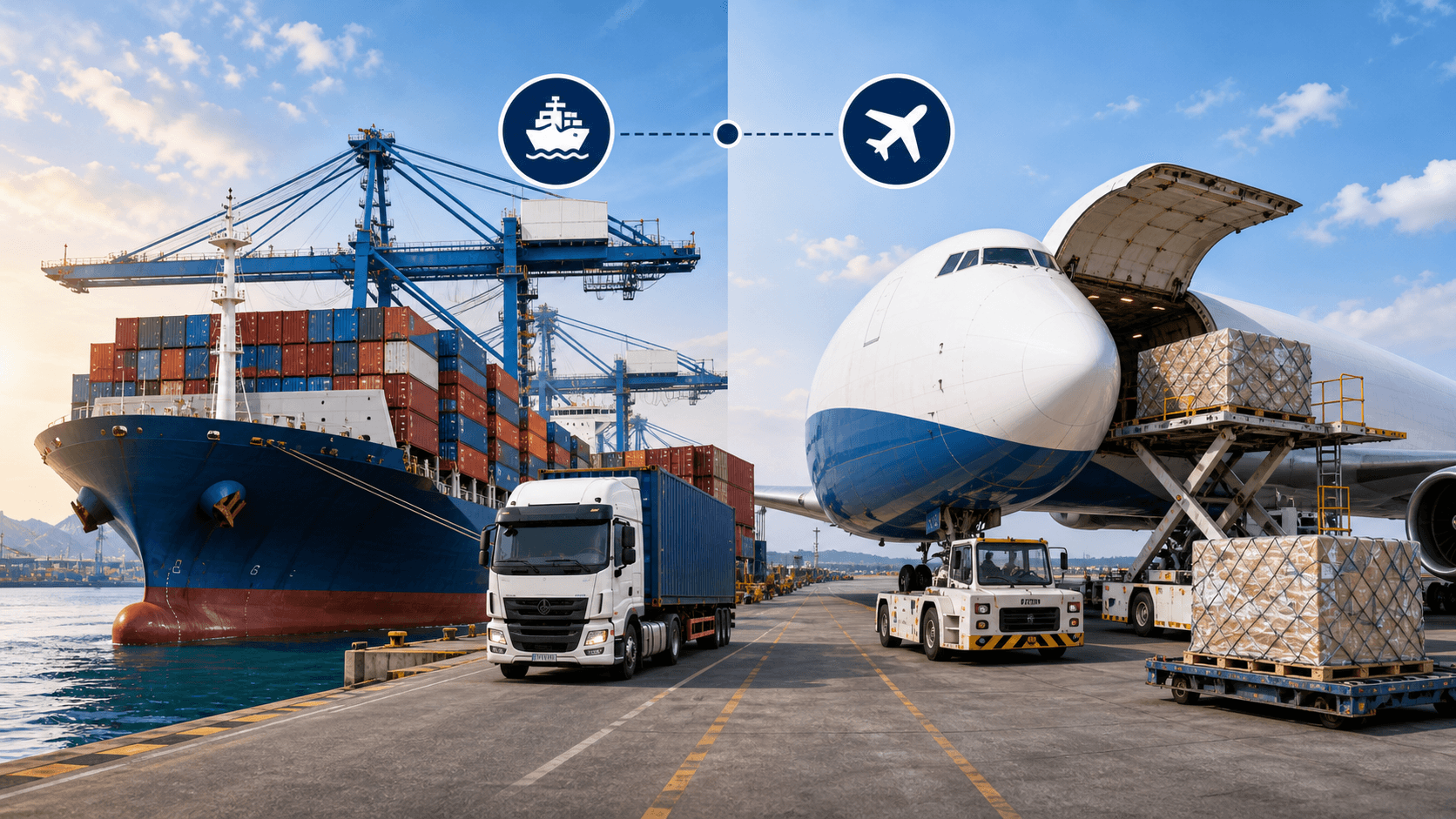
The right mode depends on the packed cargo, not only the invoice value. Air freight is usually compared first for urgent, smaller, high-value or production-critical orders. Ocean freight is usually compared for heavy, bulky or replenishment cargo that can tolerate a longer connected route. Air cargo typically moves from a suitable US gateway through an international hub to Tribhuvan International Airport in Kathmandu. Pricing is based on chargeable weight, so a large lightweight package can cost more than its scale weight suggests. Airline acceptance also depends on dimensions, batteries, dangerous-goods status and handling requirements. Ocean cargo moves from a US port in LCL or FCL service to an Indian transit gateway, then continues toward Nepal under the applicable transit process by rail or road. The best US load port depends on the supplier location, inland pickup cost, sailing options and equipment availability. The complete comparison must include US origin charges, ocean freight, destination-port and transit handling, Nepal clearance and final delivery. Review Sea Sky's air freight services and ocean freight services, then use the quick chooser below as a starting point rather than a booking decision.
| Shipment profile | Mode to compare first | Main planning issue |
|---|---|---|
| Samples or urgent parts | Air freight | Chargeable weight and flight acceptance |
| High-value equipment | Air or ocean | Security, insurance, dimensions and deadline |
| Several pallets of inventory | Air versus LCL | Total landed cost and stock-out risk |
| Heavy machinery or a full order | FCL or project cargo | Container fit, loading, lashing and inland access |
Quick planning tool
Which freight mode should you compare first?
Starting recommendation
Compare air with sea plus inland transit
This shipment sits in the middle: air may protect the timeline, while sea can lower freight cost. Compare chargeable weight, port timing, inland transit and customs risk.
Ask Sea Sky to compare the routesPlanning guide only. Product restrictions, dimensions, border status and customs documents can change the route.
US supplier pickup and consolidation
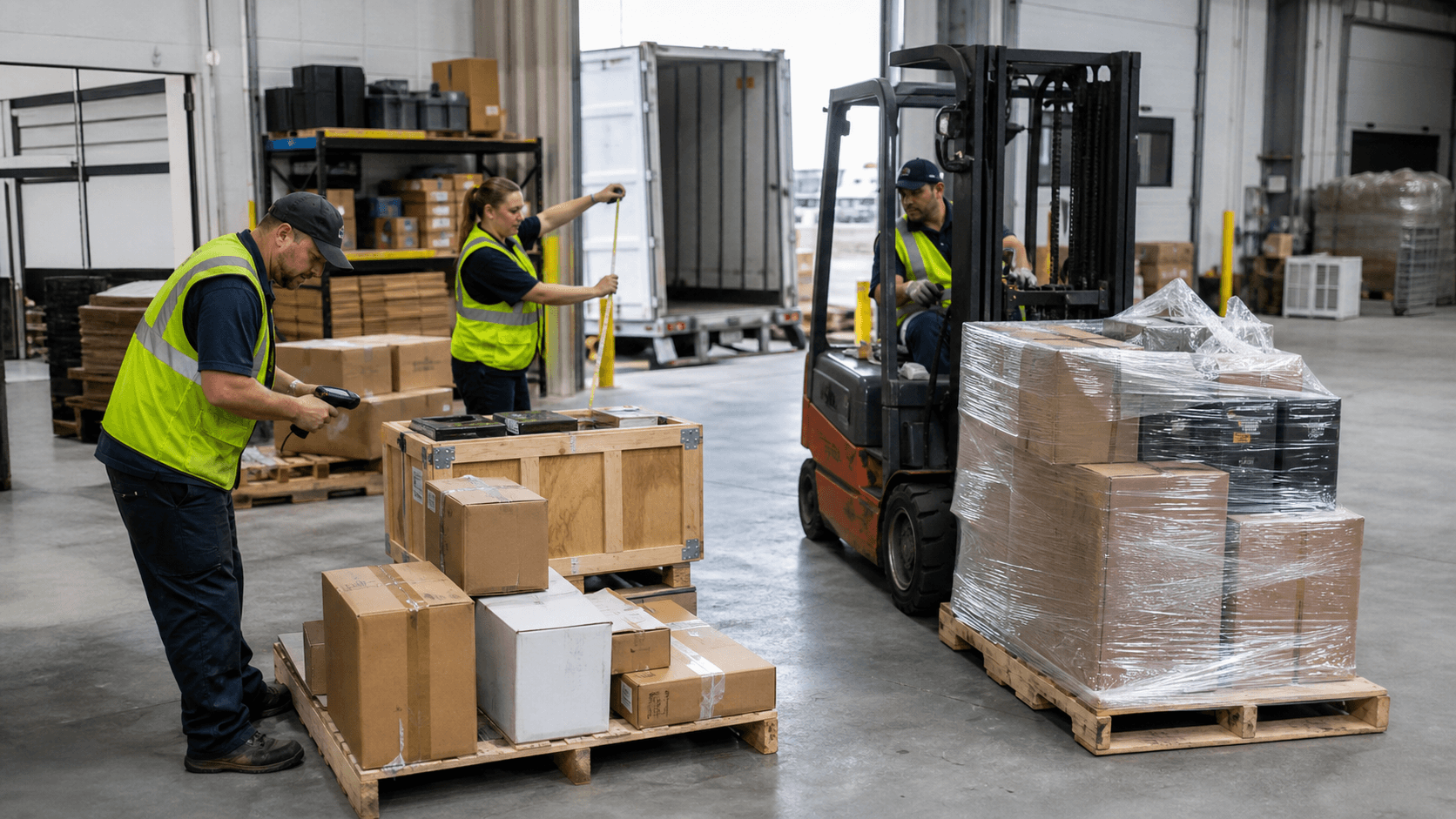
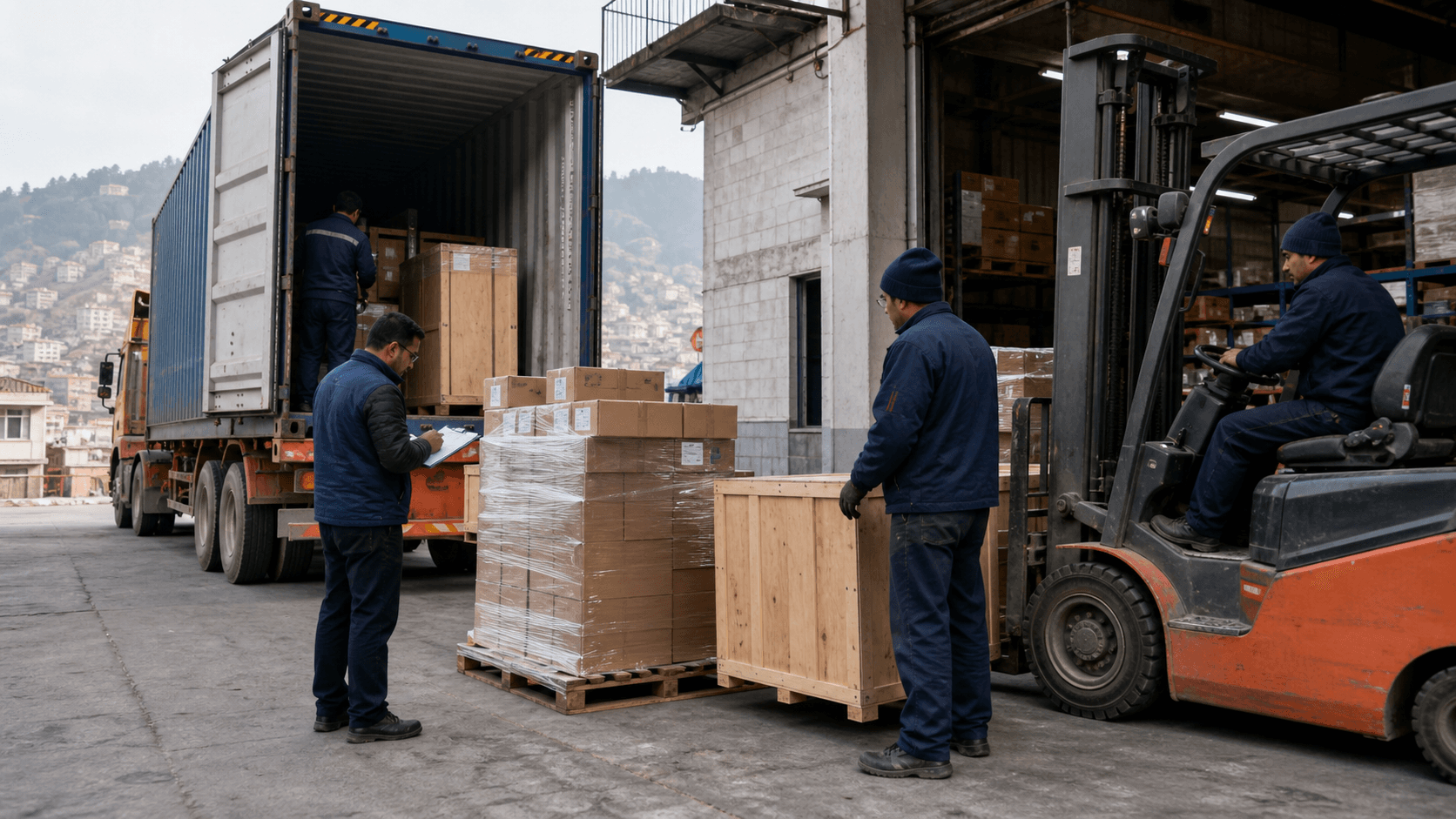
A US supplier may quote cargo at its loading dock, deliver it to a freight warehouse or require an appointment for collection. Before dispatch, confirm forklift access, dock hours, package count, dimensions, stackability, loading assistance and whether a residential or limited-access surcharge could apply.
Consolidation can help when a Nepal business buys from several US suppliers. Separate orders can be collected into one warehouse, checked against receiving records, repacked where appropriate and combined for one export movement. The benefit is not automatic: extra handling, storage, repacking and domestic trucking must be compared with the freight savings.
- Give every supplier the correct receiving reference before delivery
- Require carton or crate counts and packed dimensions before pickup
- Photograph visible package condition at warehouse receipt
- Keep products requiring special licenses or dangerous-goods handling identified
- Do not mix cargo with incompatible storage or handling requirements
- Approve consolidation only after the final weight, volume and route are compared
For machinery, non-stackable cargo and unusual dimensions, Sea Sky may need a loading plan rather than ordinary groupage handling. See the project cargo service for cargo that needs lifting, lashing or special equipment.
US export documents and compliance checks
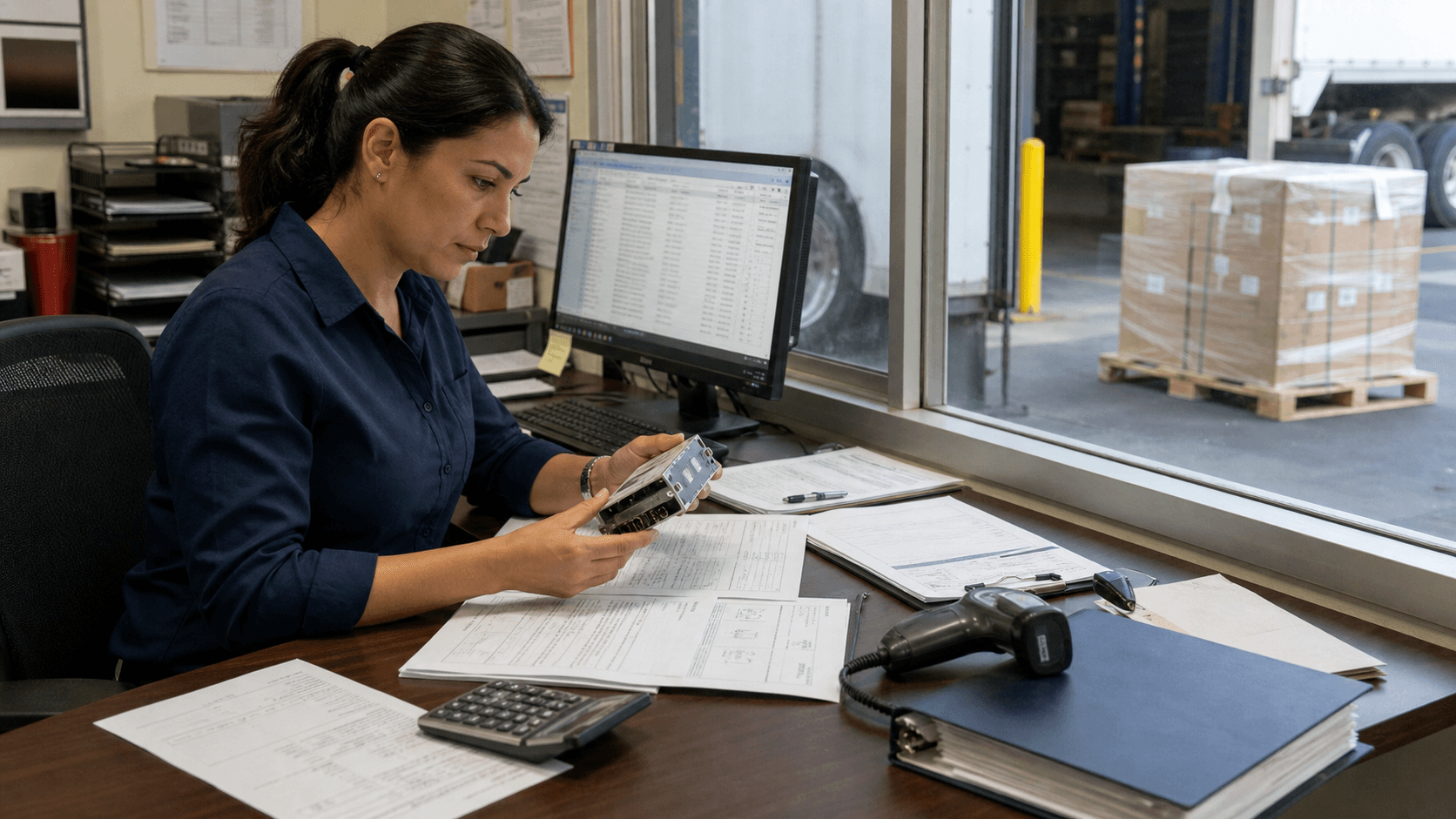
Commercial goods leaving the United States need an origin-side compliance review. The US supplier or other US principal party in interest normally provides accurate product and transaction data. An authorized US agent may file Electronic Export Information in the Automated Export System when filing is required, but authorization does not make incomplete product information acceptable.
For many unlicensed shipments, EEI filing depends on the value by Schedule B classification; licensed and specially controlled goods can have different requirements. The product must also be checked against US export-control jurisdiction, classification, destination, end user and end use. Some ordinary items may be EAR99, while controlled equipment, advanced electronics, encryption items, chemicals, aviation parts and dual-use products can require deeper review.
- Commercial invoice and seller/buyer details
- Packing list with final package count, weight and dimensions
- Schedule B or other required export commodity classification
- ECCN or EAR99 status where the Export Administration Regulations apply
- End-user and end-use information for controlled or sensitive products
- Export license or license-exception evidence when applicable
- AES Internal Transaction Number or valid exemption citation when required
- Dangerous-goods declaration and safety data when applicable
- Power of attorney or written authorization for an export filing agent
Ask the supplier to identify export restrictions before payment. Sea Sky can coordinate shipment information, but the responsible US parties and specialist agents must make any formal export classification, licensing or AES filing required for the transaction.
Buying commercial goods from a US supplier?
Share the supplier location, commodity, quantity, packed dimensions, value, cargo-ready date and delivery address in Nepal. Sea Sky can compare pickup, consolidation, air or ocean freight, customs requirements and final delivery before you place the order.
Nepal importer setup, banking and customs documents
The Nepal buyer should be import-ready before the US supplier releases the cargo. Commercial importers generally need the appropriate business registration, PAN or VAT records and an active EXIM code. The payment method and foreign-exchange documentation should be agreed with the buyer's bank before funds are sent. A normal file may include the commercial invoice, packing list, transport document, insurance evidence, bank documents, importer registration details and a product description sufficient for HS classification. Some goods also need a permit, recommendation, registration, test report or no-objection approval from the relevant Nepal authority. Never rely on the supplier's HS code alone. Review the product's material, function, model and intended use against Nepal's current tariff and permit requirements. Sea Sky's wrong HS code guide and import permit guide explain the two most common pre-shipment checks.
| Import input | Why it matters |
|---|---|
| EXIM and business details | Identifies the commercial importer and supports customs processing |
| Invoice and payment record | Supports customs value, banking and transaction consistency |
| Packing list | Connects packages, quantities, weights and marks to the declaration |
| HS code and technical description | Affects duty, VAT, permits and customs questions |
| AWB or bill of lading | Identifies the carrier movement, parties and shipment reference |
| Product approval | May be required for regulated food, medicine, telecom, chemical or other goods |

Calculate landed cost before you approve the purchase
A low US supplier price can become an expensive Nepal import when pickup, export packing, freight, transit handling, duty, VAT, storage and delivery are added. Compare the expected landed cost per unit or per saleable kilogram, not only the international freight line. Ask for an itemized route quote and identify which charges are estimated, payable at destination or excluded. Currency movement, customs valuation, inspection and storage can change the final amount, so a pre-shipment estimate is a planning tool rather than a guaranteed tax assessment. Cargo insurance should also be a deliberate decision. Carrier liability is limited and is not the same as cover for the full commercial value. Read the freight and cargo insurance guide before relying on the supplier's phrase 'shipping included.'
| Cost layer | Typical items to include |
|---|---|
| Purchase | Goods, inspection, US sales-tax position where relevant and supplier charges |
| US origin | Pickup, warehouse receiving, consolidation, export packing and documentation |
| International freight | Air chargeable weight or ocean LCL/FCL freight and surcharges |
| Transit and destination | Airport or port handling, Indian transit movement, terminal and agent charges |
| Nepal customs | Duty, VAT, excise or other applicable taxes based on current classification and value |
| Delivery and risk | Customs clearance, storage exposure, insurance, unloading and warehouse delivery |

Plan the route around the product
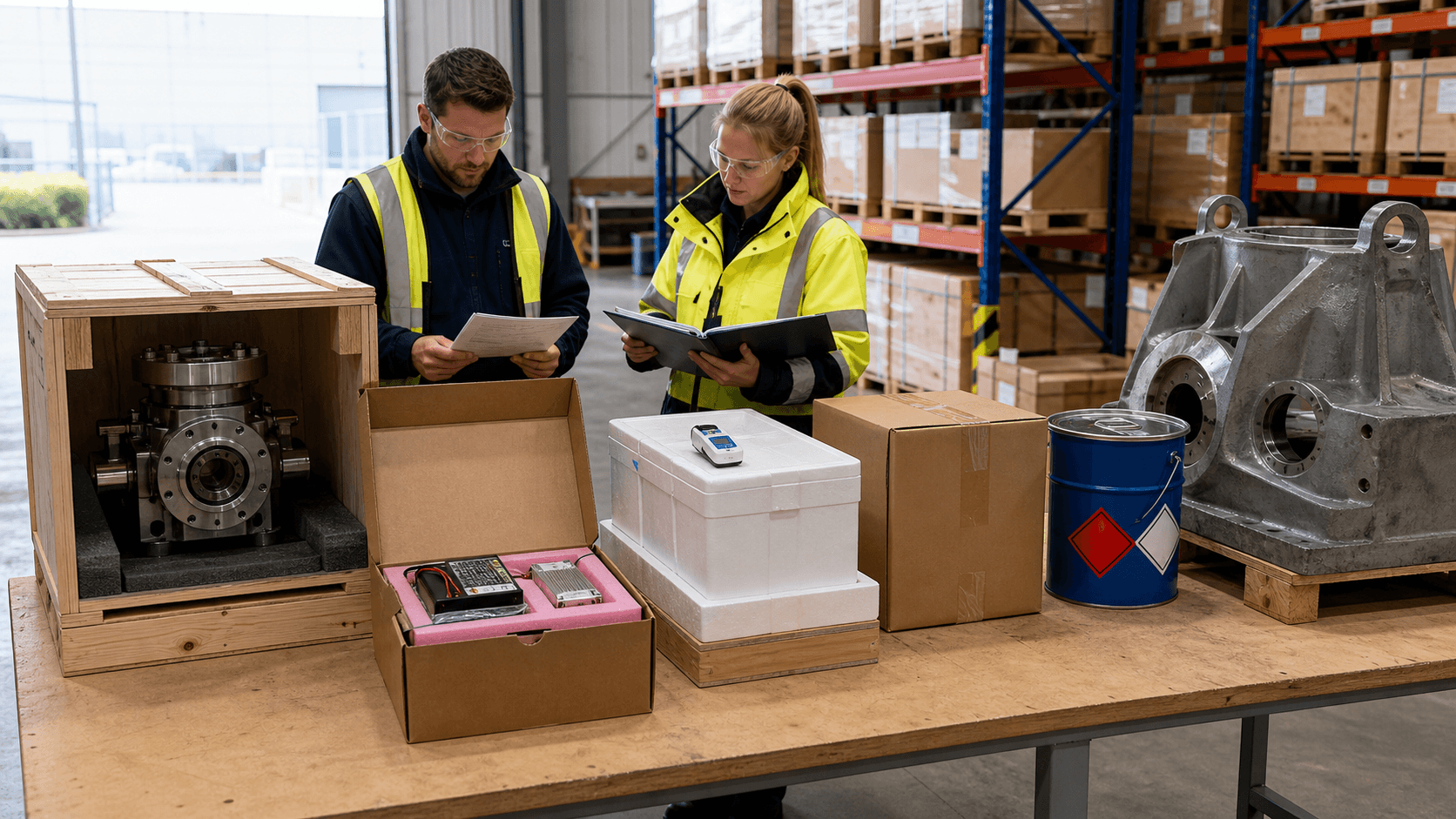
The same USA-to-Nepal route cannot be applied blindly to every commodity. Product characteristics affect export screening, carrier acceptance, packing, permits, customs classification and final handling. Send technical information early enough to change the route before the cargo is collected. Use dangerous-goods services for regulated cargo and perishable cargo services when temperature control matters. Do not allow a supplier to dispatch batteries, chemicals, medicine or food under a generic description such as 'parts' or 'samples.'
| Business cargo | Questions to resolve before buying |
|---|---|
| Machinery and spare parts | New or used, serial numbers, oil or fuel residue, dimensions, lifting points and power rating |
| Electronics and batteries | Battery chemistry, watt-hour rating, dangerous-goods status, model and telecom approval |
| Medical and laboratory goods | Temperature range, product registration, expiry, data logger and authority approval |
| Food and supplements | Ingredients, shelf life, labeling, health certificates and temperature control |
| Chemicals | Safety data sheet, UN number, hazard class, packing group and permit status |
| Oversized equipment | Crated dimensions, weight, lifting plan, port handling and Nepal delivery access |
A practical USA-to-Nepal business import workflow
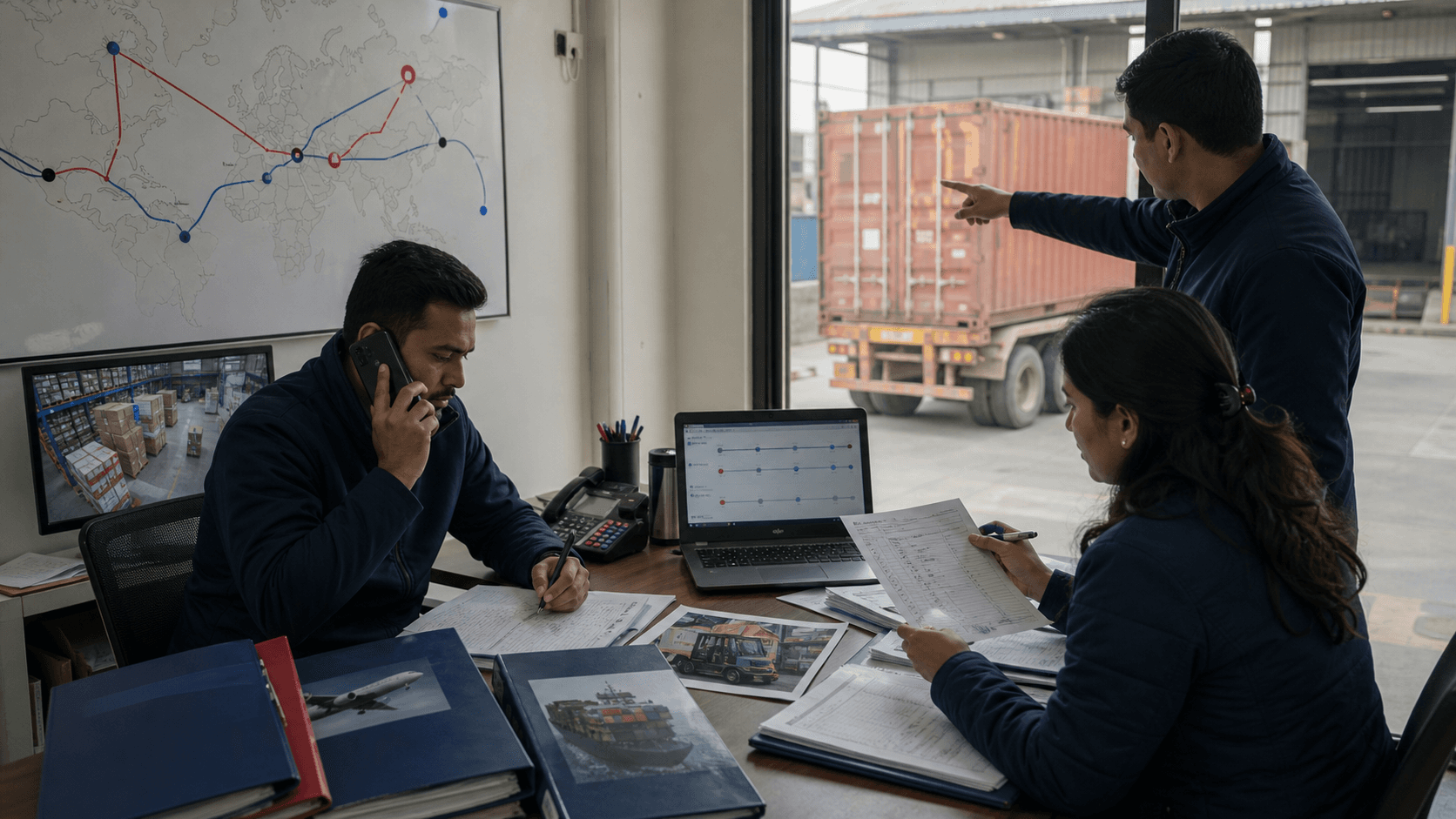
A reliable import starts before the purchase order and ends after the receiving team has accepted the cargo. The workflow below keeps commercial, freight and customs decisions in the right sequence.
- Define the product, quantity, use, target landed cost and required delivery date
- Verify the US supplier and obtain a detailed pro forma invoice
- Check export restrictions, Nepal import permits, HS classification and banking method
- Confirm packed weight, dimensions, dangerous-goods status and cargo-ready date
- Compare supplier pickup, consolidation, air and ocean route options
- Agree the Incoterm, handoff point, insurance and responsibility matrix
- Approve the purchase only after the logistics and customs inputs are workable
- Collect final invoice, packing list, export evidence and transport documents
- Coordinate Nepal customs clearance before arrival
- Plan unloading, warehouse access and proof of delivery
For ocean cargo, the movement may include a US inland leg, export terminal, ocean carrier, Indian transit port, rail or road leg, Nepal border or dry port and final truck. Sea Sky's port-to-door cargo guide explains why each handoff should have a named owner.
For repeat purchasing, keep a shipment record with the approved supplier, product description, classification, permits, packing, route, actual landed cost and delivery performance. That turns the next order into a controlled business process instead of a fresh guess.
Frequently asked questions
How can a Nepal business buy from the US and ship to Nepal? Start with a detailed supplier quotation, confirm product and export restrictions, check Nepal import readiness, then compare supplier pickup, air or ocean freight, customs and final delivery before paying or dispatching.
Can Sea Sky pick up from a US supplier? Supplier pickup can be coordinated through the origin network when the collection address, package details, access conditions and cargo-ready date are confirmed in the quote.
Can orders from multiple US suppliers be consolidated? Yes, where the products, timing and handling requirements are compatible. Warehouse receiving, storage, repacking and consolidation charges should be compared with the expected freight saving.
Is air or sea freight cheaper from the USA to Nepal? Sea freight often suits heavier or flexible cargo, while air can be better for urgent, compact or high-value orders. The right answer depends on chargeable weight, volume, origin pickup, port or airport costs, Indian transit and stock-out risk.
What documents are required for commercial imports into Nepal? Common documents include the invoice, packing list, AWB or bill of lading, insurance evidence, banking records, importer and EXIM details, HS information and any product-specific permit or certificate.
Does a Nepal business need an EXIM code? Commercial importers generally need active importer registration through Nepal's EXIM system. Confirm the current application or renewal status before the supplier dispatches.
How are customs duty and VAT calculated? They depend on the current HS classification, customs value, origin and any applicable duty, VAT, excise or concession. Obtain a product-specific pre-check rather than applying a remembered percentage.
Can Sea Sky ship machinery, electronics or medical goods from the US? These cargo types can be coordinated after their dimensions, technical specifications, permits, export status and special-handling needs are reviewed.
How long does commercial freight from the USA to Nepal take? Timing depends on the US origin, pickup readiness, mode, carrier schedule, transshipment, Indian transit, customs and final delivery. A route-specific schedule should be built from the cargo-ready date rather than a generic promise.
Does Sea Sky provide door-to-door delivery? Door delivery can be included where the scope, customs responsibilities, receiving address, access and unloading requirements are defined in the quote.
Build the import plan before paying the supplier
Send Sea Sky the supplier quotation and cargo details. We can help define the US pickup, export handoff, freight route, Nepal clearance inputs and delivery responsibilities before booking.
Related posts
1970-01-01
Sea + Air Freight: How SeaSky Helps Businesses Ship Smarter
2026-10-06
Freight Forwarding Documents in Nepal: Complete Import and Export Checklist
2026-10-05
Landed Cost in Nepal: A Step-by-Step Import Cost Worksheet
2026-10-04