What a high bed trailer is and when businesses use one
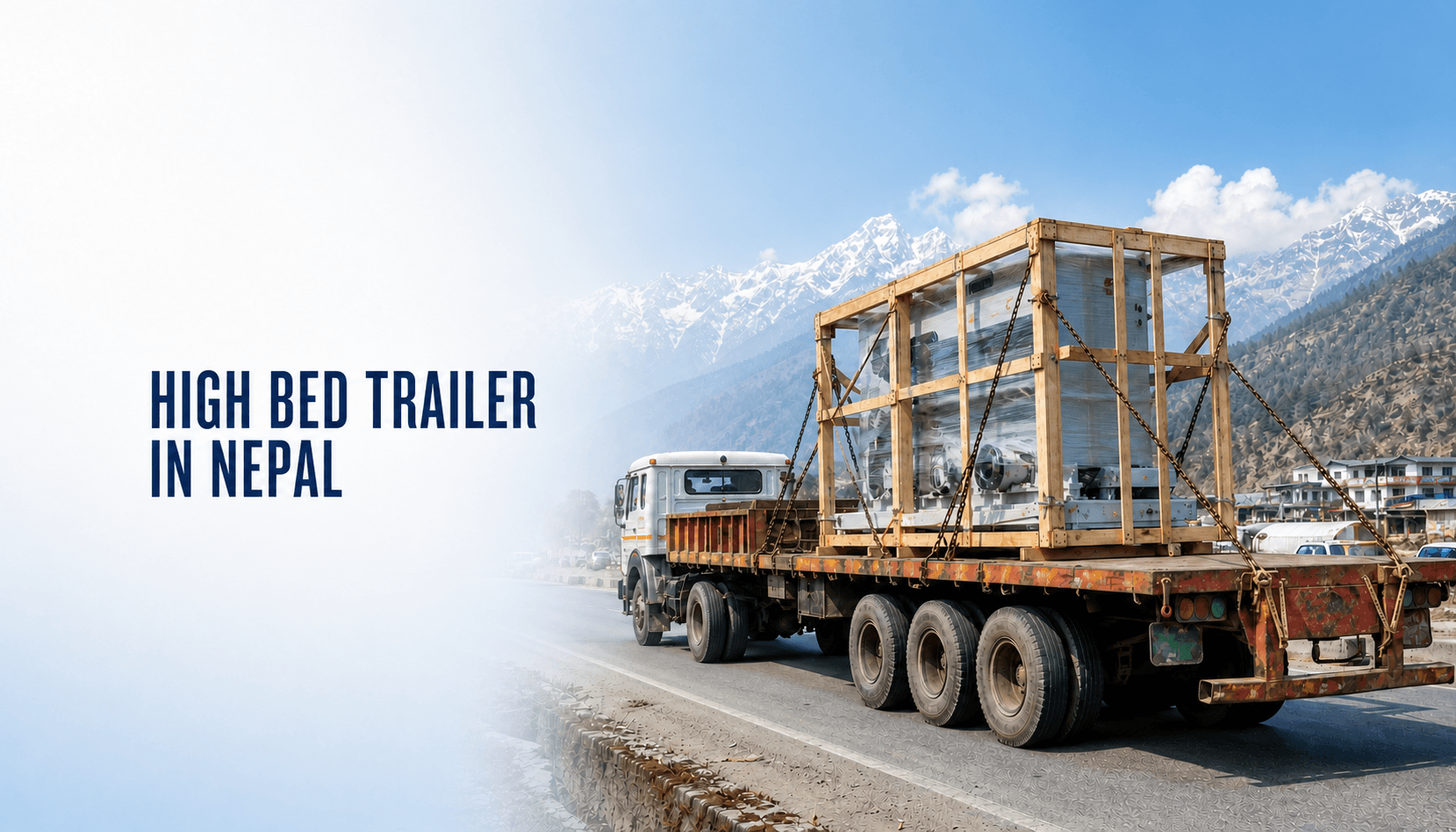
A high bed trailer is a semi-trailer with a flat loading deck positioned above the wheels. It provides an open, strong platform for cargo that is too long, heavy or awkward for an enclosed truck but does not need the lower deck of a low bed trailer.
Nepal importers use high beds for container movements, crated factory equipment, steel products, generators, construction materials and other commercial loads. The open deck allows loading from the side, rear or above, depending on the cargo and the equipment available at each site.
The name describes the trailer format, not one universal specification. Deck height, length, axle arrangement, gross vehicle weight and payload vary by unit. Sea Sky's trailer capacity in Nepal page lists a high-bed reference around a 5-foot deck height and a 22-35 metric-tonne payload range, but those figures are indicative equipment examples, not a promise for every trailer or route.
A booking should therefore begin with the cargo's packed dimensions, gross weight, centre of gravity, support points and lifting method. The actual trailer registration and manufacturer's specification must then be checked before dispatch.
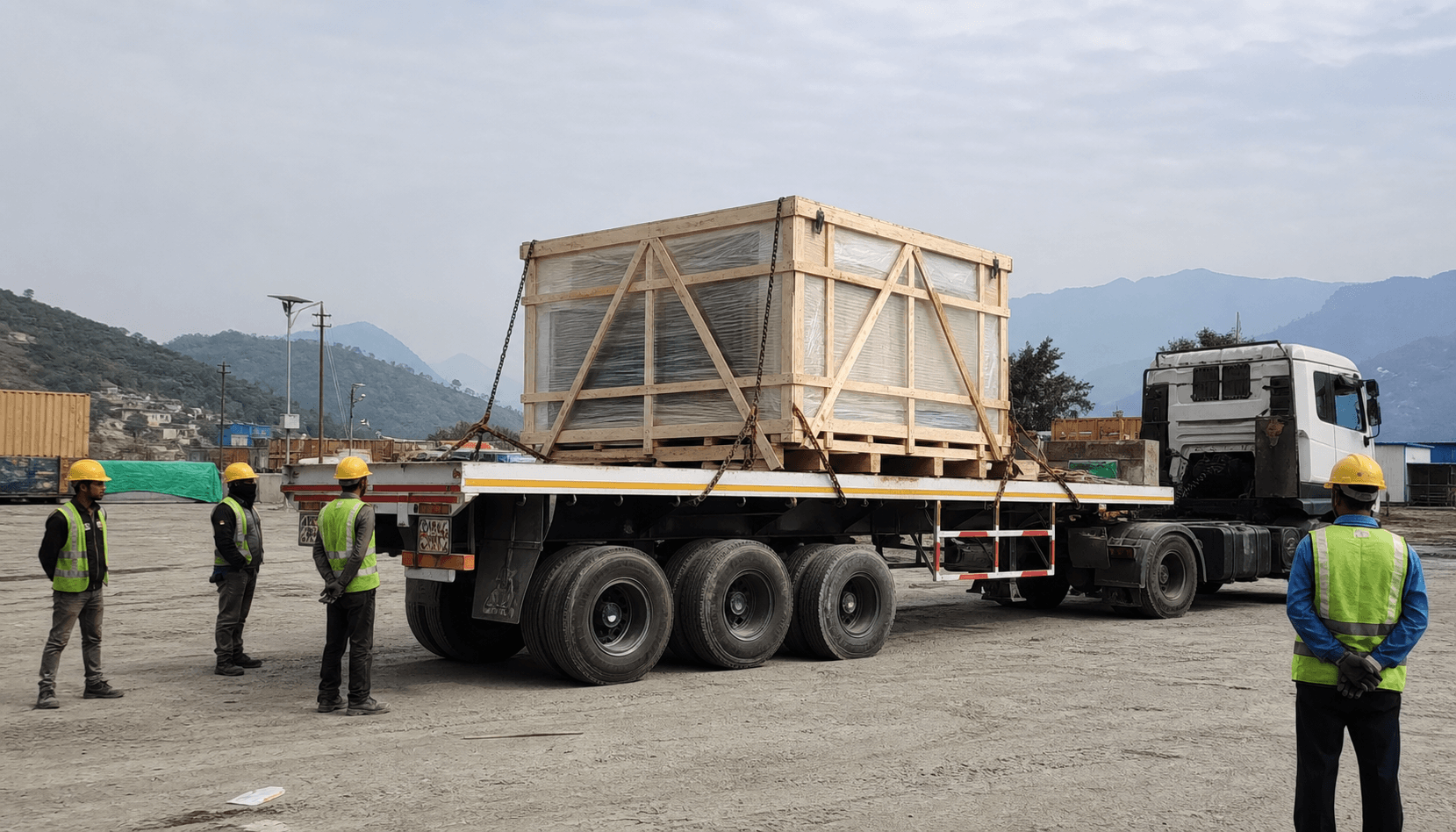
High bed trailer height from ground and total loaded height
Importers often ask for the high bed trailer height from ground as if it were a fixed number. It is not. Tire size, suspension, axle design, deck construction and whether the vehicle is loaded can all affect the measured deck height. The more useful number is total loaded height. Calculate it from the actual ground-to-deck measurement, the cargo's maximum packed height and any dunnage, saddle, frame or protective structure placed between the deck and the cargo. Measure the finished transport package before booking. A machine may fit the trailer by weight but still be unsuitable because its crate, lifting frame or exhaust stack makes the loaded combination too tall for an underpass, wire crossing, gate or final warehouse entrance. Do not rely on a remembered national maximum alone. The usable height can be lower on a specific route, and an abnormal load may need review or approval from the relevant transport and road authorities.
| Measurement | What to record | Why it matters |
|---|---|---|
| Ground to deck | Actual trailer measurement under the planned configuration | Creates the base for the loaded-height calculation |
| Packed cargo height | Highest point of the transport package, not the uncrated machine | Determines the real road envelope |
| Supports and dunnage | Timber, steel frames, saddles, skids or anti-slip material | Adds height and affects load concentration |
| Total loaded height | Deck height plus cargo and support allowance | Must be compared with the surveyed route and applicable limits |
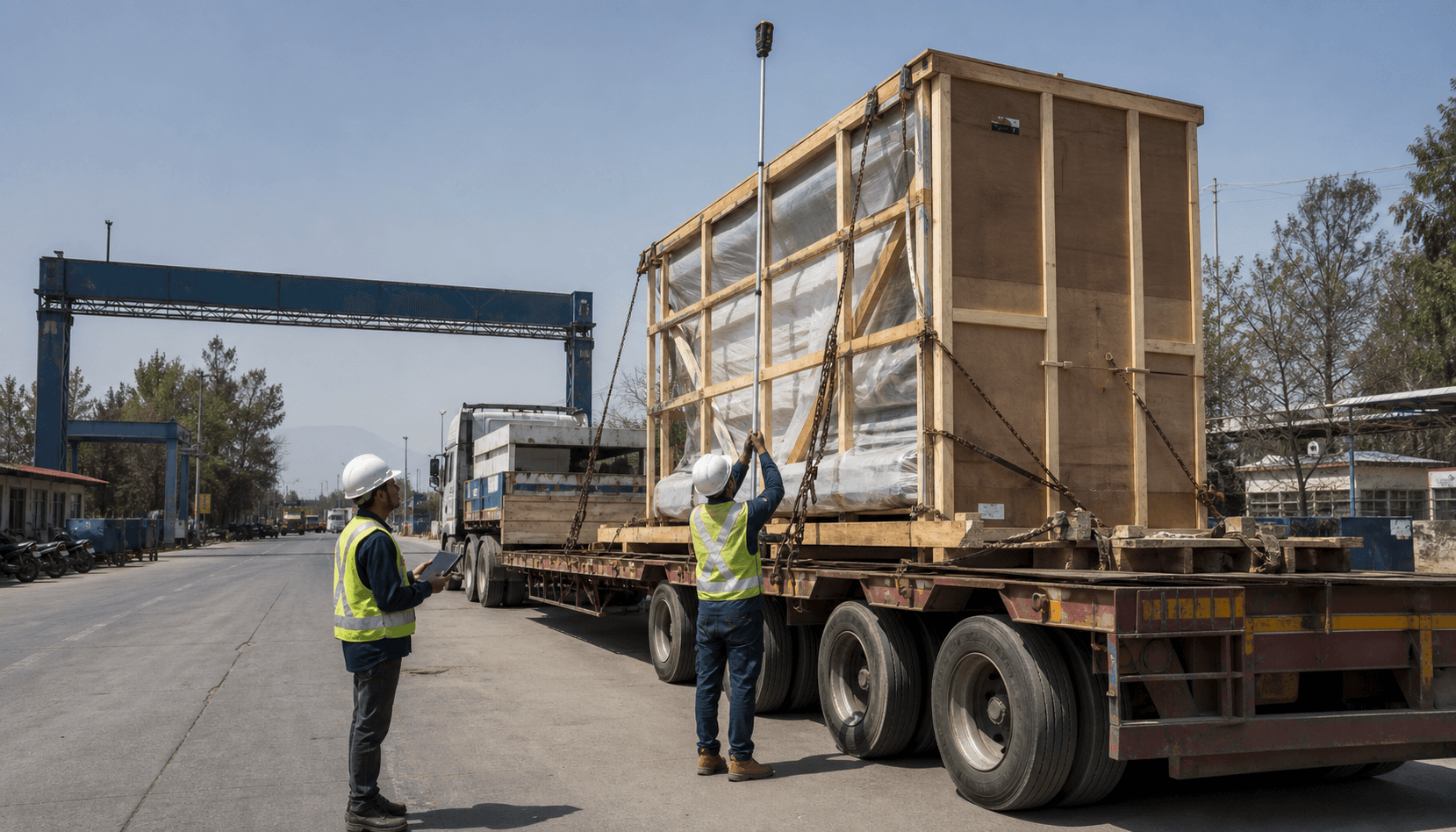
High bed, semi-low bed or low bed trailer?
The correct trailer is the one that carries the load within the trailer's verified limits and the route's usable envelope. High beds suit cargo that can travel on a higher flat platform. Semi-low and low beds reduce the deck height when tall machinery or a high centre of gravity makes total height the controlling issue. These are planning references only. Available equipment can differ, and payload is not determined by trailer name. The tractor unit, axle count, registered weights, load position and road or bridge conditions all remain part of the decision. If height is close to the route limit, compare a lower deck before the cargo is packed. Moving the same cargo to another trailer after customs release can add cranes, storage, labour and delay.
| Trailer type | Indicative deck-height reference | Common fit | Main check |
|---|---|---|---|
| High bed | Around 5 ft on Sea Sky's equipment reference | Containers, crates, steel, moderate-height machinery and commercial cargo | Total loaded height and safe access for loading |
| Semi-low bed | Around 4-4.5 ft on the equipment reference | Heavier or taller machinery needing some height reduction | Axle configuration, weight distribution and ramp or crane plan |
| Low bed | Around 2-3 ft on the equipment reference | Excavators, transformers and tall project cargo | Ground clearance, approach angle and route geometry |
| Drop bed | Around 1.5-2 ft on the equipment reference | Selected tall loads needing the lowest practical deck section | Usable well length and concentrated-load support |
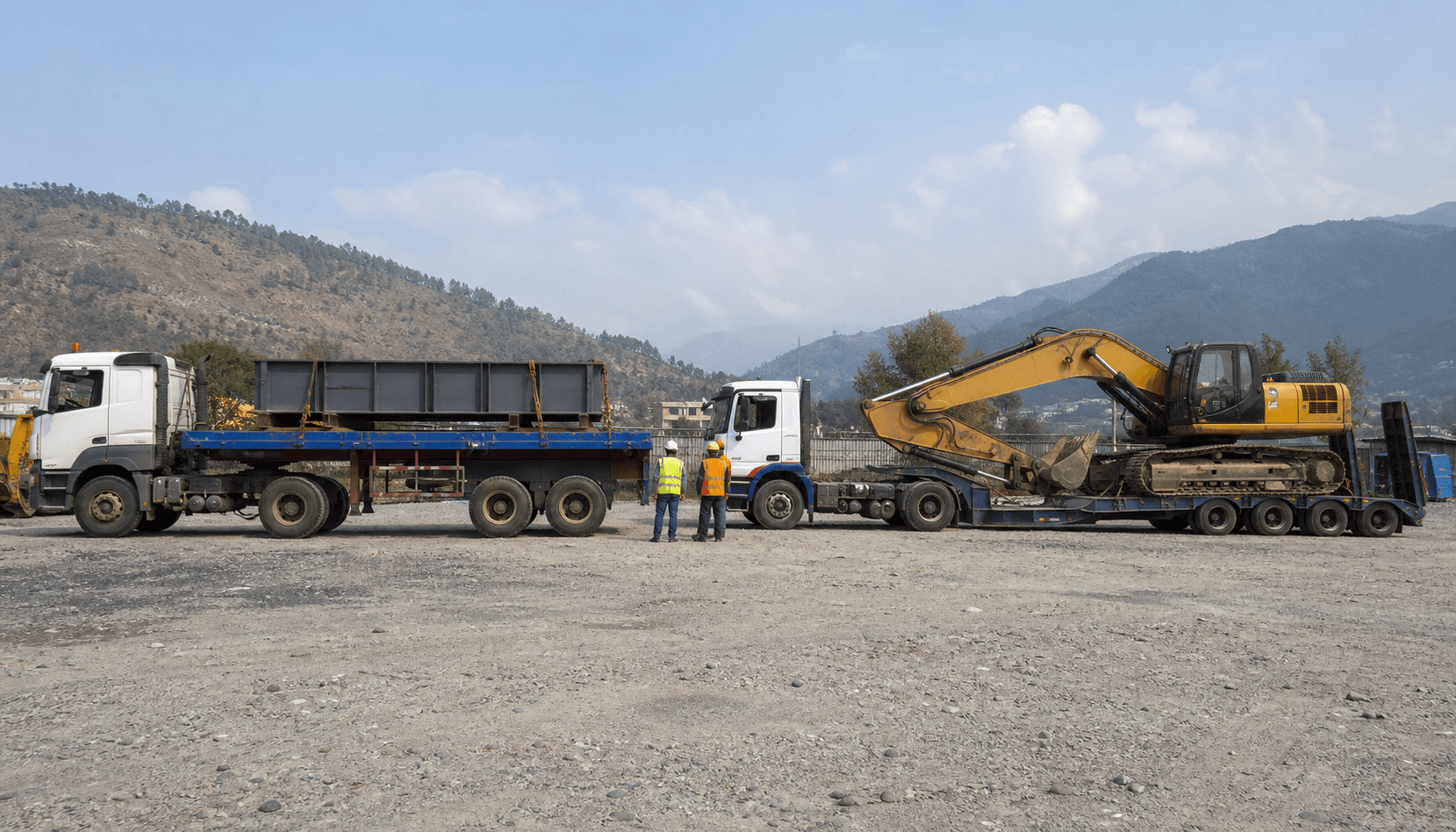
Cargo types, payload and weight distribution
A high bed can carry many business cargo types, but suitability depends on the complete load case. A compact 25-tonne machine, a 25-tonne steel frame and a 25-tonne container impose different point loads, centres of gravity and securing requirements. Payload is the usable cargo capacity after accounting for the actual tractor-trailer combination and legal operating conditions. It is not the same as the cargo's invoice weight, and it cannot be inferred from trailer length alone. Nepal's vehicle rules and Department of Roads design references address axle loading, but safe booking still requires the actual axle layout and load distribution. The movement must remain within the registered and permitted limits for the vehicle and route. A payload range shown on a service page is a starting point for matching equipment, never authorization to load that amount automatically.
| Cargo | Why a high bed may work | What to verify first |
|---|---|---|
| 20-foot or 40-foot container | Flat deck and compatible container-locking arrangement | Container gross weight, lock points, equipment approval and delivery access |
| Crated machinery | Open top and side access for crane loading | Packed dimensions, centre of gravity, base strength and lift points |
| Steel beams, pipes or structures | Long, open platform | Overhang, bundling, chocks, edge protection and load restraint |
| Generator or factory equipment | Stable deck for a self-contained heavy unit | Point loads, oil or fuel status, weather cover and unloading crane |
| Construction and project cargo | Flexible loading and equipment combinations | Abnormal dimensions, route survey, permits and site readiness |
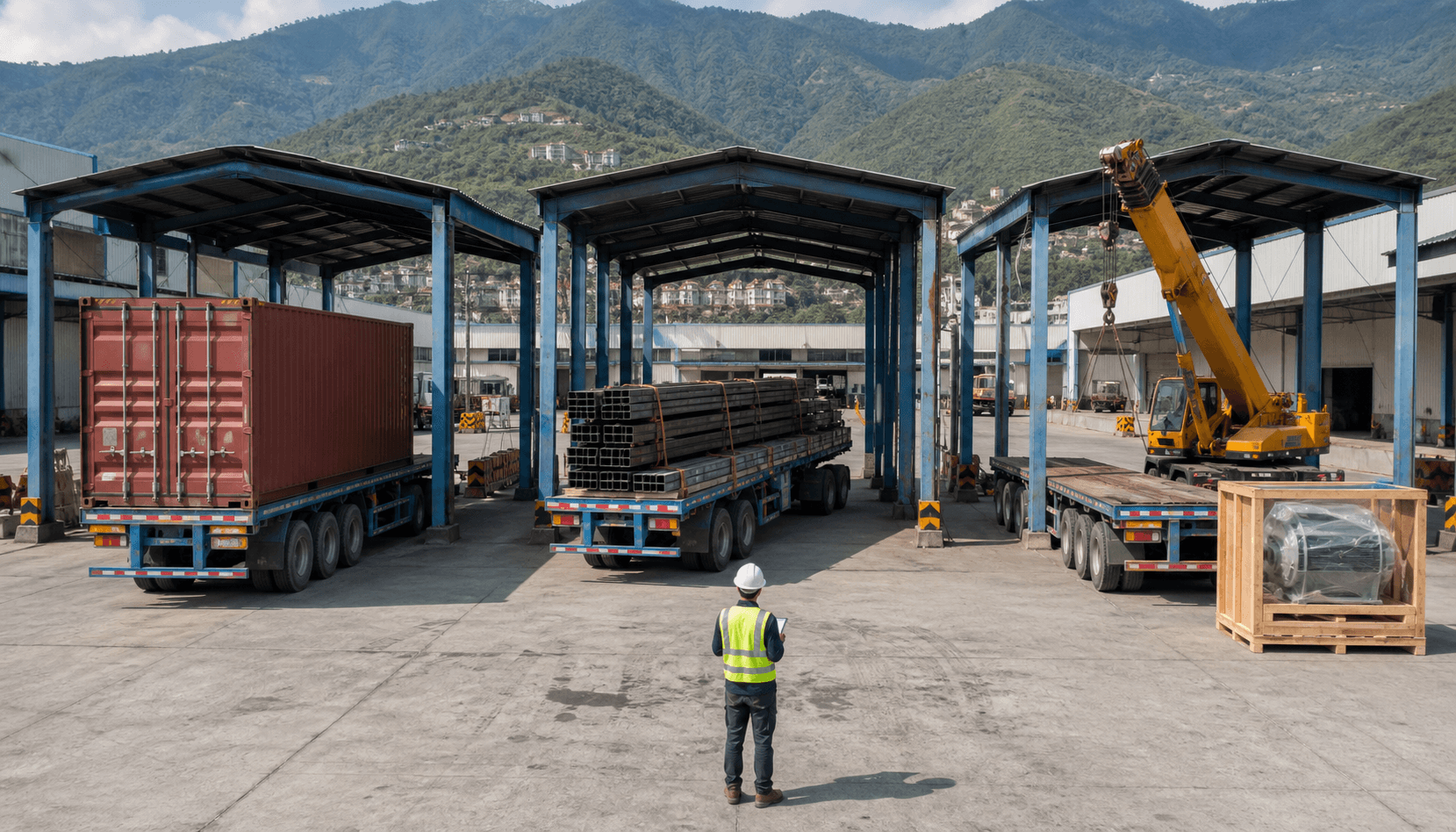
Route planning for high bed trailer cargo in Nepal
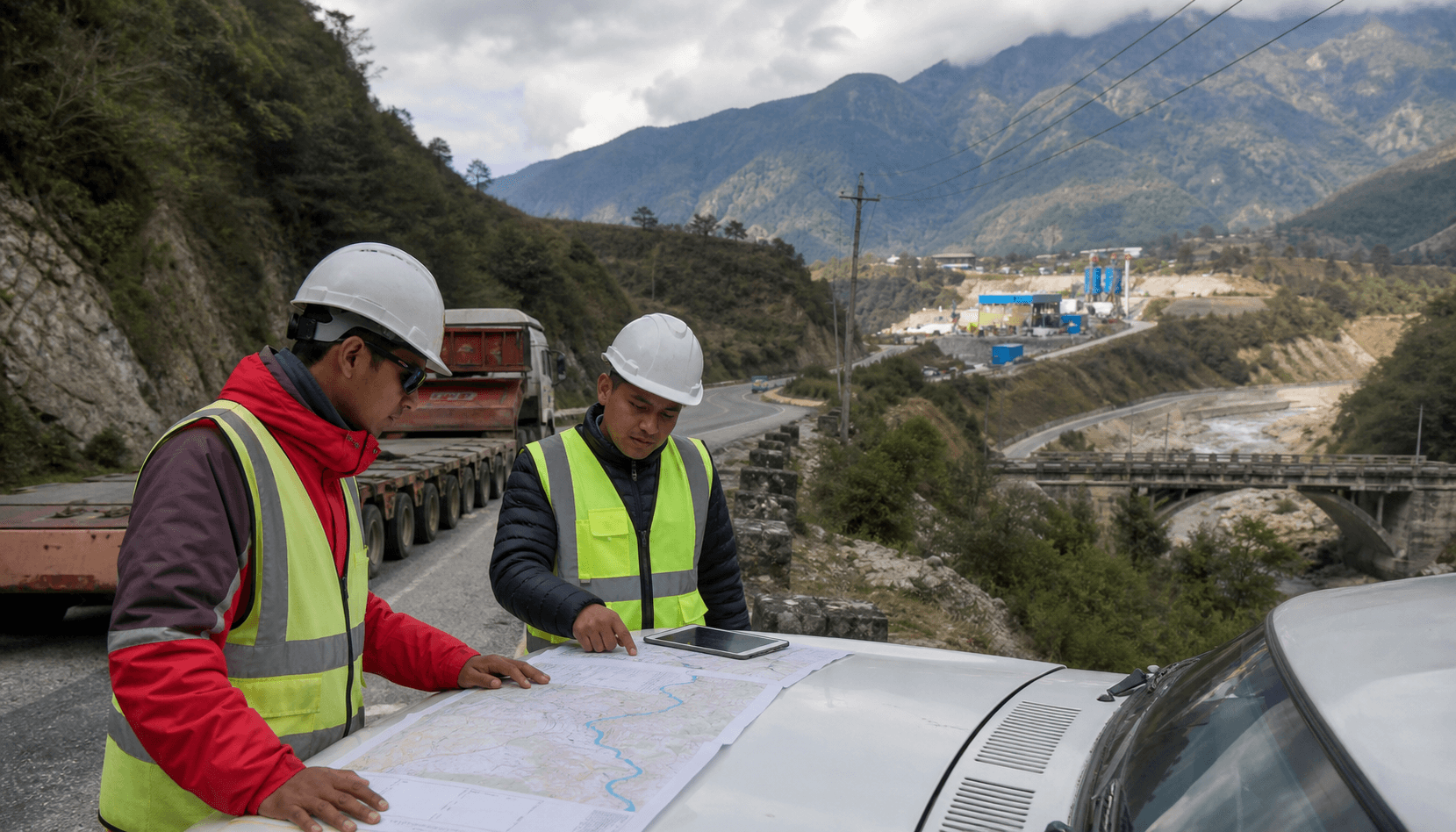
A route survey turns the cargo dimensions into a delivery plan. This matters on Nepal's mountain roads, urban approaches, border corridors and project-site access roads, where the theoretical road width may not represent the space available to a long articulated vehicle.
- Map the border, dry port, warehouse, factory or project-site route before dispatch
- Check bridge and overhead clearance against the measured loaded height
- Check lane width, sharp bends, roundabouts, gradients and turning radius
- Identify low wires, tree cover, toll structures, signs and temporary road works
- Confirm bridge or road load restrictions for the planned axle configuration
- Review traffic restrictions, movement windows and any escort or authority requirements
- Inspect the final gate, yard surface, reversing area and unloading position
- Prepare a contingency for closures, landslides, weather and unsuitable alternative roads
For an abnormal or unusually heavy load, the route may need an engineering review and approval from the relevant transport, road, local or utility authorities. Requirements can vary by province, road owner and cargo profile, so the responsible parties should be confirmed for the actual movement.
The same planning applies to cargo moving under Sea Sky's road freight service or through a connected port to door cargo service. The trailer should be matched to the entire route, not merely to the collection point.
Documents and customs clearance for imported heavy cargo
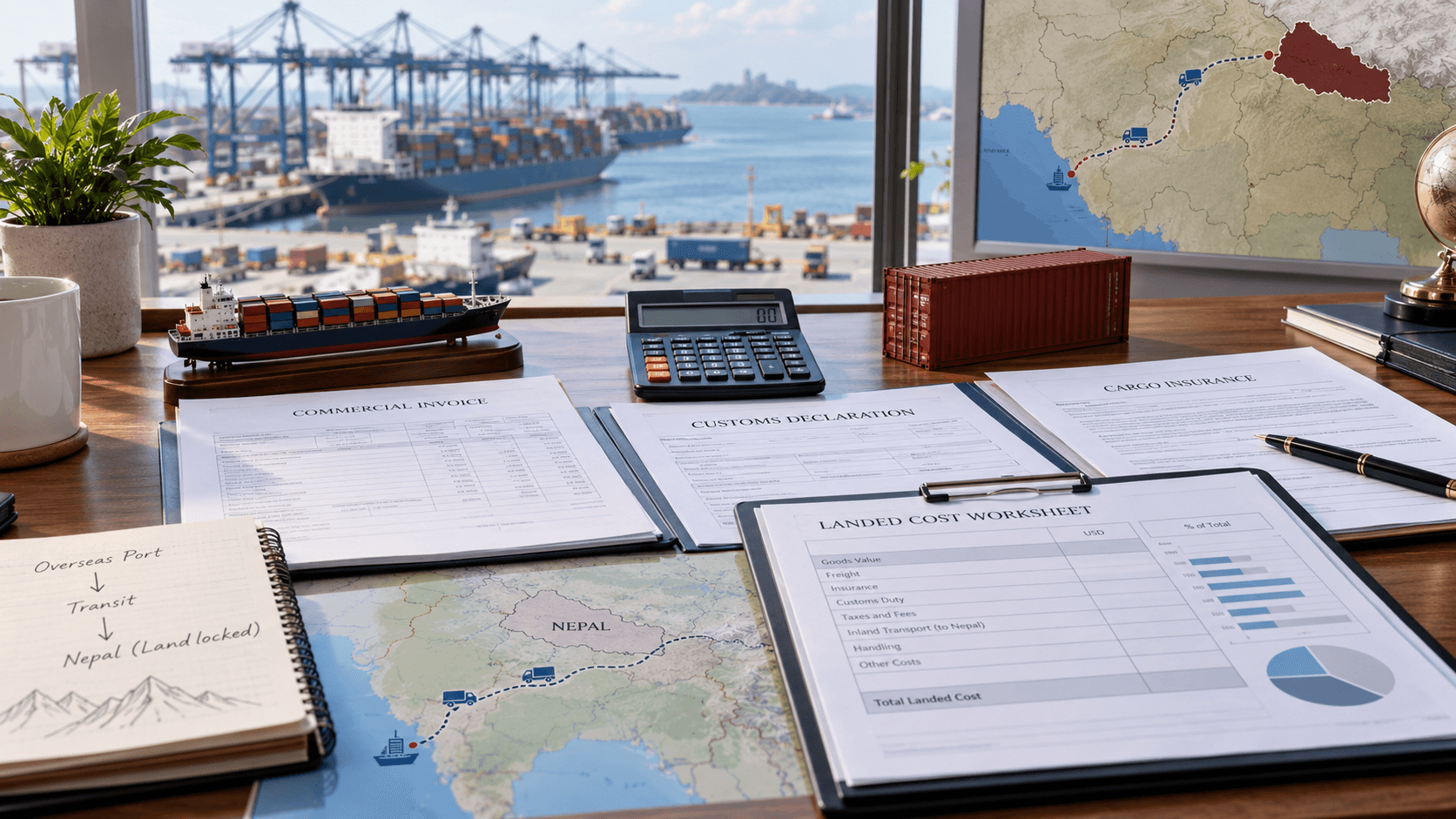
Imported machinery and project cargo often travel through an Indian seaport and transit corridor before reaching a Nepal border customs office or dry port. Customs release and trailer dispatch must be planned as one sequence so the correct equipment, driver and delivery slot are available when the cargo can legally move. A normal commercial file may include the commercial invoice, packing list, bill of lading or other transport document, certificate of origin, banking or foreign-exchange documents, importer's registration details, customs declaration and any product-specific permit or recommendation. Nepal Customs also allows an importer to appoint a licensed customs agent using the prescribed authority process. Customs valuation, inspection and release depend on the actual shipment. Avoid vague descriptions such as 'machine parts' when a model, material, function and serial number are available. Review the current tariff and permit position before dispatch through Sea Sky's customs clearance in Nepal. If the cargo is too large for standard container handling, coordinate the customs and inland plan with a breakbulk freight forwarder before the vessel booking.
| Heavy-cargo information | Customs purpose | Transport purpose |
|---|---|---|
| Precise product description and HS code | Supports classification, duty, VAT and permit review | Identifies handling or regulatory restrictions |
| Invoice and packing list | Supports value, quantity and package reconciliation | Confirms piece count, gross weight and marks |
| Technical catalogue and serial or model details | Helps explain specialised machinery | Supports weight, dimensions and handling planning |
| Packing drawing and centre-of-gravity data | Can support inspection identification | Drives trailer, lifting, support and lashing decisions |
| Permit or authority approval where applicable | Required for regulated goods | May affect release timing and route conditions |
| Delivery and unloading plan | Clarifies the released cargo's destination | Prevents the trailer waiting without safe access or lifting equipment |

Importing machinery or heavy cargo?
Sea Sky Cargo can help review your customs documents and trailer transport plan before delivery, including cargo dimensions, border release, route access and unloading requirements.
Loading, support and cargo lashing
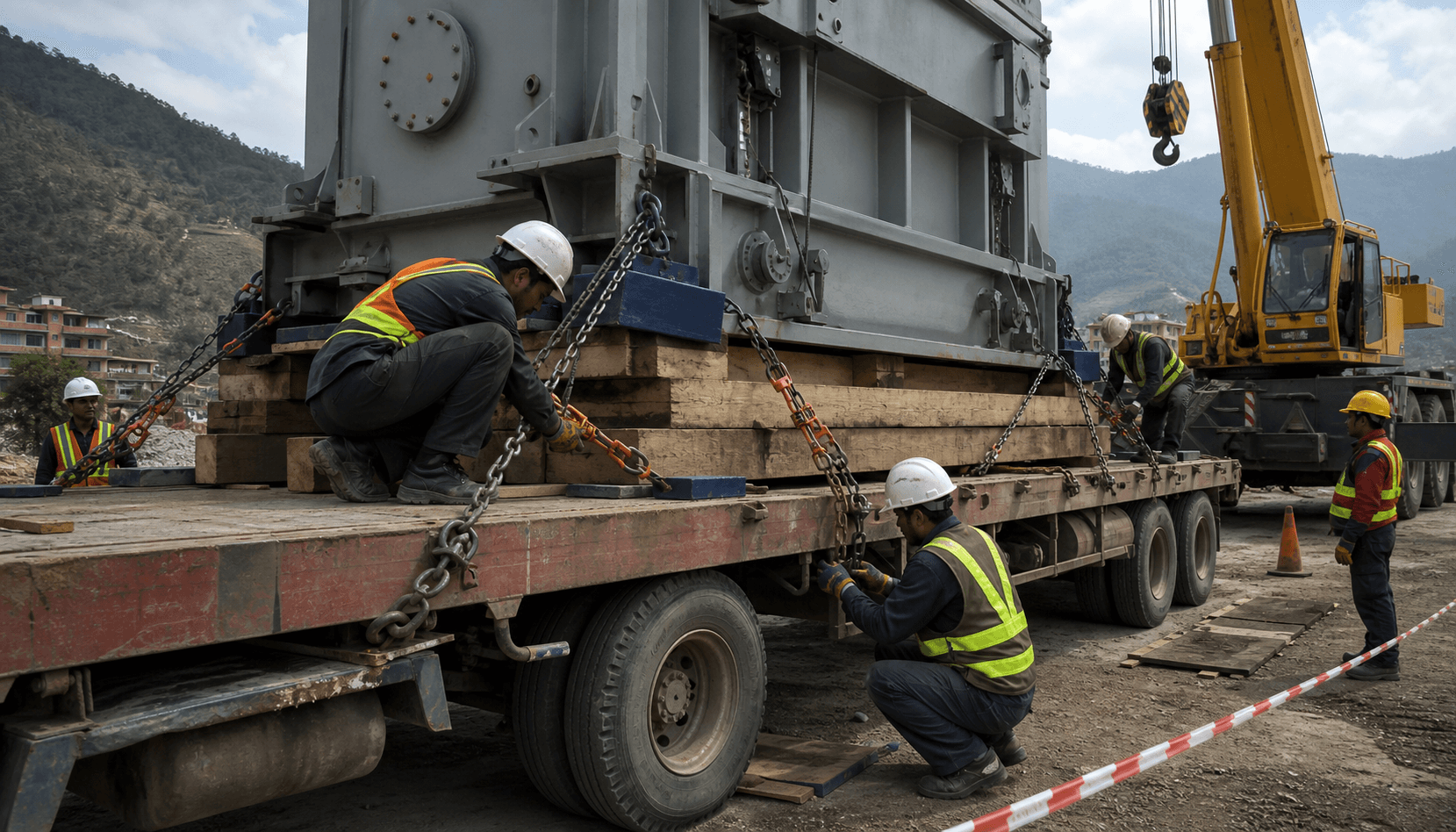
Heavy cargo must be supported and restrained for the forces expected during braking, cornering, climbing and uneven-road movement. Weight alone does not keep machinery in place. The securing method should be designed by competent personnel for the cargo, trailer and route.
- Confirm that crane, forklift or ramp capacity suits the heaviest lift and reach
- Use manufacturer-approved lifting points and protect vulnerable surfaces
- Position the centre of gravity to achieve the planned axle-load distribution
- Support concentrated loads with engineered dunnage, saddles or spreader arrangements
- Use rated chains, web lashings, binders and anchor points suitable for the load
- Add blocking, chocking and anti-slip material where the securing plan requires them
- Protect lashings from sharp edges and recheck tension after the initial movement
- Keep personnel clear of suspended loads and use a controlled exclusion area
The loading supervisor should record the final position, restraint arrangement and visible cargo condition. Photographs, equipment certificates and a signed handover can make damage prevention and later claims much clearer.
Weather cover must not create a new hazard. Tarpaulins and sheeting should be sized and secured for road movement without hiding essential warning marks, lights or abnormal-load controls.
Delivery-site access and unloading planning
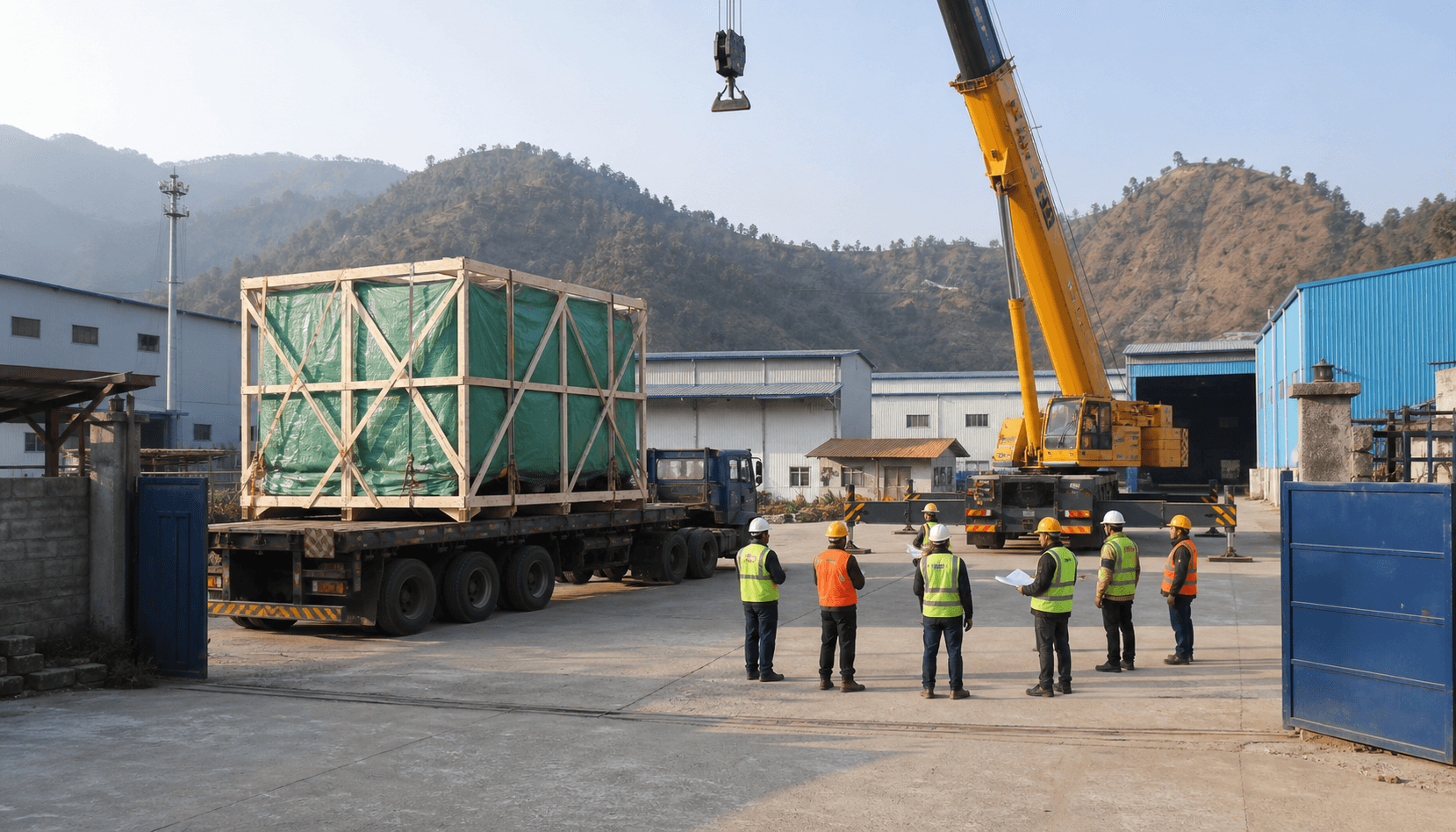
A trailer movement is not complete when the vehicle reaches the destination gate. Factories, hydropower sites and construction yards need enough space, ground strength and lifting capacity to receive the cargo safely. Confirm the gate width and height, approach angle, internal turning area, overhead services and final trailer position. Soft shoulders, uncompacted yards and steep ramps can prevent a loaded articulated vehicle from reaching the planned unloading point even when the public road is clear. Book unloading equipment against a realistic arrival window and define who pays waiting time if customs, traffic or site readiness causes delay. A low freight rate can disappear quickly when a trailer and crane wait for a gate to open.
| Site question | Decision needed before dispatch |
|---|---|
| Where will the trailer stop? | A level, stable and accessible unloading position |
| How will the cargo leave the deck? | Crane, forklift, gantry, skidding system or approved self-unloading method |
| Who controls the lift? | Named competent supervisor, operator and signal person |
| Can the equipment reach the load? | Verified crane radius, forklift capacity and access clearance |
| What happens after unloading? | Prepared foundation, storage area or installation handover |
Common high bed trailer booking mistakes
Most expensive trailer problems begin with incomplete information. The cargo is described by commodity and weight, while the dimensions, support points, centre of gravity or final-site conditions arrive after the truck is booked. Another common mistake is treating the shortest route as the best route. A longer road with better bridge capacity, wider bends and fewer overhead obstacles may be faster and safer for a high bed combination.
| Mistake | Likely result | Better action |
|---|---|---|
| Using catalogue dimensions instead of packed dimensions | Loaded height or width is greater than planned | Measure the finished transport package |
| Selecting by total weight only | Axle or deck point-load problem | Provide load drawing, centre of gravity and support positions |
| Choosing a high bed for very tall cargo | Route obstruction or last-minute trailer change | Compare semi-low and low-bed options early |
| Skipping the final kilometre survey | Trailer cannot enter the site | Inspect gates, bends, gradients and unloading position |
| Booking before customs and permits are ready | Truck, crane and labour wait at extra cost | Tie dispatch to a documented release plan |
| No unloading equipment confirmed | Unsafe improvisation or delivery refusal | Book rated equipment and responsible personnel in advance |
When should an importer use a high bed trailer?
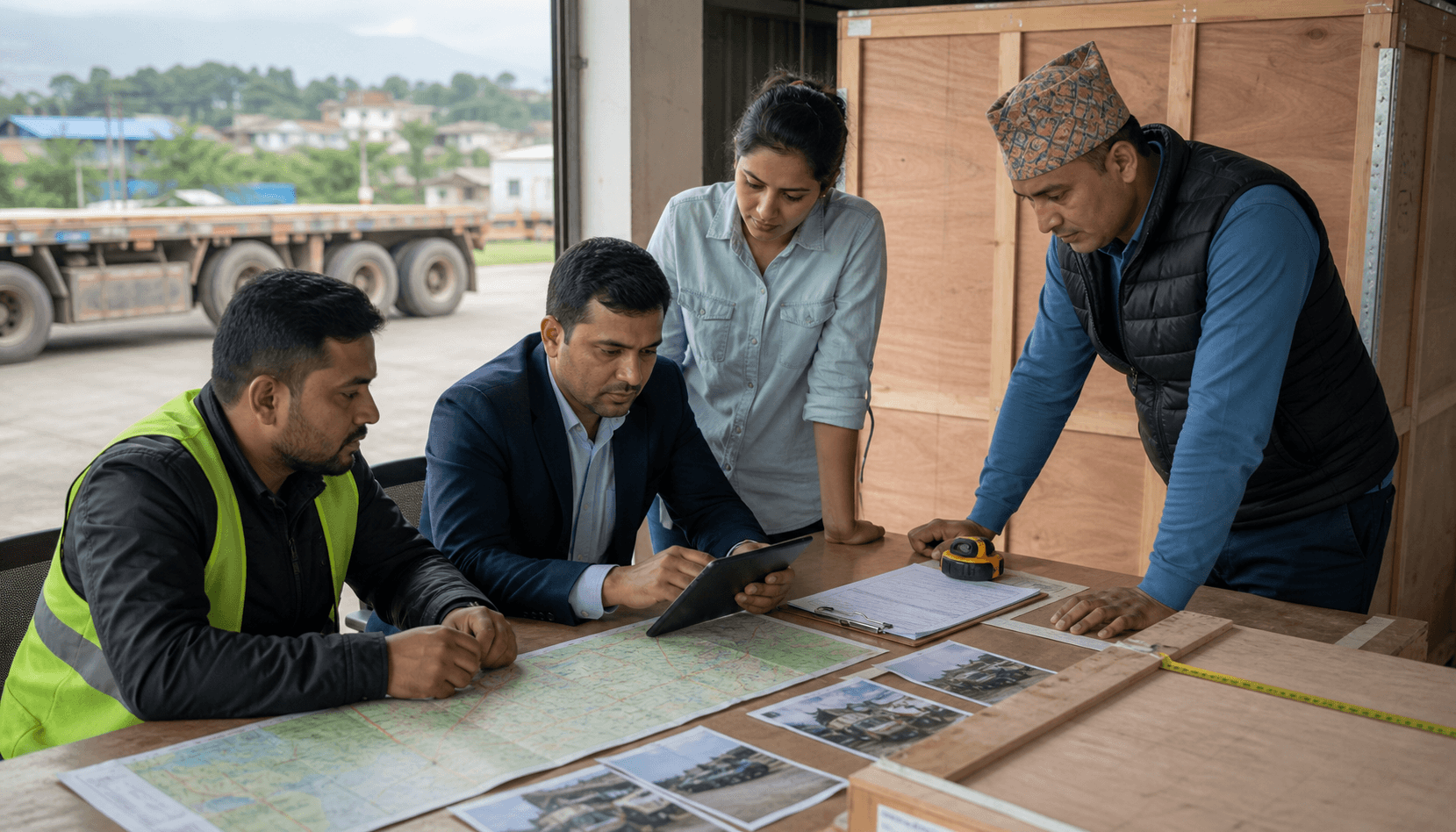
Use a high bed when the cargo needs an open, strong deck and the verified loaded combination fits the trailer, axle and route requirements. It is often a good starting point for containers, steel, crates and moderate-height industrial equipment. For abnormal cargo, do not choose from a website table alone. Send the transport drawing, packed weight and dimensions, origin, destination, cargo-ready date and unloading method so the forwarder can match an available unit and check the route.
| Pre-booking question | High bed may suit | Compare another solution |
|---|---|---|
| Is the cargo within the actual trailer payload and load-distribution plan? | Yes, with verified axle loads and support points | No or unknown: obtain engineering and equipment review |
| Does the total loaded height clear the surveyed route? | Yes, with a documented margin | No or close: compare semi-low, low bed or cargo reconfiguration |
| Can the cargo be lifted and secured on a flat deck? | Yes, with rated lifting and restraint points | No: use purpose-built support, enclosed equipment or another trailer type |
| Can the destination receive the articulated vehicle? | Yes, with prepared access and unloading | No: plan transloading or different final-mile equipment |
| Is the cargo containerised? | Potentially, with compatible locks and equipment approval | If not compatible: use a suitable skeletal container trailer |
How Sea Sky Cargo supports heavy trailer movements
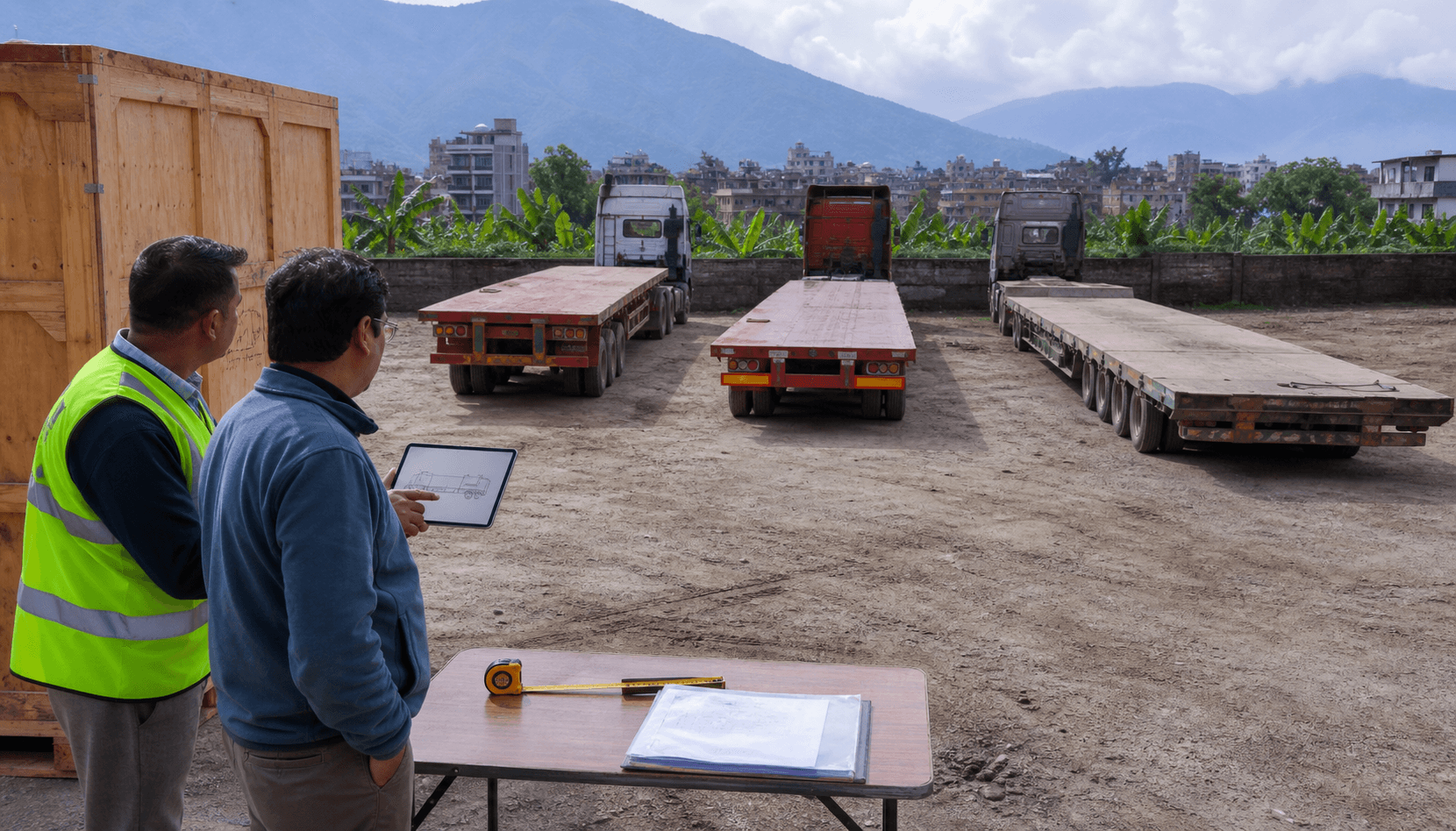
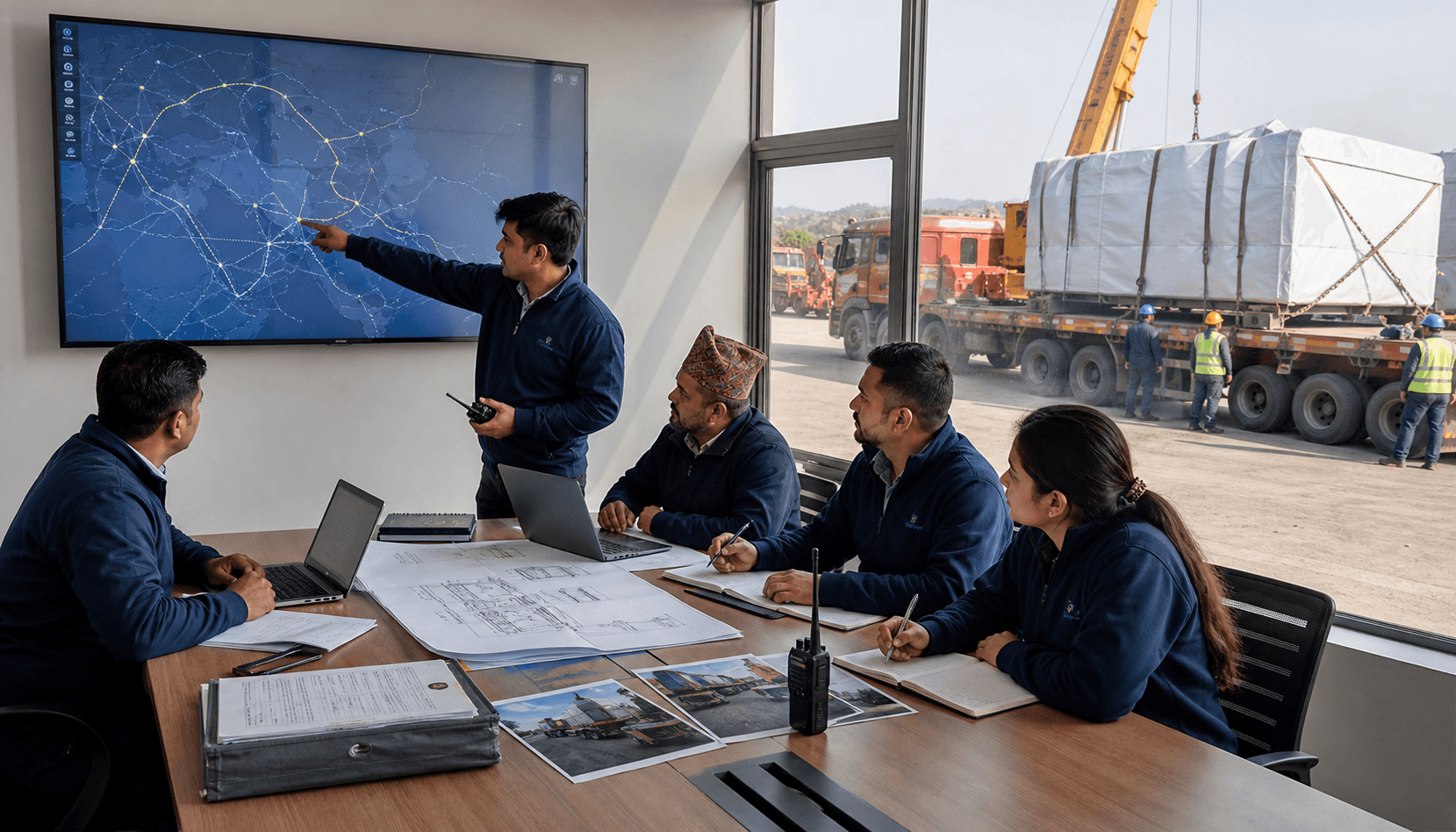
Sea Sky Cargo can coordinate the freight stages around the trailer rather than treating road transport as an isolated booking. The scope can include Nepal and Indian port coordination, customs-document review, equipment matching, route planning, loading oversight and final delivery arrangements.
- Review packed weight, dimensions, centre of gravity and lifting information
- Compare high bed, semi-low bed, low bed and project-cargo options
- Check equipment availability and the actual trailer specification
- Coordinate customs and transit milestones before truck dispatch
- Arrange route and destination-access checks where required
- Align cranes, forklifts, lashing teams and unloading appointments
- Define partner, carrier and customer responsibilities in the quote
- Coordinate delivery updates and proof of handover
The earlier this review begins, the more choices the importer keeps. Share the cargo information before the supplier finalises packing or the vessel booking. A small change to the crate, lifting frame or delivery sequence can prevent a much larger road-transport problem later.
Frequently asked questions
What is a high bed trailer used for? It is used for cargo that needs an open, strong flat deck, including selected containers, machinery, steel products, construction materials, large crates and industrial project cargo.
What is the high bed trailer height from ground? It varies by trailer design, tires, suspension and loading condition. Sea Sky's equipment reference shows an indicative height around 5 feet, but the actual trailer must be measured and combined with the packed cargo and support height before route approval.
What is the difference between a high bed and low bed trailer? A high bed has a higher flat platform and often suits containers and moderate-height industrial cargo. A low bed places the deck closer to the road to reduce total height for tall machinery or oversized equipment.
Can a high bed trailer carry machinery? Yes, when the actual trailer capacity, point loads, packed dimensions, centre of gravity, route clearance, securing plan and unloading method are all suitable.
Can a high bed carry a 20-foot or 40-foot container? Potentially, but the selected equipment must have the appropriate locking arrangement and capacity. Confirm container gross weight, trailer specification, route and site access before booking.
Does heavy cargo need a route permit in Nepal? Oversized, overweight or otherwise abnormal movements may require review or approval from the relevant transport, road, local or utility authorities. The requirement depends on the vehicle, dimensions, weight and route, so confirm it for the actual movement.
What information is needed for a heavy-cargo quote? Provide the origin and destination, packed length, width, height and weight, package count, cargo description, centre of gravity, lifting points, cargo-ready date, customs status and unloading method.
Does Sea Sky Cargo help with customs and trailer delivery? Yes. Sea Sky can coordinate document review, customs support, trailer selection, route planning and final delivery according to the agreed shipment scope.
Plan the trailer before the cargo moves
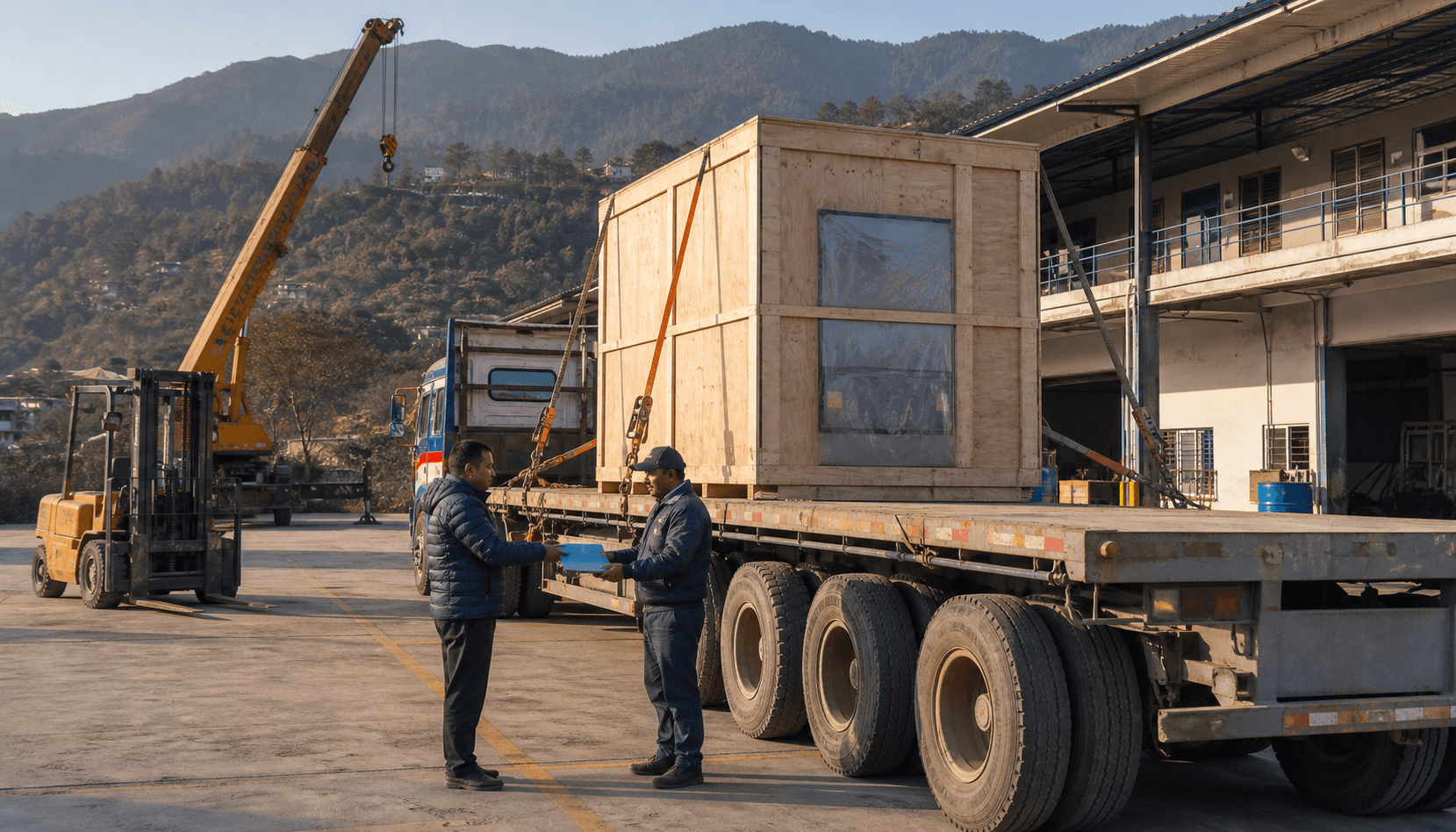
Moving heavy machinery, containers or project cargo? Sea Sky Cargo can help check trailer type, route, customs documents and delivery plan before booking.