
1. Read the Scope Before the Price
A freight quote for Nepal is a proposal for moving a specified shipment between agreed points. Its value depends on the service covered, the cargo assumptions and the terms attached to the price. A low total is useful only when you know what you will receive for it.
Start at the top of the quotation. Check the pickup address, origin gateway, destination gateway and final delivery point. Guangzhou airport to Kathmandu airport is a different scope from collection at a Guangzhou factory through delivery to a warehouse in Lalitpur.
- Quote reference, issue date, validity and currency
- Product description, package count, packed dimensions and weight
- Route, transport mode, connections and service level
- Pickup and delivery points, including the unloading scope
- Purchase Incoterm, named place and version where relevant
- Payment terms, assumptions, exclusions and potential extra charges
A quotation is not necessarily a confirmed booking or a final invoice. Check how acceptance works, when space is confirmed, and what can change after the cargo is measured or the booking is placed. A spot rate, an estimate and a fixed-scope offer may have different conditions.
This guide uses an illustrative air shipment from a Guangzhou factory to a Kathmandu warehouse. The figures explain the structure of a quote; they are not current market rates, a Sea Sky Cargo offer or evidence of available capacity.

2. Origin Charges: Pickup, Export Handling and Documents
Origin charges cover the agreed work before the main international movement. Ask which costs the supplier already pays under the sale contract and which costs the forwarder is quoting. Otherwise, pickup or export handling can be omitted or counted twice. These are service-charge examples. A customs brokerage fee pays for an agreed service; it is not an import tax. An export permit, inspection or special approval may be a separate requirement and should not be assumed included in the filing fee. For an air shipment, describe cargo-terminal or warehouse handling accurately. CFS means Container Freight Station and is usually associated with containerized sea-freight consolidation or deconsolidation. If an air quote uses CFS as a label, ask which actual service it refers to. Likewise, a documentation fee should name the work being charged: an air waybill, booking documents or another specific task. The supplier normally provides the commercial invoice and packing list; do not assume the forwarder creates or validates every commercial document simply because a documentation line appears. Check collection limits, loading responsibility, waiting allowance and whether the price changes if the supplier address or cargo-ready date changes. The freight-forwarding documents guide helps identify the documents needed for the wider movement.
| Illustrative Origin Item | Amount (USD) |
|---|---|
| Factory Pickup to Origin Cargo Facility | 150 |
| Export Customs Brokerage or Filing Service | 100 |
| Origin Warehouse or Cargo Handling | 80 |
| Transport Documentation | 50 |
| Origin Subtotal | 380 |

3. Main Freight: Check the Rate and Chargeable Quantity
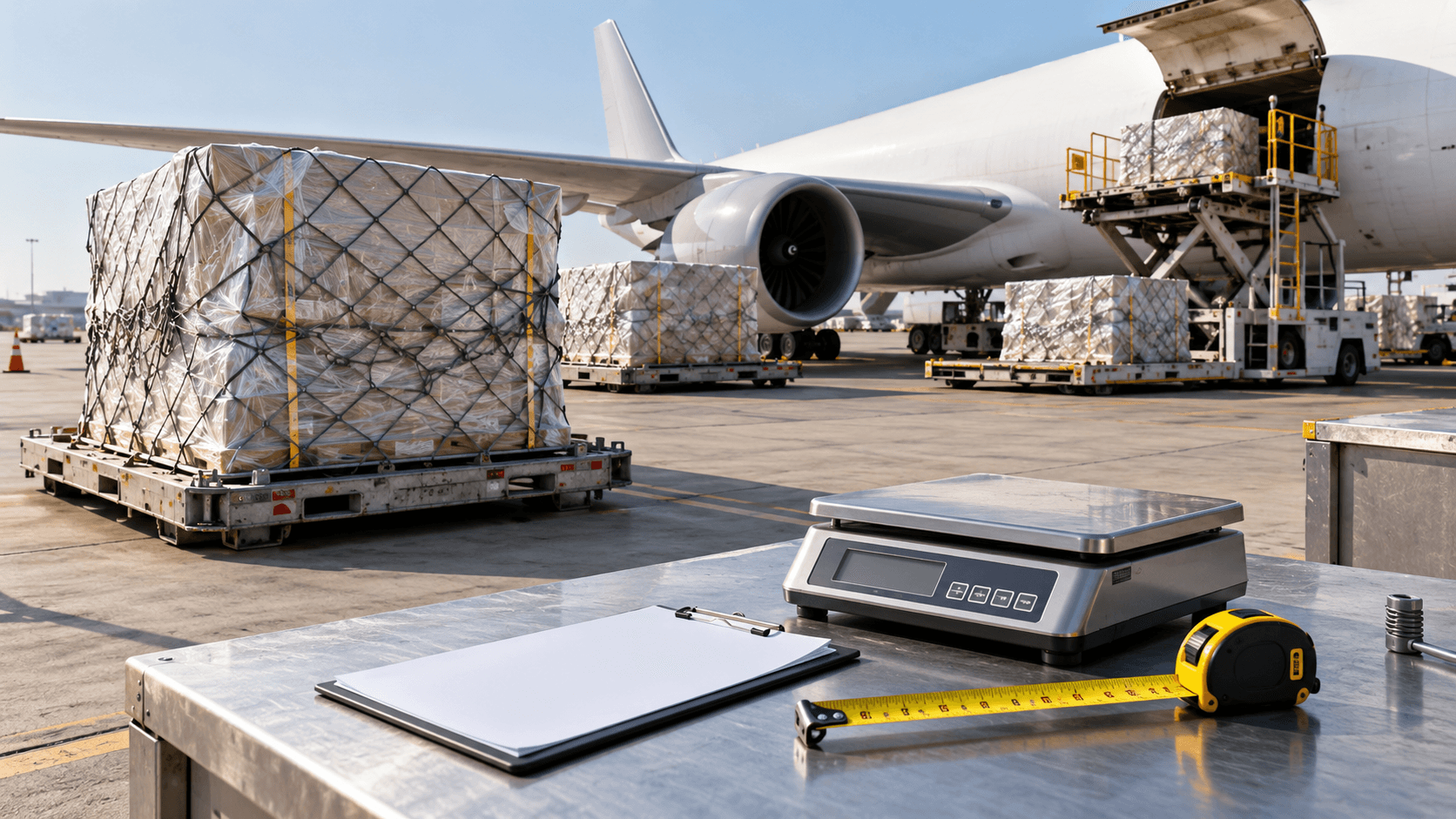
The main freight line should state both the rate and the quantity to which it applies. Depending on the mode, that may be chargeable kilograms, a container, a truck, a trip or an agreed weight-or-volume unit. The lowest unit rate does not always produce the lowest bill. For air cargo, ask how chargeable weight is determined. IATA explains the role of actual and volumetric weight. Confirm the divisor, rounding, minimum charge and any special rules in the booked service rather than applying one formula to every carrier or express shipment. Illustrative Air-Weight Calculation Assume packed gross weight is 400 kg and total packed volume is 3 cubic metres. If the quoted service uses 6,000 cubic centimetres per kg, the volumetric weight is 3,000,000 ÷ 6,000 = 500 kg. For this example, the quoted chargeable weight is therefore 500 kg. Confirm whether fuel and security are already included in the base rate. Do not add them twice. Also check whether each surcharge uses the same weight basis and whether a minimum applies. Final remeasurement can change the bill if the packed cargo differs from the information used for the quote. For LCL sea freight, ask for the W/M conversion, minimum revenue units and rounding. For FCL, confirm container type, weight limits and the quoted route. For road freight, establish whether the price is per vehicle, trip, tonne or another unit. See the air freight guide and freight consolidation guide for related planning.
| Illustrative Air Item | Calculation | Amount (USD) |
|---|---|---|
| Base Air Freight | 500 kg × USD 3.50 | 1,750 |
| Fuel Surcharge | 500 kg × USD 0.50 | 250 |
| Security Charge | 500 kg × USD 0.20 | 100 |
| Main-Freight Subtotal | Base Plus Listed Extras | 2,100 |
4. Destination Charges: Separate Services from Import Taxes
Destination charges can include cargo handling, release documentation, customs representation and delivery. Ask who invoices each item and whether the quote covers only the airport or ICD, or continues to the final receiving point. The USD 150 brokerage fee in this example does not pay customs duty, import VAT or another government levy. Those amounts require a separate assessment. Request an itemized explanation if a quotation uses a broad label such as customs charges. THC may appear as a shorthand for terminal handling. Confirm the actual terminal or operator, service, unit, tariff basis and included handling steps. Air cargo, seaport and ICD charges should not be treated as identical merely because the abbreviation looks familiar. Check free storage, when it starts, and the rate after it expires. Airport storage, container demurrage, detention and truck waiting are different charges. Confirm each applicable clock and responsibility; the demurrage and detention guide explains the distinction. For warehouse delivery, establish the handover point, access conditions, unloading responsibility and waiting allowance. A quoted truck movement may not include a forklift, crane or carrying goods upstairs. Use the last-mile delivery checklist before accepting the final-leg scope.
| Illustrative Nepal Item | Amount (USD) |
|---|---|
| Import Customs Brokerage Service | 150 |
| Airport Cargo Handling | 120 |
| Destination Documentation | 50 |
| TIA-to-Warehouse Delivery | 200 |
| Destination Subtotal | 520 |

5. Surcharges, Insurance and Conditional Fees
A surcharge should explain what it covers, when it applies, how it is calculated and whether it is already included elsewhere. Common labels include fuel, security, peak-season, congestion, currency adjustment and dangerous-goods handling. Their use depends on the provider, mode and booking. Separate fixed included charges from conditional charges and amounts subject to a third-party tariff. A quote-validity date does not necessarily freeze every component. As an example of why the wording matters, Maersk’s rate-sheet guidance distinguishes inclusive charges from other surcharges; use the actual terms attached to your own provider’s quotation. The worked example assumes an optional cargo-insurance premium of USD 100 has been selected and included. It does not assume a universal 1% premium. Obtain the actual insurance terms and pricing for the goods and route. Cargo insurance and a carrier’s liability terms are different. Ask what evidence is needed for a claim and whether delay, consequential loss or particular causes of damage are excluded. A cargo booking should not be described as fully insured unless the relevant coverage has actually been arranged.
| Item | What to Confirm |
|---|---|
| Fuel or Security | Included or additional; rate, basis and minimum |
| Peak Season or Congestion | Applicable route, trigger and period |
| Currency Adjustment | Currency, conversion rule and adjustment terms |
| Dangerous Goods | Product acceptance and specific handling or documentation scope |
| Insurance | Insured value, premium, cover, deductible and exclusions |
| Waiting, Examination or Rehandling | Trigger, allowance, charging unit and approval process |

6. Exclusions: Find the Costs Outside the Total
Exclusions do not disappear because the quote has a total at the bottom. List each excluded cost, who pays it and how it will be confirmed. An amount marked at actuals is still a potential cost even though it has no fixed figure yet.
- Customs duty, import VAT, excise and other applicable product-specific levies
- Product permits, testing, inspections or regulatory approvals
- Storage, demurrage, detention and waiting beyond agreed allowances
- Unloading, specialist equipment or extra handling outside the scope
- Bank charges, payment fees and agreed currency-conversion costs
- Applicable service taxes or other charges not included in the stated rates
Import taxes cannot be calculated from the freight total alone. The goods, HS classification, customs valuation, current tariff, exemptions and any other applicable levies matter. The import-VAT base can include customs duty and other relevant taxes or charges; it should not be reduced to a universal CIF-plus-duty shortcut for every product.
Ask the customs representative to prepare the product-specific calculation using current official rules, including the IRD VAT legislation. Keep the estimated government assessment separate from the brokerage-service charge and any tax on logistics services.
For this article’s worked example, import taxes and other excluded amounts remain unpriced until confirmed. This avoids assigning a guessed tariff rate to unspecified goods. The Nepal tariff guide and landed-cost worksheet explain the information needed for the next calculation.

Check the Complete Quote Before Booking
Share the route, packed cargo details and delivery scope. Sea Sky Cargo can review the charges and information needed for a quotation.
7. Reconcile the Quote Total and the Landed Cost
Now add the included logistics charges once. In this example, fuel and security are already inside the main-freight subtotal. The selected insurance premium is a separate included line. The USD 3,100 total is not the complete landed cost of the goods. If the separately payable purchase price is USD 5,000 and none of these logistics charges is already included in that purchase price, the subtotal becomes USD 8,100 before unpriced import taxes and other exclusions.
| Included Logistics Component | Amount (USD) |
|---|---|
| Origin Charges | 380 |
| Main Air Freight, Fuel and Security | 2,100 |
| Destination Services and Delivery | 520 |
| Selected Cargo Insurance | 100 |
| Total Included Logistics | 3,100 |
All amounts are illustrative, shown in USD for comparison. They are not a current Sea Sky Cargo quote, an official customs assessment or a statement that Nepal charges are invoiced in USD. Confirm actual invoice currencies, conversion dates and exchange rates. Applicable service taxes are not priced in this example. If the supplier price already includes freight or insurance under the sale terms, reconcile those inclusions before adding the forwarder’s lines. Otherwise, the same movement can appear twice. A useful landed-cost model also identifies the endpoint and the number of saleable units used for a per-unit cost.

8. Understand Abbreviations and Incoterms
Abbreviations are useful shorthand, but the provider should explain the exact service and calculation. A familiar label is not proof that two quotations contain the same work. Incoterms govern agreed seller and buyer obligations in the sale contract; they do not replace the forwarder’s written scope. Include the named place or port and the version, for example Incoterms® 2020. The ICC introduction distinguishes multimodal rules from sea-and-inland-waterway rules.
| Term | Meaning and Reading Check |
|---|---|
| AWB | Air Waybill: air transport document; check the quoted documentation scope |
| B/L | Bill of Lading: sea transport document; check issue and release arrangements |
| CFS | Container Freight Station: confirm consolidation or deconsolidation work |
| THC | Terminal Handling Charge: identify the terminal and service |
| FSC / FAF | Fuel Surcharge or Fuel Adjustment Factor: confirm inclusion and basis |
| PSS | Peak Season Surcharge: confirm applicability |
| CAF | Currency Adjustment Factor: confirm calculation and currency |
| DG | Dangerous Goods: acceptance and special requirements must be confirmed |
| CBM | Cubic Metre: packed volume used for relevant rating |
| W/M | Weight or Measurement: confirm conversion, minimum and rounding |
| LCL / FCL | Shared-container or full-container service; check equipment and scope |

9. Compare Two Quotes on the Same Basis
Send both providers the same cargo details, addresses, ready date and service requirement. Then build one comparison sheet showing the included price, excluded costs and unresolved assumptions for each offer. Match weight, route, delivery endpoint, insurance and handling scope before comparing totals. Example: The Lower Headline Price Costs More Assume Quote A is USD 2,850 but excludes three required Nepal charges. Quote B is USD 3,100 and includes those three charges. For this hypothetical comparison, all remaining service scope, quantity, insurance and exclusion assumptions are the same. Quote A looks USD 250 cheaper initially but becomes USD 220 more expensive for the matched scope. This is an arithmetic example, not a comparison of actual providers. Goods purchase cost and unpriced import taxes remain outside both logistics totals. Price is only one decision. Compare the estimated end-to-end time, route and connections, cargo acceptance, space-confirmation process, free time, update arrangements, payment terms and exception handling. A faster airport-to-airport estimate may still lead to a later warehouse delivery. For different currencies, use a stated comparison exchange rate and date, then check each provider’s actual billing rule. Ask who approves a charge when measurement, examination, waiting or routing changes. Record unresolved items rather than treating a blank cell as zero.
| Comparison Item | Quote A (USD) | Quote B (USD) |
|---|---|---|
| Headline Logistics Total | 2,850 | 3,100 |
| Import Brokerage Missing from Headline | 150 | Included |
| Airport Cargo Handling Missing from Headline | 120 | Included |
| Warehouse Delivery Missing from Headline | 200 | Included |
| Comparable Logistics Total | 3,320 | 3,100 |

10. Clarify Vague Charges Before Accepting
An all-in price can be useful when its scope is precise. Ask what it is all-in for: which pickup and delivery points, cargo quantity, handling steps, taxes and booking assumptions? The issue is whether the total can be reconciled, not whether the provider uses one line or several.
- A low unit rate without the chargeable quantity or minimum
- Destination charges marked collect or at actuals without a basis
- The same surcharge appearing in both an inclusive rate and an extra line
- No distinction between brokerage services and government taxes
- A delivery promise without a defined endpoint or release assumptions
- Unclear validity, currency conversion, cancellation or amendment terms
- Insurance described vaguely without terms or evidence of arranged cover
Check what must happen before expiry: quote acceptance, booking, pickup, flight departure or another event. The trigger can differ between offers. Also establish whether a price remains subject to space, commodity acceptance or final measurement.
Before accepting, request a revised written quote that resolves the open points. Keep the accepted version and any later approvals with the shipment file. When the invoice arrives, reconcile it against that version and the actual events rather than the first informal price message.

11. Request a Clear, Itemized Quote from Sea Sky Cargo
Sea Sky Cargo can review the shipment and prepare a quotation for the agreed air, sea or road movement. A useful request gives the team enough detail to identify the transport, document and final-delivery requirements rather than price an undefined shipment.
- Pickup and delivery addresses, with the exact receiving point
- Goods description, HS code if known, value and any special characteristics
- Package count, packed dimensions, gross weight and stackability
- Cargo-ready date, delivery deadline and preferred service level
- Supplier Incoterm, named place and included supplier-paid charges
- Battery, liquid, dangerous-goods, temperature or oversized-cargo details
- Customs-document readiness, unloading needs and insurance request
Ask the returned quotation to identify origin, main freight, destination and selected additional services, together with currencies, chargeable quantities, validity and exclusions. Confirm estimated milestones, the shipment contact and the process for authorizing extra work.
The worked figures in this article illustrate how to read a quotation; they are not an issued Sea Sky Cargo offer. The actual quote should reflect the cargo, route and booking conditions reviewed by the team.
Need a clear, itemized freight quote for your next shipment? Sea Sky Cargo can prepare a quotation for suitable air, sea or road freight from China, India, Europe or the Gulf to Nepal. Request your freight quote. For the wider process, see the freight forwarding in Nepal guide.

12. Frequently Asked Questions
What should a freight quote for Nepal include? It should define the cargo, route, pickup and delivery scope, chargeable quantity, price components, currencies, validity, assumptions, exclusions and payment terms.
Does a customs-clearance fee include import duty and VAT? Not necessarily. A brokerage or filing fee is a service charge. Ask for government import taxes and any applicable tax on services to be identified separately.
Why is chargeable air weight higher than the scale weight? Bulky cargo can be rated on volumetric weight. Confirm the divisor, rounding, minimum and chargeable quantity used by the quoted carrier or service.
Is an all-in freight quote always door-to-door? No. All-in must be read against a defined scope. It may apply only between gateways or exclude taxes, unloading and other costs.
Is the freight quote the same as landed cost? No. Landed cost also includes the goods purchase price and applicable taxes or other costs to the chosen endpoint, with no double counting of supplier-paid freight or insurance.
Can a quote change before the shipment moves? It depends on validity, booking terms, measurement, commodity acceptance, tariffs and other stated conditions. Confirm which components are fixed and what event locks the price.
How can I compare two freight quotes fairly? Match the cargo, route, service level and endpoint, add required excluded costs, align currencies and quantities, then compare timing, handling, liability and exception terms.
Does DDP always include unloading? No. Under Incoterms 2020 DDP, unloading is normally the buyer’s responsibility. Confirm the named destination, importer arrangements and any separately agreed handling.

Need a Clear, Itemized Freight Quote?
Request a shipment-specific quotation with the agreed scope, charges, assumptions and exclusions for your Nepal cargo.
Related posts
1970-01-01
Sea + Air Freight: How SeaSky Helps Businesses Ship Smarter

2026-10-26
Cargo for Tihar: How to Import Festival Stock to Nepal on Time

2026-10-15
Last-Mile Delivery in Nepal: How Businesses Can Reduce Delays and Delivery Costs

2026-10-13