What Incoterms actually decide
Incoterms are standard trade rules published by the International Chamber of Commerce. They divide specified delivery tasks, transport costs and cargo risk between the seller and buyer. They do not set the product price, payment method, ownership transfer, customs duty rate or every term of the sales contract.
The current edition is Incoterms 2020. A contract should name the exact place or port and the edition, such as FOB Shanghai Port, Incoterms 2020 or CIF Kolkata Port, Incoterms 2020. Writing only "FOB China" or "CIF India" leaves too much room for disagreement.
- Where the seller delivers the goods under the agreed rule
- Which party contracts and pays for the main carriage
- The point where loss or damage risk transfers to the buyer
- Whether the seller must arrange cargo insurance
- Which export, transit and import formalities belong to each party
The ICC Incoterms overview should be the starting point for the rule itself. Nepal Customs law, tariff rules, import permits and transit procedures still apply separately, no matter which Incoterm appears on the invoice.

FOB: what the seller and Nepal importer each handle
FOB means Free on Board. It is a sea or inland-waterway rule. The seller delivers when the goods are loaded on board the buyer-nominated vessel at the named origin port. Risk transfers to the buyer at that onboard point, not when the vessel reaches the destination. The seller normally handles export clearance, origin delivery and the cost of loading the goods on the vessel. The buyer contracts the ocean freight, chooses whether and how to insure the cargo, and handles costs and responsibilities after the onboard delivery point. FOB gives an experienced importer control over the carrier, sailing, freight rate and destination partner. That control is useful when the same forwarder is coordinating sea freight to Nepal and the connected inland route. It also means the importer must make a timely booking and give the supplier clear loading instructions.
| FOB stage | Seller normally handles | Buyer normally handles |
|---|---|---|
| Before loading | Goods, export packing, export clearance and delivery to the named shipment port | Vessel nomination and booking instructions |
| On board at origin | Loads and delivers the cargo on the nominated vessel | Risk transfers when delivery is completed on board |
| Main carriage | Provides agreed shipping documents | Ocean freight and optional cargo insurance |
| After arrival | No automatic Nepal-side obligation | Port, transit, inland transport, import clearance, taxes and final delivery |

CIF: freight is paid to port but risk transfers at origin
CIF means Cost, Insurance and Freight. It is also limited to sea or inland-waterway transport. The seller contracts and pays the freight to the named destination port and arranges the required cargo insurance. However, risk still transfers to the buyer when the goods are loaded on board at the origin port.
This split between cost destination and risk origin is the most commonly misunderstood part of CIF. A supplier quoting CIF Kolkata may pay the ocean carrier to Kolkata, but that does not mean the supplier carries the transit risk until Kolkata or manages the shipment onward to Nepal.
Under Incoterms 2020, CIF requires minimum insurance broadly equivalent to Institute Cargo Clauses (C), generally for at least 110% of the contract price in the contract currency. That is limited cover, not automatic all-risks insurance. The buyer should review the policy, insured route, exclusions, claim process and beneficiary before relying on it.
CIF does not automatically include unloading, Indian destination charges, Nepal transit formalities, inland transport, import customs clearance, duty, VAT or warehouse delivery. Those services must appear separately in the supplier, forwarder or port to door cargo service scope.

FOB vs CIF comparison for Nepal-bound sea cargo
FOB and CIF do not describe the complete cost of importing into Nepal. They identify different handover and carriage arrangements for the sea leg. The named port and the separate inland scope determine what is still missing. Neither rule is automatically cheaper. FOB may offer more booking control and visibility. CIF may make the supplier quotation appear simpler. The right comparison is the same final delivery point, the same insurance scope and the same list of included charges.
| Decision point | FOB | CIF |
|---|---|---|
| Main ocean freight booking | Buyer | Seller |
| Ocean freight paid to named destination port | Not included in supplier's FOB price | Included in seller's CIF price |
| Risk transfer | On board at named origin port | On board at named origin port |
| Cargo insurance | Buyer decides and arranges if required | Seller arranges minimum required cover |
| Choice of ocean carrier | Buyer controls booking | Seller controls booking |
| Indian-port destination charges | Buyer checks and pays under carrier/forwarder terms | Buyer usually still checks and pays unless expressly included |
| Indian port to Nepal | Separate unless included in buyer's forwarding scope | Separate unless the sales contract expressly includes it |
| Nepal customs and taxes | Buyer | Buyer |

Why Nepal's port-to-door route changes the decision
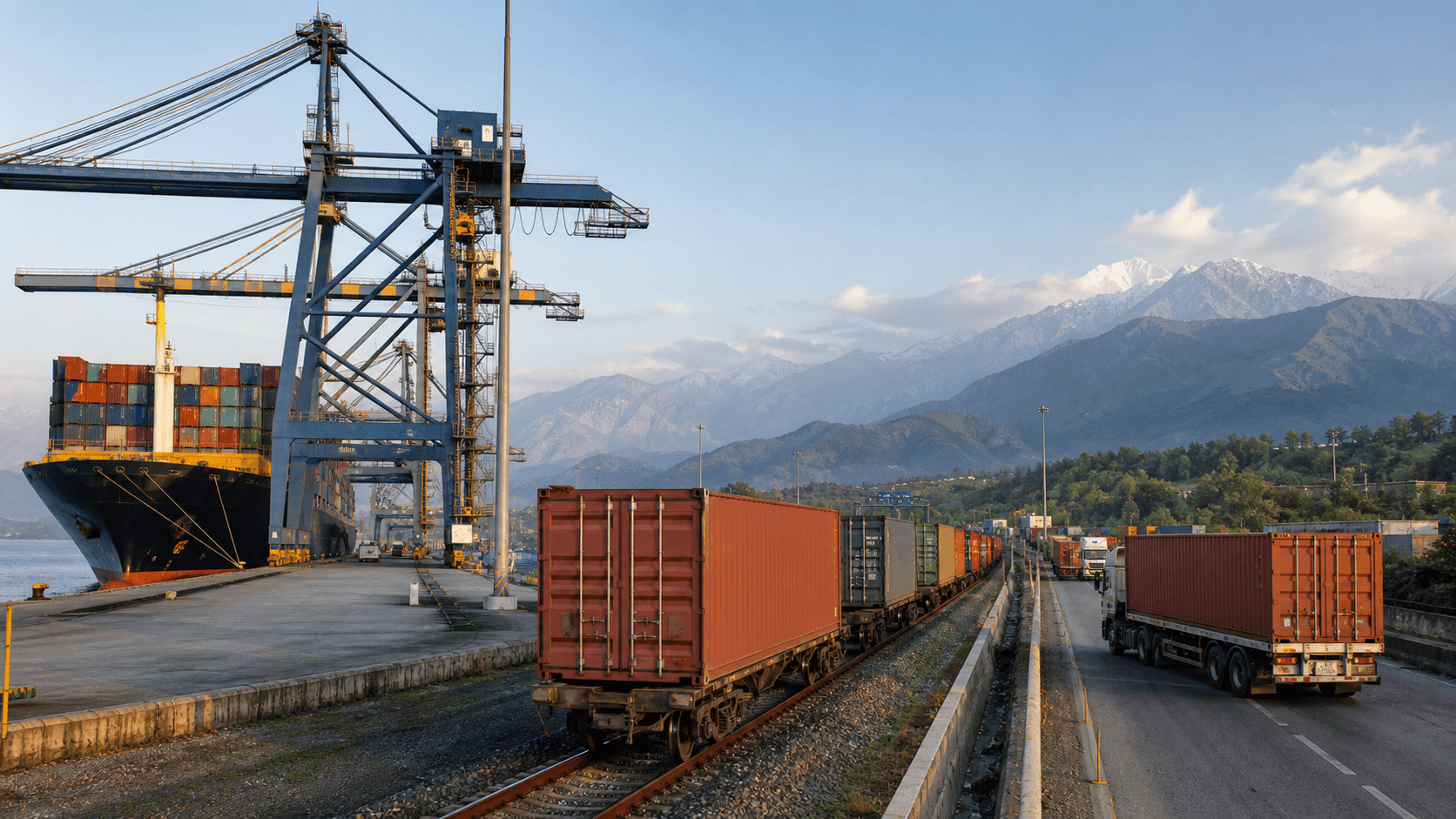
Nepal has no seaport, so a sea shipment normally needs a connected transit and inland plan after discharge at an Indian port. Depending on the cargo, carrier, route and current operating arrangements, the journey may use Kolkata, Haldia, Visakhapatnam or another suitable gateway before road or rail-linked movement to a Nepal customs point.
- Destination terminal handling and shipping-line charges
- Delivery order, documentation and container release
- Indian customs-transit procedures and applicable port formalities
- Rail or road movement toward the Nepal border or dry port
- Container detention, demurrage and storage exposure
- Nepal customs declaration, inspection and tax payment
- Final delivery, unloading and empty-container return where applicable
A CIF price to an Indian port stops well before most of these activities. Even an FOB booking only becomes useful when the buyer's forwarder has quoted and coordinated the complete onward scope. Ask for a written route plan showing the discharge port, container terms, transit mode, customs point and final Nepal delivery location.
Current government requirements should be checked through Nepal Customs and the Nepal Trade Portal. Port options, shipping-line services and transit processes can change, so confirm the live route before the supplier ships.
Compare total landed cost, not two supplier prices
Suppose Supplier A quotes USD 10,000 FOB Shanghai and Supplier B quotes USD 10,800 CIF Kolkata. The second quotation includes ocean freight and insurance to Kolkata, but neither number proves which shipment will cost less at a warehouse in Nepal. Use the same cargo weight, dimensions, sailing period, exchange-rate assumption and delivery point for both calculations. Also compare free time, transit time and the financial effect of delay. A low headline freight rate can be outweighed by high local charges or slow container release. The result is an estimate, not a guaranteed customs assessment. But a structured landed-cost comparison exposes missing scope before the purchase order is signed.
| Cost component | FOB quote review | CIF quote review |
|---|---|---|
| Goods and origin delivery | Confirm included scope through onboard delivery | Confirm included scope through onboard delivery |
| Ocean freight | Add buyer's live freight quotation | Included to named port; verify carrier and surcharges |
| Insurance | Add the coverage the buyer chooses | Review seller's policy and any upgrade cost |
| Destination-port charges | Add full local-charge schedule | Identify every charge not included in CIF |
| Port-to-Nepal transit | Add rail/road, transit and container costs | Add rail/road, transit and container costs |
| Customs and taxes | Estimate from classification, value and current rules | Estimate from classification, value and current rules |
| Final delivery | Add vehicle, unloading and return requirements | Add vehicle, unloading and return requirements |

Comparing supplier quotes before you pay?
Sea Sky Cargo can review the named Incoterm, freight scope, insurance, Indian-port charges, Nepal transit and estimated landed cost before you confirm the order.
Insurance must cover the actual multimodal journey
Cargo risk does not disappear because a supplier arranged the freight. Under CIF, the seller's required insurance is minimum cover and risk transfers at origin. Under FOB, the buyer has no automatic seller-provided policy and should arrange suitable cover before the onboard risk-transfer point.
- Confirm the insured value, currency and policy beneficiary
- Check whether the policy is Clauses C, broader Clauses A or another wording
- Review exclusions for inadequate packing, delay, rust, leakage or inherent vice
- Make sure the insured route includes Indian-port handling and inland transit to Nepal if needed
- Check whether transshipment, temporary storage and container handling are covered
- Record survey, notification and claim-document deadlines
- Ask how machinery, fragile cargo, temperature-sensitive goods or used equipment are treated
For a Nepal importer, port-to-port insurance can leave a gap before the cargo reaches the final warehouse. Ask for the geographic start and end points in writing, not only the word "insured" on the quotation.
High-value or damage-sensitive cargo should be reviewed before packing. The policy may require particular crates, moisture protection, seals, temperature controls or inspection evidence for a claim to remain valid.

Customs value, HS code and documents must agree
The Incoterm on the commercial invoice helps customs understand which transport and insurance elements are included in the transaction value. It does not itself determine the final duty. Nepal Customs reviews the declaration, classification, value and applicable taxes under current law and may request supporting evidence. Do not change an Incoterm label simply to produce a desired customs value. The invoice, payment, freight contract and insurance evidence should reflect the real transaction. A mismatch can delay valuation and release. Review the HS code for Nepal customs, current custom duty in Nepal and any import-permit requirement before the cargo leaves origin. Sea Sky's customs clearance in Nepal team can coordinate the shipment file with the forwarding plan.
| Document or data | What to verify |
|---|---|
| Commercial invoice | Exact Incoterm, named port/place, edition, currency, goods description and price |
| Packing list | Package count, net/gross weight, dimensions and marks match the cargo |
| Bill of lading | Shipper, consignee, ports, container and freight particulars align with the booking |
| Freight and insurance evidence | Amounts and scope are available when customs needs cost separation or support |
| HS code and product details | Classification is supported by catalogue, composition, function and model data |
| Permit or recommendation | Required approval is obtained before dispatch for regulated goods |

Container shipments may need FCA or CIP instead
FOB and CIF are familiar, but they are not designed for every shipment. The ICC recommends considering FCA when containerised cargo is handed to a carrier at a terminal before it is physically loaded on the vessel. FOB assumes the seller can deliver the goods on board, which may not match normal container-terminal practice. Similarly, CIP can suit multimodal carriage when the seller pays transport and insurance to a named inland place. CIP and CIF also require different default insurance levels under Incoterms 2020: CIP generally requires broader Clauses A-style cover, while CIF requires minimum Clauses C-style cover. Do not replace one three-letter rule with another without matching the sales process, payment documents and operational handover. Ask the supplier and freight forwarder where the cargo will actually be delivered to the carrier, then name that place precisely in the contract.
| Shipment setup | Rule to discuss | Reason |
|---|---|---|
| Bulk or breakbulk cargo loaded directly on a vessel | FOB or CIF | Sea-rule delivery point can match physical loading |
| Container handed to the carrier at an origin terminal | FCA | Risk can transfer at the actual carrier handover point |
| Seller pays multimodal carriage to an inland named place | CPT or CIP | Rules work across road, rail, air and sea combinations |
| Buyer needs broader seller-provided insurance | Discuss CIP or an express CIF insurance upgrade | Default insurance obligations differ |

Which option fits first-time and regular importers?
A first-time importer may prefer CIF because the supplier obtains the ocean booking. That convenience is real only when the importer has already identified the destination agent, local charges, customs steps and inland partner. Waiting for the arrival notice to plan Kolkata-to-Nepal movement is too late. A regular importer may prefer FOB because one forwarder can compare sailings, consolidate cargo, negotiate rates and coordinate the onward Nepal route. The importer also sees the freight contract and local-charge schedule directly. FOB still requires disciplined purchase-order instructions and fast communication with the supplier. Experience alone does not decide the term. Compare the live freight market, supplier capability, cargo risk, payment terms, documentation control and final destination for every order.
| Importer situation | Useful starting point | Condition before confirming |
|---|---|---|
| First sea shipment | CIF may reduce origin booking work | Destination and Nepal-side costs are quoted in writing |
| Repeat shipments | FOB may improve control and rate comparison | Buyer has a reliable forwarding and insurance process |
| Supplier has strong contract freight | Compare CIF | Carrier, route, free time and local charges are acceptable |
| Urgent, high-value or sensitive cargo | Choose by route and risk control, not familiarity | Insurance and handling cover the complete journey |
| Container delivered to origin terminal | Discuss FCA/CIP | Contract matches the real carrier handover |

Pre-booking questions and Sea Sky Cargo support
A supplier quotation should be reviewed before the deposit, letter of credit or shipping instruction makes the route difficult to change. Send the actual quote, packing data and delivery point to the forwarder rather than asking for a generic FOB-versus-CIF opinion.
- What is the exact named port or place and Incoterms edition?
- Where will the seller physically hand the cargo to the carrier?
- Who chooses the shipping line, sailing and transshipment route?
- Which origin and destination charges are included or excluded?
- What free time applies and who pays demurrage, detention or storage?
- Does the insurance cover the full route to the Nepal destination?
- Which documents, permits and HS-code evidence are required?
- What is the estimated port-to-door landed cost under each option?
- Who coordinates an inspection, damage claim or document correction?
- Is FCA, CPT or CIP a better match for the actual container movement?
Sea Sky Cargo can compare the supplier's scope with live international freight booking, identify missing Indian-port and Nepal-side costs, review the customs-document plan and coordinate the agreed port-to-door movement.
The final quotation should state what Sea Sky handles directly, what an origin or destination partner handles, what the customs agent handles and which charges remain payable by the importer. That written responsibility map is more useful than choosing FOB or CIF by habit.

Frequently asked questions
What is FOB in shipping? FOB means Free on Board. For sea or inland-waterway cargo, the seller delivers and risk transfers when the goods are loaded on board the buyer-nominated vessel at the named origin port. The buyer contracts the main carriage.
What is CIF in shipping? CIF means Cost, Insurance and Freight. The seller pays the sea freight and arranges minimum required insurance to the named destination port, but risk transfers to the buyer when the goods are loaded on board at origin.
Is FOB or CIF better for Nepal importers? Neither is always better. FOB can provide freight control and transparency; CIF can reduce origin booking work. Compare the same final Nepal delivery point, insurance scope and landed cost before choosing.
Does CIF include delivery to Nepal? No, not automatically. CIF to Kolkata or another Indian port does not by itself include port handling, transit to Nepal, Nepal customs, taxes or final delivery.
Does CIF insurance cover cargo all the way to Nepal? Not necessarily. CIF requires minimum insurance to at least the named destination port. Check whether the policy expressly covers Indian-port handling and inland movement to the Nepal delivery point.
When does risk transfer under CIF? Risk transfers when the seller delivers the goods on board the vessel at the origin port, even though the seller pays freight and insurance to the named destination port.
Should container cargo use FOB? Often FCA is operationally clearer when the seller hands a container to the carrier at a terminal before vessel loading. Match the rule to the actual handover and payment requirements.
Should I compare only the FOB and CIF supplier prices? No. Compare product, freight, insurance, origin and destination charges, Indian-port transit, customs taxes, final delivery, free time and delay exposure.
What should the invoice say? State the three-letter rule, precise named port or place and edition, for example "CIF Kolkata Port, Incoterms 2020." The wording must reflect the real transaction.
Can Sea Sky Cargo review FOB and CIF supplier quotes? Yes. Sea Sky can review the quote, compare freight and onward costs, check the document plan and coordinate the agreed route to Nepal.

Choose the term after you see the full route
Before you confirm FOB or CIF with your supplier, Sea Sky Cargo can review the quote, freight route, customs documents and total landed cost so you can ship with more confidence.