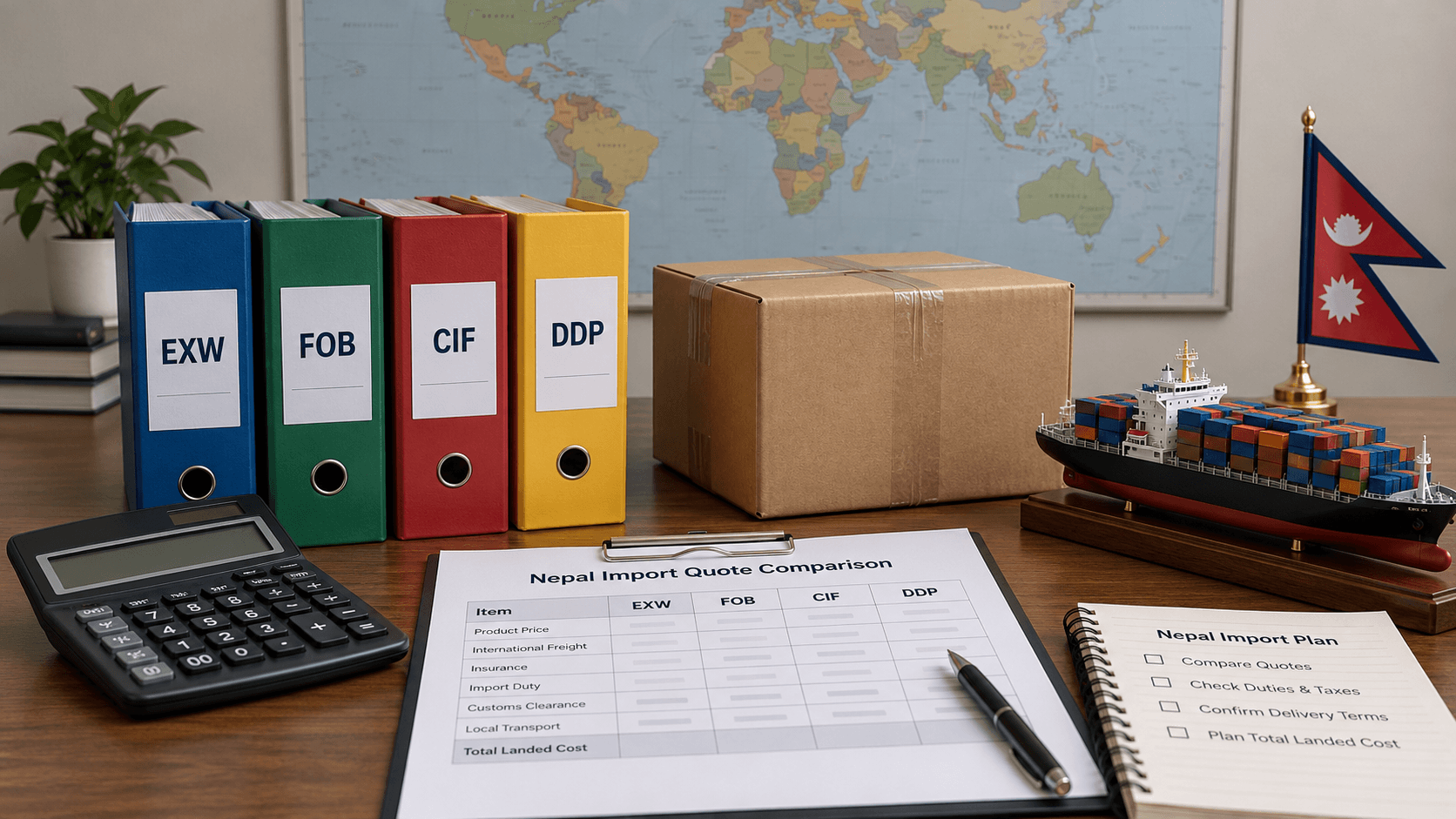
1. What Incoterms Mean for Nepal Importers
The cheapest supplier quotation is not always the cheapest way to import goods into Nepal.
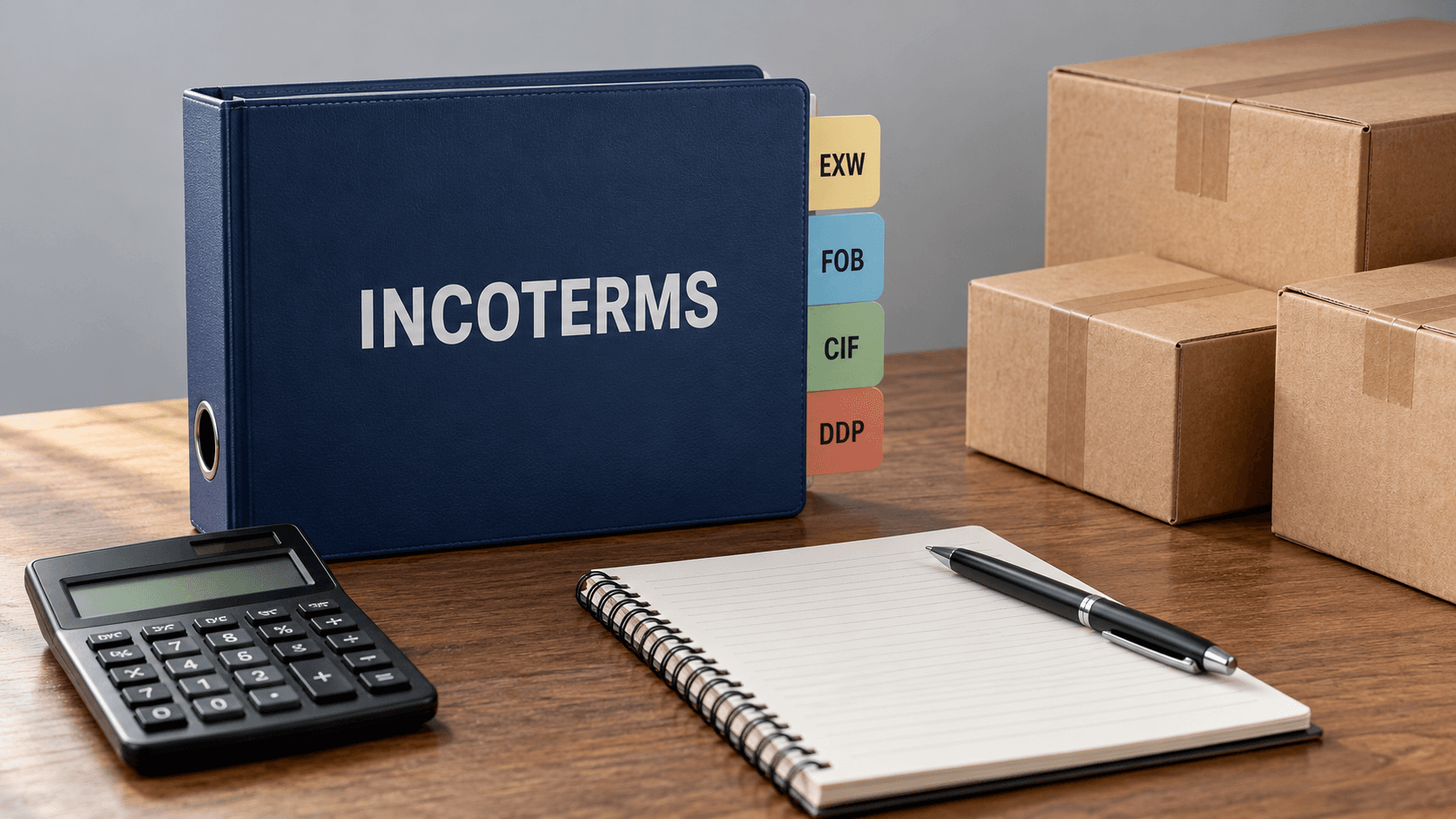
A supplier may offer a low price under EXW, FOB, CIF or DDP terms, but each Incoterm assigns different responsibilities for pickup, export clearance, freight, insurance, customs and final delivery. If these responsibilities are misunderstood, the final warehouse cost can be much higher than expected.
This is especially important for Nepal importers because Nepal is landlocked. Sea cargo often travels through an Indian port before moving by road or rail toward Nepal. Therefore, a quote that includes international freight may still exclude Indian-port charges, customs transit, Nepal customs clearance and inland delivery.
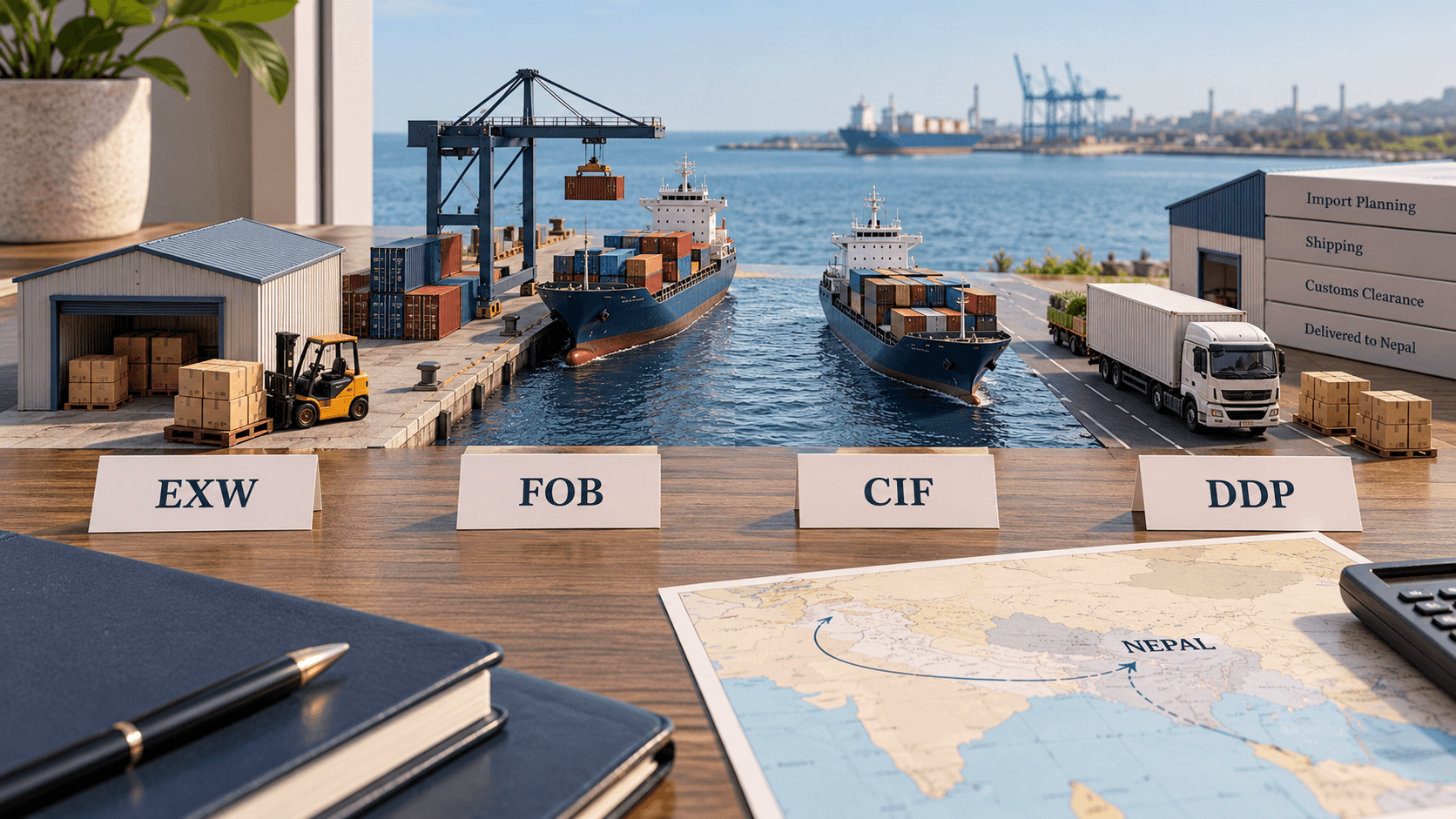
This guide explains what EXW, FOB, CIF and DDP mean for Nepal importers and how to compare them using total landed cost.
Comparing a supplier quotation? Sea Sky Cargo can review the Incoterm, route, freight scope and Nepal delivery charges before you confirm the order.
What Are Incoterms?
Incoterms are internationally recognized trade terms published by the International Chamber of Commerce. They explain how responsibilities are divided between the seller and buyer.
- Incoterms help clarify:
- Where delivery takes place
- Who arranges transport
- Who pays freight
- Who handles export formalities
- Who pays for insurance
- When cargo risk transfers
- Who manages import clearance
- Who pays duties and taxes
Incoterms do not automatically determine the product price, payment method, customs duty or every local handling charge. The named location is also important.
For example:
- FOB Shanghai
- CIF Kolkata
- DDP Kathmandu
- These are not equivalent offers. Each one ends at a different point and assigns different responsibilities.
Use the full expression: [Rule] [Precise named place or port] Incoterms® 2020. For example, FOB Shanghai [agreed terminal/port details] Incoterms® 2020 or DDP [full warehouse address], Kathmandu, Nepal, Incoterms® 2020. Confirm that this is the edition incorporated into the sales contract. The ICC overview explains the rules and their current edition.
Incoterms allocate defined delivery obligations, risks and costs between seller and buyer. They do not decide ownership transfer, payment terms, remedies for breach or the customs authority’s valuation decision. The sale contract, carriage contract and insurance policy need to fit together.
2. Why Nepal Imports Need a Complete Route Review
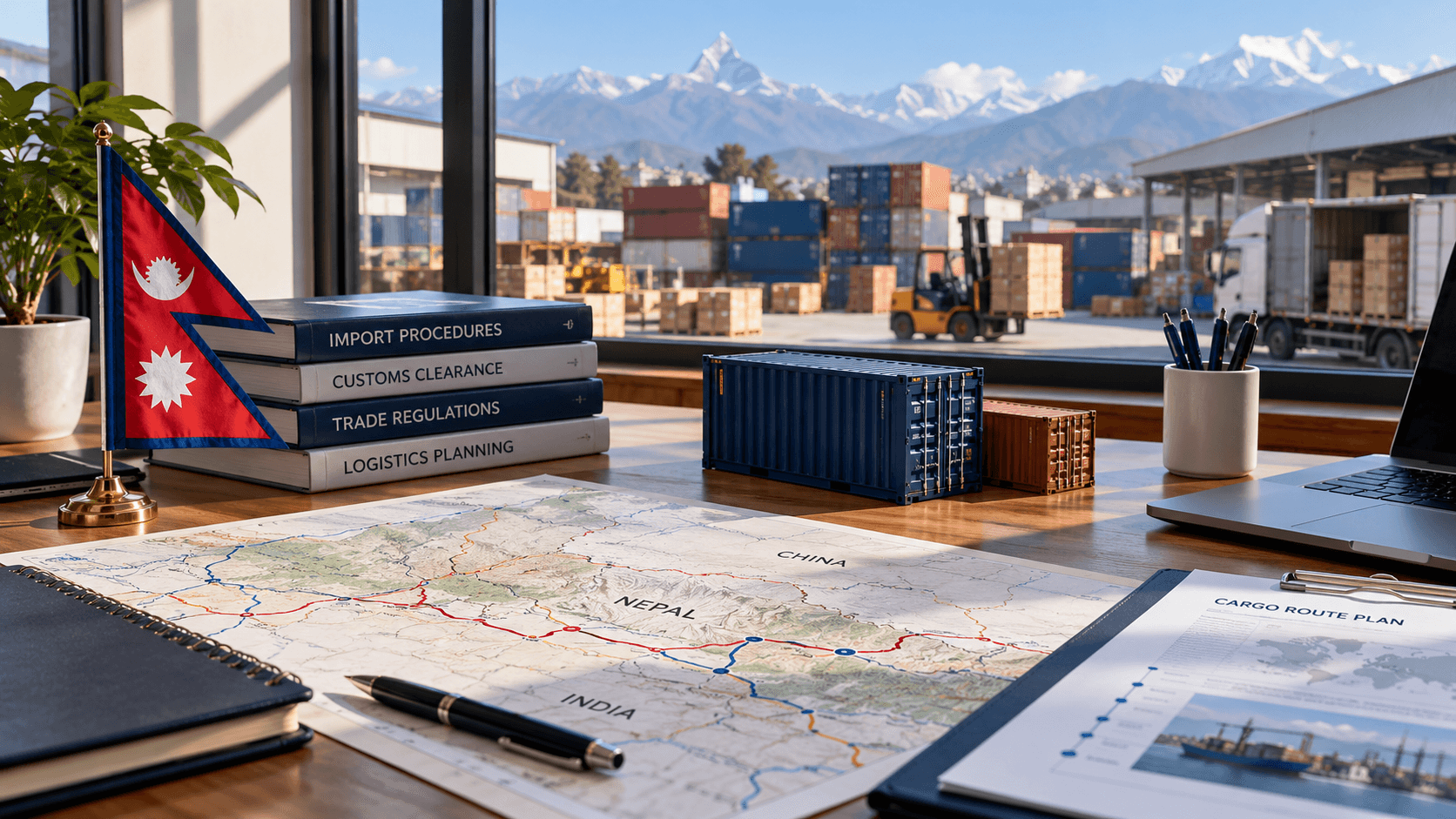
A simple Incoterms chart may show cargo moving from the seller to the buyer. For Nepal imports, the shipment may pass through several additional stages:
- Supplier warehouse
- Origin transport
- Export customs
- Origin port or airport
- International freight
- Indian gateway port
- Customs-transit process
- Rail or road transport
- Border or inland container depot
- Nepal customs clearance
- Final delivery
- Possible additional charges include:
- Origin pickup
- Export documentation
- Port handling
- Indian terminal charges
- Delivery-order fees
- Customs-transit documentation
- Rail or road transport
- Border handling
- Nepal customs clearance
- Import duty and VAT
- Storage
- Demurrage or detention
- Unloading
- Final-mile delivery
- Empty-container return
- The most important question is not only “Which Incoterm is cheapest?” It is:
“Which option gives me the lowest and clearest landed cost at my Nepal delivery address?”
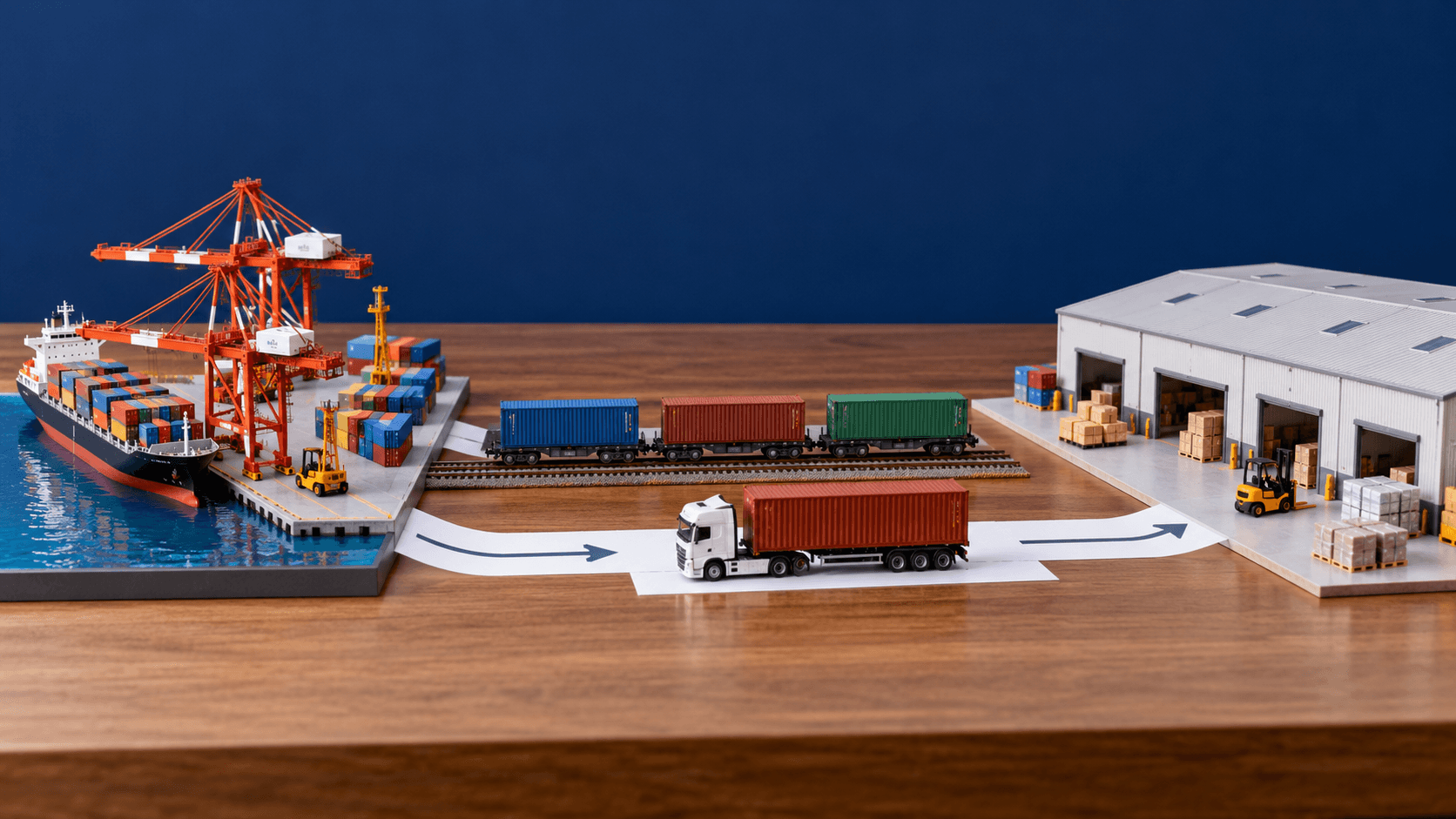
3. EXW: Ex Works and Origin Responsibilities
Under EXW, the seller generally makes the goods available at their premises. The buyer takes responsibility for most of the transport process.
The buyer may need to arrange:
- Pickup from the supplier
- Loading, if not included
- Export clearance
- Origin transport
- International freight
- Insurance
- Indian-port handling
- Customs transit
- Nepal customs clearance
- Duties and taxes
- Inland delivery
- Unloading
Advantages of EXW
EXW may be useful when:
- The buyer has a freight forwarder in the supplier’s country
- The buyer wants control over the entire route
- The buyer regularly consolidates cargo
- The supplier cannot arrange export freight
- The buyer wants to compare carriers directly
Risks of EXW for Nepal importers
EXW can create problems if the buyer does not understand export procedures in the supplier’s country. The supplier may also be less involved in loading, export documents or origin coordination.
Before accepting EXW, confirm:
- Who loads the cargo
- Who prepares export documents
- Whether the buyer can legally arrange export clearance
- Pickup address and working hours
- Supplier warehouse access
- Cargo-ready date
- Origin handling charges
- Whether the quote includes loading and local transport
A low EXW product price can become expensive after origin pickup, export handling and international freight are added.
Under standard EXW, delivery occurs with the goods at the buyer’s disposal at the named place, before loading onto the collecting vehicle. The buyer bears risk from that point. If the seller will load or handle export clearance, document that arrangement precisely. FCA at the seller’s premises is often a clearer alternative when the seller should load and clear for export. See the ICC Academy comparison of EXW and DDP.
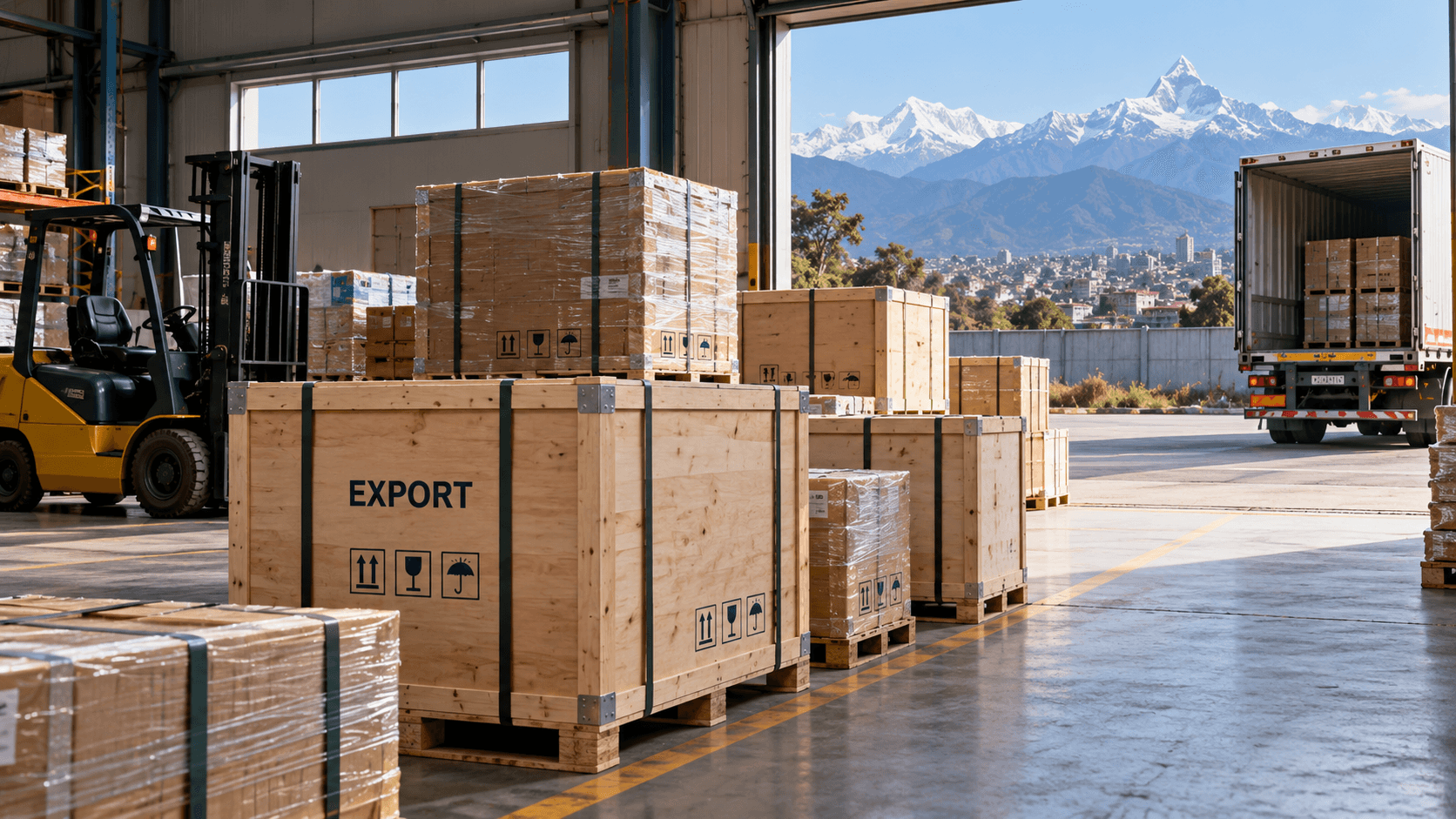
4. FOB: Free on Board and the Origin Delivery Point
FOB is generally used for sea or inland-waterway transport. The seller typically handles export clearance and delivers the goods on board the vessel at the named port.
After the agreed FOB delivery point, the buyer generally arranges:
- Main ocean freight
- Insurance, if desired
- Destination-port charges
- Indian-port handling
- Customs transit to Nepal
- Inland transport
- Nepal customs clearance
- Duties and taxes
- Final delivery
Advantages of FOB
- FOB may suit importers who:
- Have their own freight forwarder
- Want control over the shipping line
- Regularly import by sea
- Want to compare LCL and FCL rates
- Understand port and transit procedures
Risks of FOB for Nepal imports
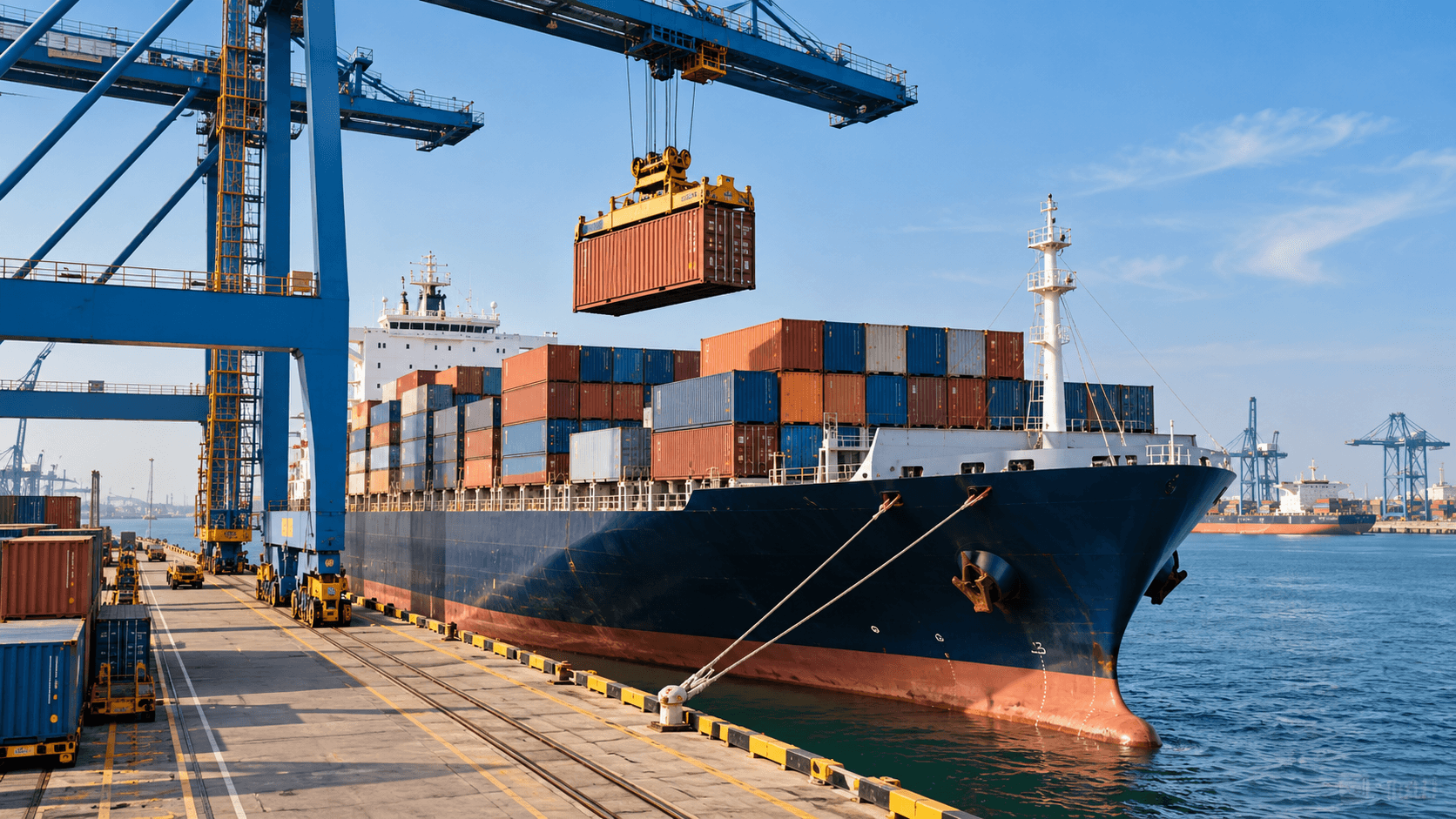
FOB delivery takes place when the goods are on board the buyer-nominated vessel at the named origin port. The seller handles the movement needed to reach that delivery point and export clearance; the buyer normally takes the main freight and subsequent risks and costs.
For example, FOB Shanghai may leave the Nepal importer responsible for:
- Ocean freight
- Indian gateway charges
- Transit documentation
- Inland movement toward Nepal
- Customs clearance
- Final delivery
The importer should confirm whether the supplier’s FOB quotation includes loading, export documentation and local origin charges.
FOB and CIF are rules for sea and inland-waterway transport, not air freight. A container is often handed to a carrier at a terminal before it goes on board. In that situation, FCA may better match the actual handover. The ICC checklist recommends considering FCA for containers and multimodal movements. Agree the appropriate rule before booking rather than treating FOB as a generic word for export shipping.
5. CIF: Freight Payment, Insurance and Risk Transfer
Under CIF, the seller generally arranges the cost, insurance and freight to the named destination port. However, the buyer remains responsible for many destination-side activities.
For a Nepal importer, CIF Kolkata does not necessarily mean delivery to Kathmandu, Birgunj or another Nepal warehouse.
The buyer may still need to pay or arrange:
- Destination-port charges
- Delivery-order fees
- Customs-transit documents
- Inland transport to Nepal
- Border or ICD handling
- Nepal customs clearance
- Import duty and VAT
- Storage
- Demurrage or detention
- Final delivery
- Unloading
Advantages of CIF
CIF may be useful when:
- The supplier has competitive ocean-freight rates
- The buyer wants the supplier to arrange main freight
- The shipment is moving through a known port
- The buyer has a trusted destination agent
- The buyer understands destination charges
Risks of CIF for Nepal importers
CIF is often misunderstood as “delivered to Nepal.” It is not automatically a warehouse-delivery term.
Also, the insurance arranged under CIF may provide only limited coverage according to the applicable rule and contract. The buyer should check:
- Insured value
- Policy coverage
- Exclusions
- Route coverage
- Claims procedure
- Whether inland transit to Nepal is covered
Always identify the named port and ask for a separate estimate from that port to the final Nepal destination.
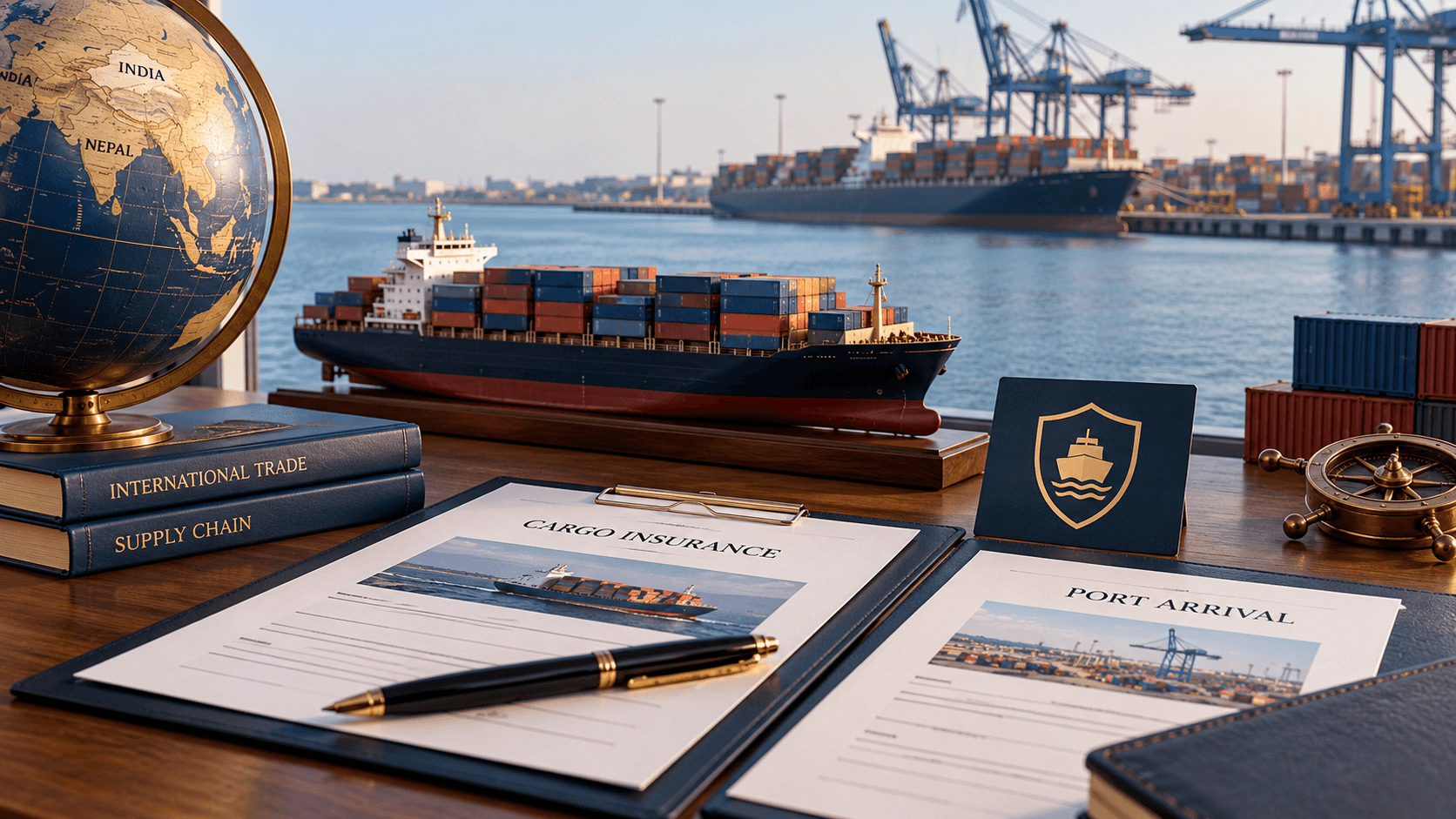
Under CIF, risk passes when the goods are on board at the port of shipment, although the seller pays carriage to the named destination port. Do not assume the seller carries the transit risk until Kolkata. The ICC Academy explanation of delivery and risk distinguishes these two points.
CIF normally requires minimum cargo cover corresponding to Institute Cargo Clauses (C) or similar, unless higher cover is agreed. Do not assume this is all-risks protection or that it continues to a Kathmandu warehouse. Confirm the insured journey, value, exclusions, deductible and claims procedure. Port discharge costs depend on the carriage contract: identify what the seller’s freight already includes before adding destination charges again.
6. DDP: Import Clearance, Taxes and Delivery
Under DDP, the seller generally takes responsibility for arranging delivery to the named destination and paying applicable import duties and taxes.
DDP can appear attractive because the buyer receives one consolidated price. However, DDP requires careful checking for Nepal imports.
Clarify:
- Who is the importer of record
- Who files the Nepal customs declaration
- Which company pays duty and VAT
- Whether the seller is legally able to arrange import clearance
- Whether the final delivery point is included
- Whether unloading is included
- Which documents the buyer will receive
- Whether the quotation is genuinely DDP or only door delivery
- What happens if customs reassesses the shipment
Advantages of DDP
DDP may offer:
- A simple buying experience
- More predictable budgeting
- Less transport coordination for the buyer
- Supplier-managed international freight
- A single delivery arrangement
Risks of DDP for Nepal importers
DDP can create compliance problems if the supplier or overseas logistics provider cannot legally act as the importer or complete Nepal customs procedures.
A seller may use the term “DDP” loosely while excluding:
- Customs duty
- VAT
- Permits
- Inspection
- Storage
- Unloading
- Additional customs assessments
- Remote-area delivery
Do not accept DDP based only on a supplier message. Request a written scope showing who handles import clearance and which company appears on the customs documents.
Standard DDP delivery is at the named destination, on the arriving vehicle, ready for unloading. The buyer normally unloads. If the seller also promises unloading, identify the agreed service and cost in writing. DDP itself does not impose a cargo-insurance requirement, even though the seller bears risk until delivery.
DDP assigns import-clearance obligations and import duties and taxes to the seller. An offer labelled DDP but excluding duty or VAT changes that standard allocation and needs an explicit explanation. A foreign supplier’s promise does not establish that it can meet Nepal’s registration, permit or filing requirements. Confirm the lawful importer, authorized representative and documentary trail for the specific goods before shipment. If the seller cannot arrange import clearance, discuss whether DAP is a more workable rule with the buyer taking import formalities; it is a different cost allocation, not a promise of a lower total.
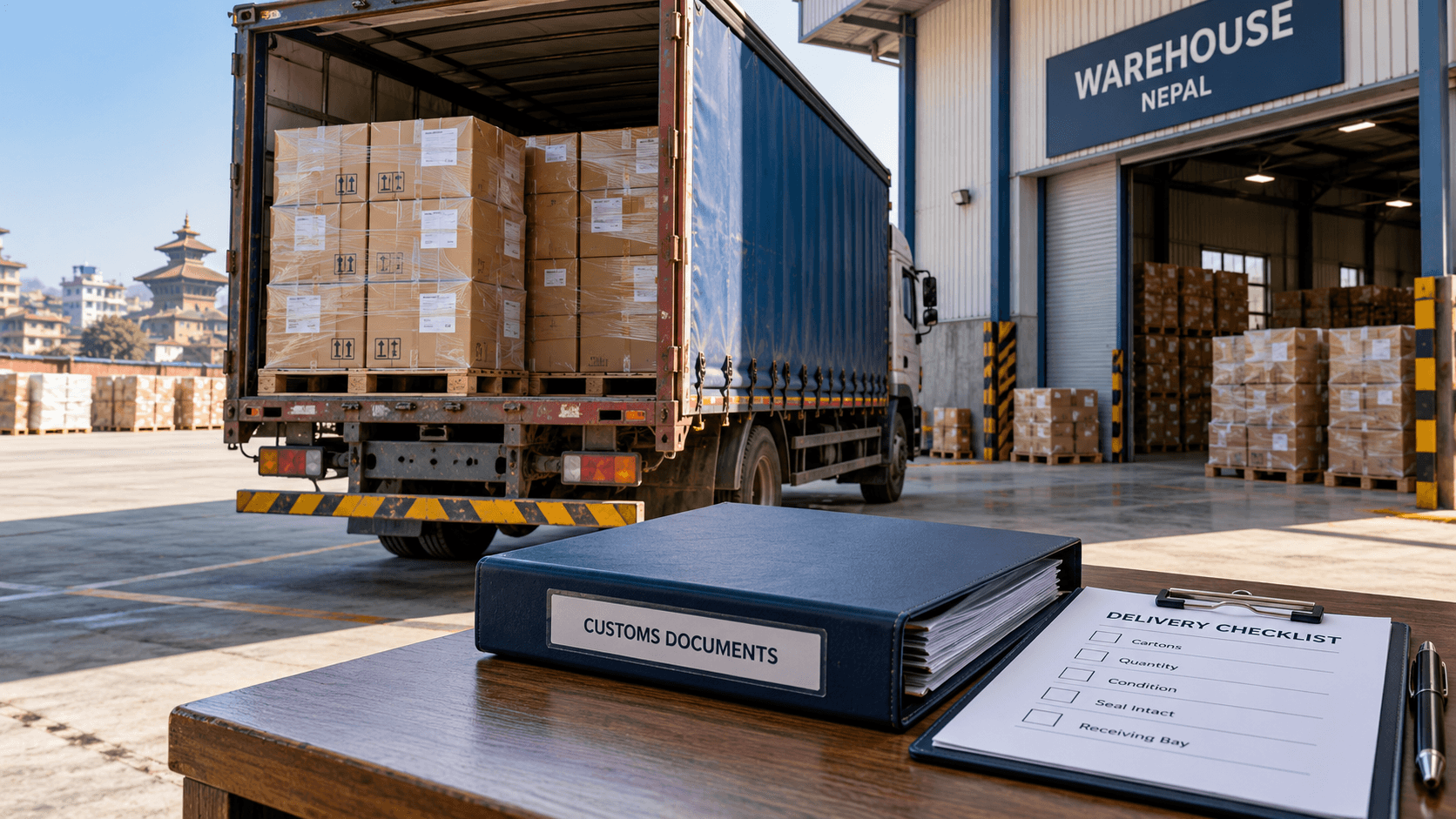
Check What Your Supplier Quote Includes
Review the named place, Indian-port transit, customs responsibility and final Nepal delivery scope.
7. Compare Responsibilities and CIF Kolkata Costs
Who Pays Freight, Insurance, Customs and Delivery? Freight EXW: usually buyer FOB: buyer after origin port CIF: seller to named port DDP: usually seller to named destination Insurance EXW: no compulsory insurance obligation under the rule; the buyer can arrange protection for its risk FOB: buyer normally arranges insurance if required CIF: seller arranges the required insurance to the named port DDP: the seller bears transport risk until delivery at the named destination; the rule does not itself require an insurance policy Export customs EXW: buyer’s responsibility under the standard rule, with seller assistance where required FOB: usually seller CIF: usually seller DDP: usually seller Nepal import customs EXW: buyer FOB: buyer CIF: buyer DDP: seller, if the DDP arrangement is genuine and legally workable Duties and taxes EXW: buyer FOB: buyer CIF: buyer DDP: seller, subject to the agreed terms and legal responsibilities Final delivery EXW: buyer FOB: buyer CIF: usually buyer after the named port DDP: seller to the named destination, if included in writing CIF Kolkata Is Not Delivery to Nepal This is one of the most important points for Nepal importers. A CIF Kolkata quotation may include: Product cost Ocean freight to Kolkata Basic insurance to Kolkata It may not include: Kolkata terminal charges Delivery-order fees Customs-transit arrangements Rail or road transport to Nepal Birgunj ICD charges Nepal customs clearance Import duties and VAT Kathmandu or warehouse delivery Unloading Storage or delay charges Therefore, compare CIF with the complete cost from Kolkata to your final Nepal address. Use the port-to-door cargo guide to understand the additional stages after the Indian port. For third-country cargo passing through India, include the applicable customs transit declaration and transit procedure. Under CIF, do not assume the seller has paid for transit formalities and transport from the named Indian port to Nepal. Confirm the route and the party arranging each stage. The table summarizes standard commercial allocations. A freight invoice may be issued to one party while costs are contractually recoverable from another. Ask who books, who initially pays, who ultimately bears each cost and where risk transfers. Delay costs can depend on their cause and the applicable contracts; do not assign every storage or detention charge solely from the three-letter term.
| Incoterm | Seller usually handles | Buyer may still handle |
|---|---|---|
| EXW | Makes goods available at seller’s premises | Pickup, export, freight, insurance, customs and delivery |
| FOB | Export clearance and delivery on board at origin port | Main freight, insurance, destination, transit, Nepal customs and delivery |
| CIF | Freight and insurance to named destination port | Port charges, inland transit, customs, duties, taxes and final delivery |
| DDP | Most transport and import-delivery responsibilities | Providing information, receiving cargo and confirming legal/import requirements |
8. Incoterms for LCL and FCL Cargo
Your Incoterm does not replace the need to choose the right shipment format.
LCL
LCL cargo shares container space with other shipments. Check whether the quotation includes:
- Origin consolidation
- LCL documentation
- Destination deconsolidation
- CFS handling
- Storage-free time
- Transit to Nepal
- Customs clearance
- Final delivery
FCL
FCL uses a dedicated container. Check:
- Container type
- Loading and sealing
- Weight distribution
- Free time
- Demurrage and detention
- Inland movement
- Unloading
- Empty-container return
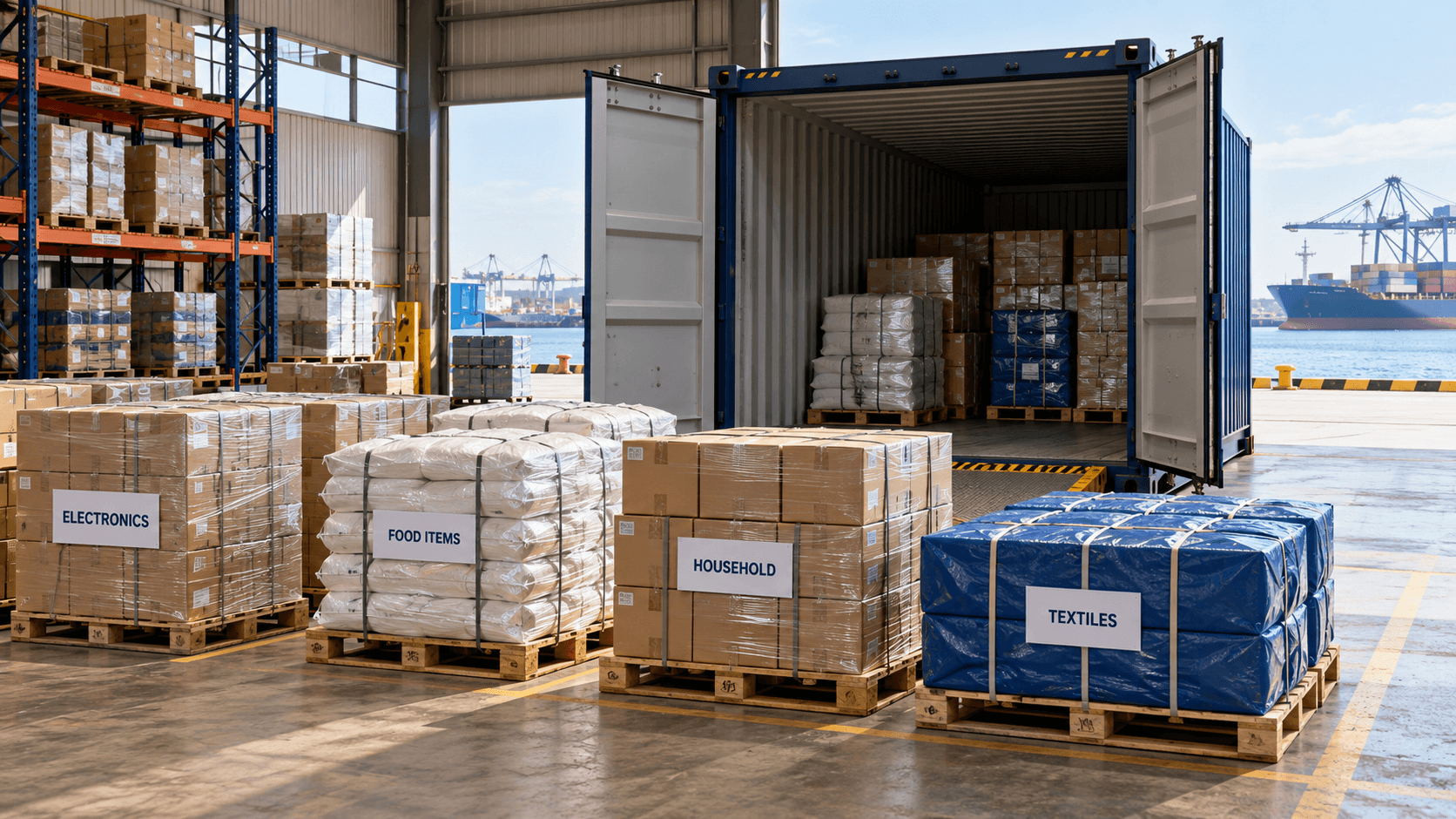
- A CIF quotation for LCL and a CIF quotation for FCL may have very different destination charges. Compare the complete route, not just the Incoterm.
9. Compare Quotes at the Same Nepal Delivery Address
Suppose a supplier offers the following options for the same goods:
Option A: EXW
You may need to add:
- Factory pickup
- Export handling
- Origin documentation
- International freight
- Insurance
- Indian-port costs
- Transit to Nepal
- Customs clearance
- Duty and VAT
- Final delivery
Option B: FOB
You may avoid some origin-export responsibilities, but still need to pay:
- Main freight
- Insurance
- Indian-port charges
- Transit
- Nepal customs
- Duty and VAT
- Final delivery
Option C: CIF
The supplier may include freight and insurance to an Indian port, but you still need to calculate:
- Destination charges
- Transit to Nepal
- Customs clearance
- Duty and VAT
- Final delivery
Option D: DDP
The quote may include most delivery costs, but verify:
- Importer-of-record responsibility
- Customs documentation
- Duty and VAT
- Permits
- Final delivery
- Unloading
- Any excluded charges
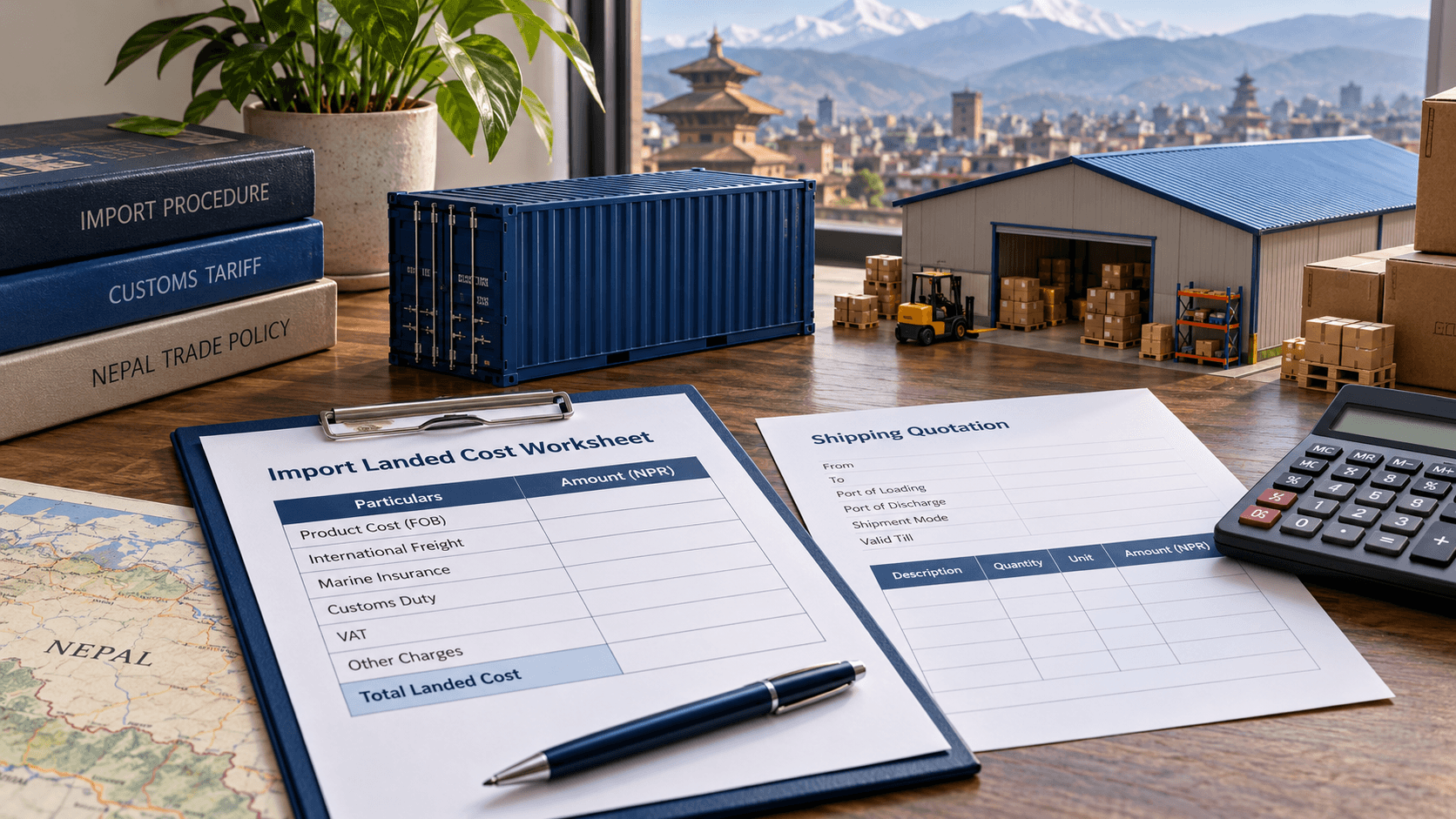
The cheapest product price is not enough to choose the best option. Prepare a worksheet with one final Nepal delivery address and add every known cost.
Build one worksheet with columns for Cost item, Already included, Additional amount, Currency, Paying party, Evidence and Estimate/Confirmed. Start with each actual supplier offer, then add only excluded costs. Use the same cargo dimensions, weights, ready date, route, delivery address and exchange-rate assumptions. Avoid adding a freight component twice when it is already inside CIF or DDP.
Include origin pickup and loading; export and origin handling; international freight; insurance; gateway and release charges; India transit and inland transport; border/ICD handling; Nepal clearance; applicable taxes; final delivery; unloading and equipment; and an identified allowance for uncertainty. Confirm empty-container return and free-time assumptions for container movements.
A useful arithmetic check is Comparable warehouse budget = Supplier offer + Excluded route costs + Applicable import taxes not already included + Agreed receiving/unloading costs + Identified contingency. Customs valuation is a separate calculation under applicable rules; do not treat this budgeting formula as the legal tax base. Keep recoverable VAT separate from the gross cash needed to release and receive the shipment, based on the business’s actual tax treatment.
Use the landed-cost guide and freight-quote breakdown to organize the comparison. Request a written breakdown when a bundled quote prevents you from identifying overlapping or omitted charges.
10. Questions, Common Mistakes and Choosing a Term
Ask the supplier:
- What exact place is named after the Incoterm?
- Does the price include origin pickup?
- Who completes export customs?
- Which port or airport will be used?
- Does the price include Indian-port charges?
- Who arranges customs transit to Nepal?
- Who handles Nepal customs clearance?
- Are duty and VAT included?
- Is final warehouse delivery included?
- Is unloading included?
- Who pays storage, demurrage or detention?
- What insurance is provided?
- Which documents will the buyer receive?
- Who is the importer of record?
- What happens if customs reassesses the shipment?
Get the answers in writing before the supplier dispatches the goods.
Common Incoterm Mistakes
Comparing EXW and CIF product prices directly
These prices include different services. Normalize them to the same final delivery point.
Assuming CIF means door delivery
CIF requires the seller to pay the agreed freight and insurance to the named destination port. Delivery and risk transfer occur on board at the origin port; the paid destination is not the risk-transfer point.
Accepting DDP without checking importer responsibility
The supplier must be able to legally arrange import procedures and provide the required documentation.
Ignoring Indian-port transit
For sea cargo, port-to-Nepal transport can be a major part of total cost.
Forgetting unloading
Machinery, furniture and heavy cargo may require cranes, forklifts or additional labour.
Failing to check insurance
The insurance amount and exclusions may not cover the full commercial risk.
Using an unclear named place
“DDP Nepal” is less precise than a named delivery location with written inclusions.
Assuming the Incoterm controls customs value
Customs authorities assess goods using applicable customs rules. The Incoterm alone does not guarantee a particular duty calculation.
Which Incoterm Is Best for Nepal Importers?
There is no universally best Incoterm.
EXW may suit you if:
- You have strong origin-country logistics support
- You want complete control over freight
- You regularly consolidate cargo
- You understand export procedures
FOB may suit you if:
- You have a trusted freight forwarder
- You want to control the main freight
- You import regularly by sea
- You can manage Indian-port transit
CIF may suit you if:
- The supplier has a reliable ocean-freight arrangement
- You have destination-side support
- You understand port-to-Nepal costs
- You want the supplier to arrange the main ocean leg
DDP may suit you if:
- The seller can legally handle Nepal import procedures
- The written quote genuinely includes duty and customs
- The importer-of-record arrangement is clear
- The final delivery scope is documented
For many Nepal importers, FOB or CIF can work well when a capable freight forwarder manages the destination and transit stages. The final choice should be based on landed cost, control and compliance—not the label alone.
11. How Sea Sky Cargo Helps Compare Your Quotes
Sea Sky Cargo can help Nepal importers compare the complete cost and responsibility of EXW, FOB, CIF and DDP quotations.
Support may include:
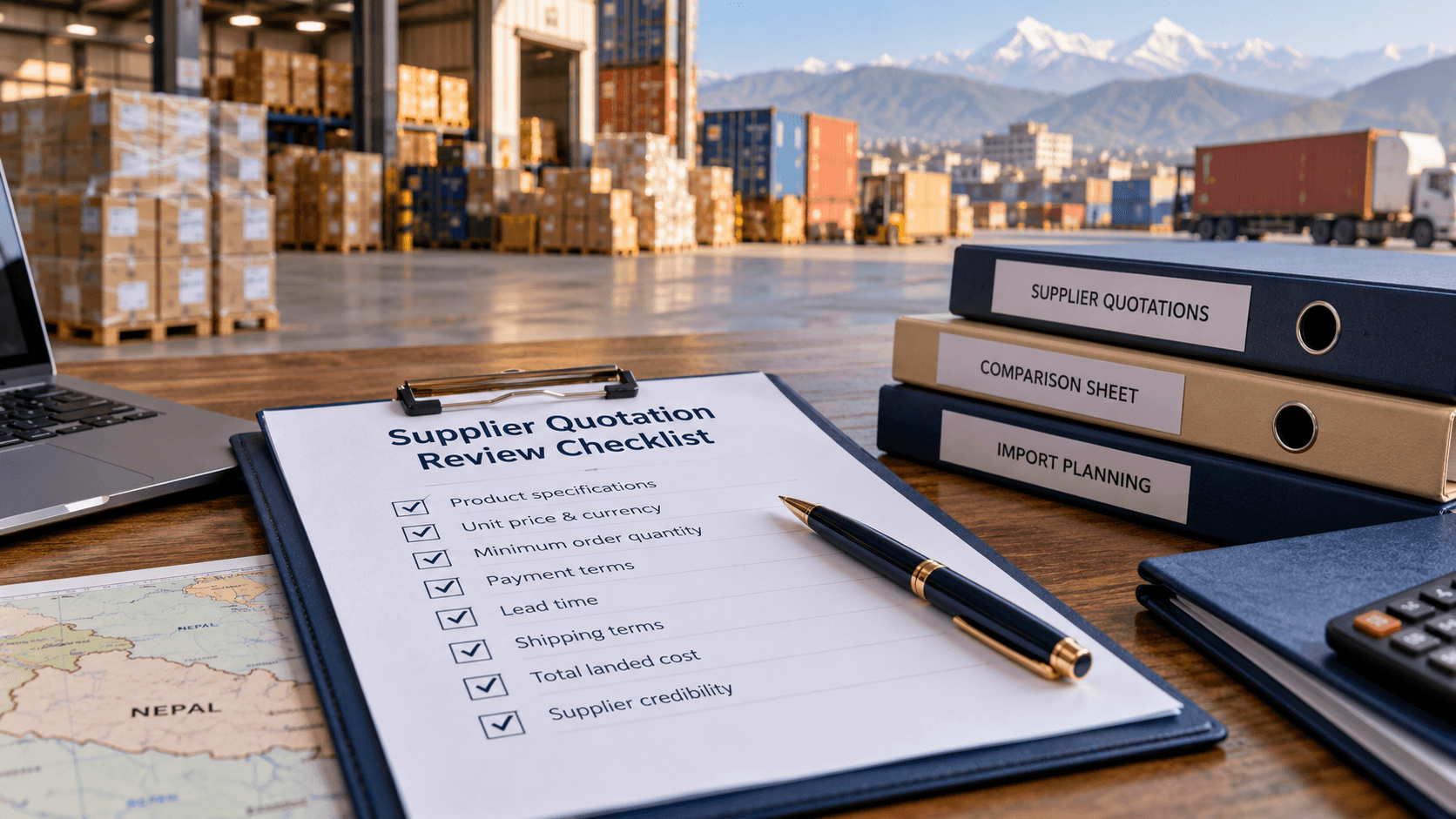
- Reviewing supplier quotations
- Comparing Incoterms
- Checking named places
- Estimating route stages
- Comparing LCL and FCL
- Reviewing Indian-port transit
- Checking freight-document requirements
- Coordinating customs-clearance preparation
- Planning final warehouse delivery
- Identifying excluded charges
- Reviewing cargo insurance questions
Sea Sky Cargo can help organize the shipment plan, but final customs classification, valuation, duties, taxes and import permissions remain subject to the relevant authorities.
Before accepting an EXW, FOB, CIF or DDP quotation, ask Sea Sky Cargo to compare the complete landed cost, Indian-port transit, customs responsibility and final delivery charges.
Conclusion
Incoterms help divide responsibilities between buyers and sellers, but they do not automatically reveal the total cost of importing into Nepal.
- EXW may leave the buyer responsible for almost everything. FOB transfers risk when the goods are delivered on board at the named origin port. CIF may include freight and insurance to an Indian port but still exclude Nepal delivery. DDP may offer convenience but requires careful checking of customs responsibility and importer-of-record arrangements.
- Before choosing an Incoterm, compare every cost from the supplier’s premises to your final warehouse. Include freight, insurance, Indian-port charges, transit, customs, duties, taxes, storage, unloading and delivery.
Before confirming your supplier order, send Sea Sky Cargo your quotation and delivery location. We can help compare EXW, FOB, CIF and DDP based on the complete Nepal landed cost.
Send the supplier offer, precise named place, shipment dimensions and weights, goods description, country of origin, planned Indian gateway where relevant, Nepal delivery address and permit status. Sea Sky Cargo can connect this review with freight-forwarding documents, ocean freight, customs clearance in Nepal and broader freight forwarding in Nepal.
Before confirming your supplier order, send Sea Sky Cargo your quotation and delivery location. We can help compare EXW, FOB, CIF and DDP based on the complete Nepal landed cost. Request a quote review.
12. Frequently Asked Questions
What is the best Incoterm for Nepal importers? It depends on the importer’s logistics experience, supplier capability, cargo type and delivery requirements. EXW, FOB, CIF and DDP should be compared using total landed cost, risk transfer and the legal ability to complete the assigned formalities.
Does CIF include delivery to Nepal? Not automatically. CIF normally covers freight and insurance to the named port. Transport from the Indian port to Nepal, customs clearance, duties and final delivery may remain separate.
Does DDP include customs duty in Nepal? DDP is intended to include import delivery responsibilities, including applicable duties and taxes, but the arrangement must be legally workable and clearly documented. Verify who acts as importer of record.
Is FOB cheaper than CIF? Not necessarily. FOB and CIF allocate different costs and responsibilities. The cheaper supplier price may not produce the cheaper final warehouse cost.
Who pays customs duty under FOB? The buyer normally pays import customs duty, VAT and related destination taxes under FOB. Confirm the exact contract and destination responsibilities.
What is the difference between EXW and FOB? Under EXW, the buyer generally collects goods from the seller’s premises and manages most transport stages. Under FOB, the seller usually handles export clearance and delivers the goods on board at the named origin port.
Can Incoterms determine the HS code or duty rate? No. HS classification and customs assessment depend on the actual goods, documents and applicable customs rules. The relevant customs authority makes the final decision.
How can I compare Incoterm quotations? Use the same product value, route, final delivery address and shipment details. Add all origin, freight, insurance, port, transit, customs, tax, storage and delivery costs.
Compare the Complete Nepal Landed Cost
Send your supplier quotation and delivery address for a review of EXW, FOB, CIF and DDP inclusions.
Related posts
1970-01-01
Sea + Air Freight: How SeaSky Helps Businesses Ship Smarter
2026-10-27
Customs Transit Declaration for Nepal Cargo via India: Documents, Birgunj ICD and Delay Prevention

2026-10-27
How to Read a Freight Quote in Nepal: Line-by-Line Breakdown
2026-10-26