
What life logistics means for Nepal businesses
Life logistics is the coordinated movement of products that support healthcare, diagnosis, laboratories, emergency response and patient care. It can include routine hospital consumables, regulated medicines, medical devices, diagnostic equipment, temperature-sensitive products and urgent relief supplies.
The term does not mean that every shipment needs refrigeration or dangerous-goods handling. It means the cargo profile must be understood before a route is booked. A box of non-sterile gowns, a diagnostic analyser, a registered medicine and a specimen packed with dry ice create very different transport and regulatory responsibilities.
- Hospitals, clinics and healthcare procurement teams
- Pharmaceutical and medical-product importers
- Laboratories and diagnostic networks
- Medical-device distributors and service teams
- Government, NGO and humanitarian programmes
- Manufacturers supplying healthcare projects
- Businesses moving urgent spare parts for medical equipment
A reliable plan connects the product owner, consignee, freight forwarder, carrier, customs representative and final receiver before pickup. Sea Sky Cargo's Life Logistics Services page is the starting point for route-specific support.

Classify the medical cargo before requesting a quote
The exact commodity determines the permit, packaging, carrier acceptance and delivery plan. Avoid quotation requests that say only "medical items" or "hospital goods." Give the commercial name, manufacturer, model or formulation, intended use, quantity and regulatory status. Do not assume that donated, urgent or life-supporting goods are automatically exempt from normal import controls. The responsible importer should confirm the current product-specific position before the cargo leaves origin.
| Cargo profile | Examples | Main control question |
|---|---|---|
| General healthcare supplies | Gowns, masks, dressings and non-regulated consumables | Are the description, labelling and packing suitable for normal cargo handling? |
| Medicines and pharmaceutical products | Tablets, injectables, vaccines and pharmaceutical raw materials | Is the product registered or covered by the required DDA recommendation or permission? |
| Medical devices and equipment | Monitors, analysers, imaging parts, surgical instruments and hospital machines | What health-technology requirements, technical records and installation needs apply? |
| Temperature-sensitive healthcare cargo | Certain medicines, diagnostics and laboratory reagents | What range and permitted excursion are specified by the manufacturer? |
| Samples or potentially regulated substances | Biological samples, chemicals, dry ice and battery-powered equipment | Is dangerous-goods or infectious-substance classification required? |
| Humanitarian and project cargo | Emergency kits, donated equipment and public-health supplies | Who is the consignee, importer and approval owner, and is any exemption actually documented? |
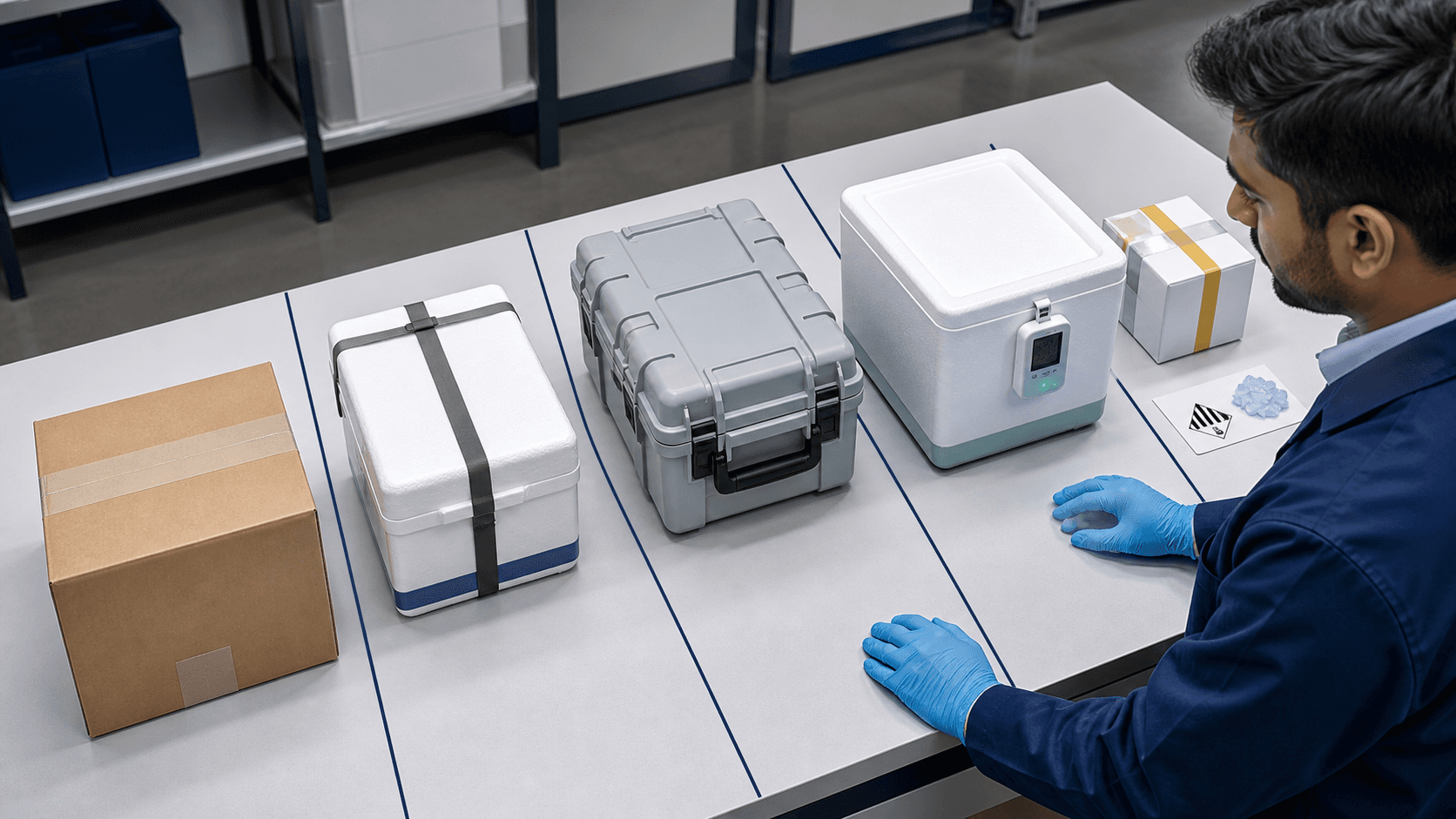
Build a shipment control plan before pickup
A life-logistics booking should begin with a written cargo brief. This prevents the freight team from choosing a route before it knows the conditions that protect the product and the requirements that allow it to enter Nepal. The control plan should use the manufacturer's documented product requirements. A freight provider should not invent a storage temperature, shelf-life tolerance or clinical acceptability decision.
| Control area | Information to confirm | Owner |
|---|---|---|
| Product | Exact name, manufacturer, model or formulation, intended use and HS code support | Supplier and importer |
| Regulatory | Registration, permit, recommendation, technical record or other approval requirement | Importer and relevant authority |
| Condition | Storage range, humidity limit, shock sensitivity, orientation and expiry or shelf life | Manufacturer or product owner |
| Transport | Packed pieces, dimensions, weight, refrigerant, batteries and declared dangerous-goods status | Shipper and freight forwarder |
| Customs | Invoice, value, classification, permits, expected inspection and release contact | Importer and customs representative |
| Delivery | Receiving hours, unloading equipment, storage readiness and named handover person | Consignee and final receiver |
| Contingency | Escalation contacts and action for delay, damage, temperature excursion or failed delivery | All parties |

Air freight for urgent and high-value healthcare cargo
Air freight is often the first comparison for urgent medicines, diagnostic kits, laboratory reagents, replacement components and high-value medical equipment. A faster international leg can protect the delivery deadline, but it does not remove the need for carrier acceptance, customs readiness and immediate destination handling.
Provide the complete cargo profile before airline booking. Liquids, aerosols, chemicals, compressed gas, lithium batteries, radioactive materials, biological substances and dry ice may be regulated, restricted or prohibited depending on their classification and the carrier. Misdeclared cargo can be rejected at acceptance and create a much larger delay than an early compliance check.
- Confirm the cargo-ready time and latest useful delivery time
- Calculate chargeable weight from the final packed dimensions
- Check airline and transfer-station acceptance for the actual commodity
- Include storage and handling needs during each connection
- Prepare permits and customs documents before departure
- Arrange airport release and final transport before the flight lands
- Keep supplier, importer and emergency contacts available throughout transit
The IATA pharma and healthcare cargo guidance emphasises specialised equipment, handling procedures and cooperation across cold-chain partners. Sea Sky's air freight service in Nepal can compare the operating route using the real cargo details.

Road transport and final delivery inside Nepal
Most life-logistics shipments need a road leg even when they arrive by air. The cargo may move from the airport or border to a hospital, laboratory, distributor, project warehouse or regional healthcare site. That final leg should be booked as part of the shipment plan, not improvised after customs release. Use Sea Sky's road freight service in Nepal for airport-to-door, border-to-warehouse and domestic distribution planning. For sensitive cargo, the receiving team should be ready before the driver leaves the release point.
| Delivery issue | Question to settle before arrival |
|---|---|
| Vehicle | Does the cargo need a clean enclosed truck, refrigerated unit, tail lift or specialist securing? |
| Access | Can the vehicle reach the facility, and are there height, road or unloading restrictions? |
| Timing | Are receiving staff available outside normal hours if customs releases urgent cargo late? |
| Storage | Is the destination room, refrigerator, freezer or secure area ready and qualified for the product? |
| Handover | Who checks package condition, seal, logger status and transport records at receipt? |
| Exception | Who decides what happens after damage, delay or a suspected temperature excursion? |

Temperature control, monitoring and excursion planning
Not every healthcare shipment needs a cold chain. When it does, the approved storage range must come from the manufacturer, supplier or product dossier. Similar-looking products can have different limits, so labels such as "medicine" or "diagnostic kit" are not enough to design the packaging. WHO guidance covers good storage and distribution practices for medical products, including transport and temperature monitoring. Use the WHO distribution guidance library for technical context and Sea Sky's temperature-controlled cargo guide for route-planning details. A data logger records conditions; it does not decide whether a product remains safe or effective. That decision belongs to the responsible quality or product authority using the approved excursion procedure.
| Control component | Planning question |
|---|---|
| Packaging system | Is it qualified for the route duration, season and likely delay window? |
| Conditioning | Were gel packs, phase-change materials or other refrigerants prepared correctly? |
| Monitoring | Is the logger suitable, activated, placed correctly and linked to the shipment record? |
| Handoffs | How is exposure controlled during pickup, terminal processing, inspection and delivery? |
| Destination | Who stops the logger and transfers the product immediately to approved storage? |
| Excursion | Who reviews the data and has authority to accept, quarantine or reject the product? |
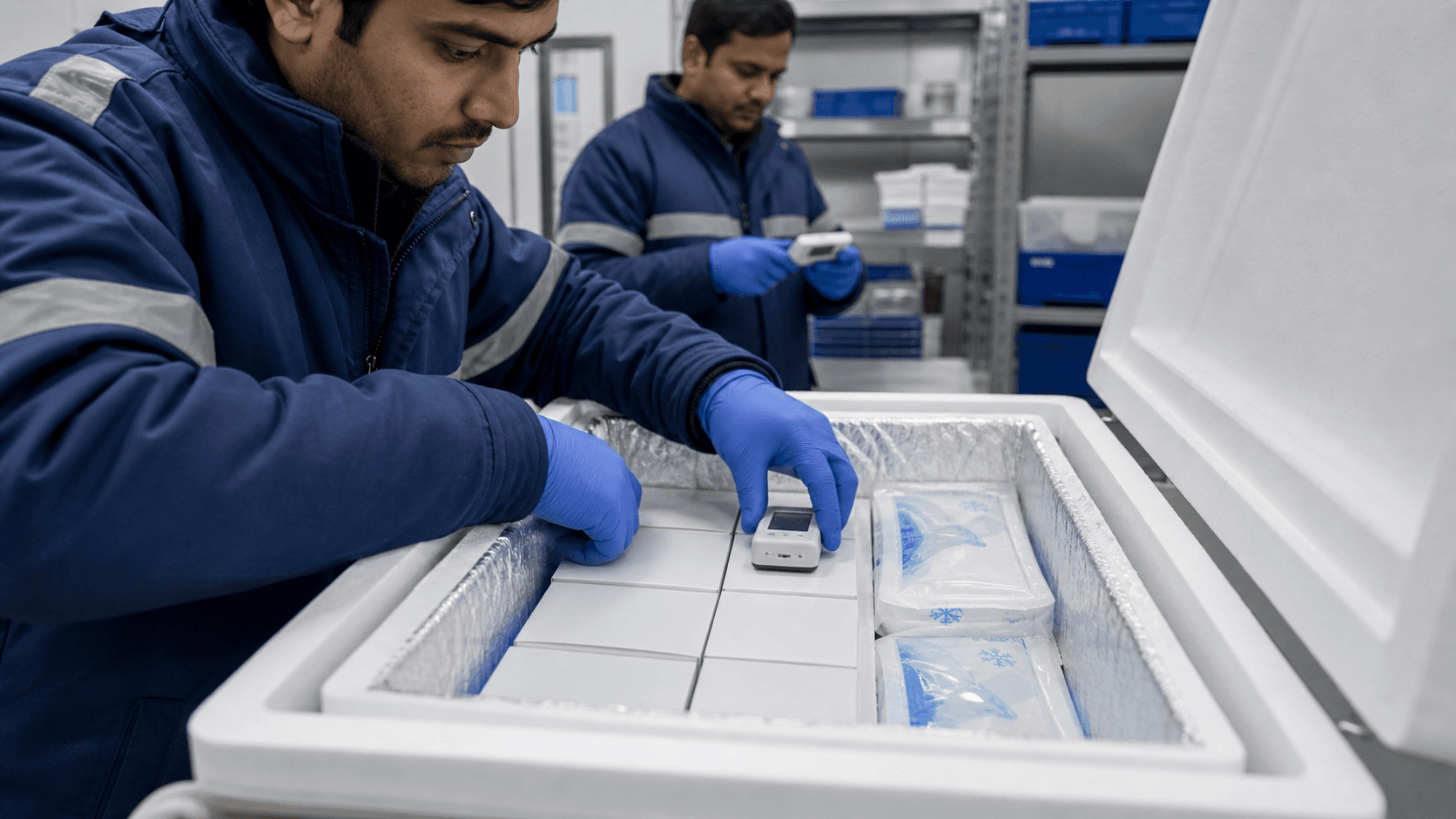
Documents needed for medical and healthcare shipments
The document set depends on the product and transaction. Prepare it before dispatch and make sure the commercial, transport, regulatory and product records describe the same goods. Avoid vague descriptions such as "health products" or "medical equipment." State what the item is and what it does. Sea Sky's HS code Nepal guide explains why classification should be supported before the shipment reaches customs.
| Document or data | Why it matters |
|---|---|
| Commercial invoice | Identifies seller, buyer, exact goods, quantity, value, currency and Incoterm |
| Packing list | Shows package count, dimensions, net and gross weight, batch or serial references and marks |
| Transport document | Connects the shipment parties, route, pieces, weight and freight terms |
| HS code support | Uses catalogue, composition, function and technical information to support classification |
| DDA or other authority record | Supports product registration, recommendation, permission or health-technology compliance where applicable |
| Product dossier extract | May include specification, manufacturer, model, batch, expiry, storage and handling data |
| Dangerous-goods information | Identifies classification, UN number, packing instruction, quantity and required declaration where applicable |
| Insurance evidence | Shows the insured value, route, interest, coverage period and claims contact |
| Clearance authority | Confirms the importer, customs representative and any agent authorisation |
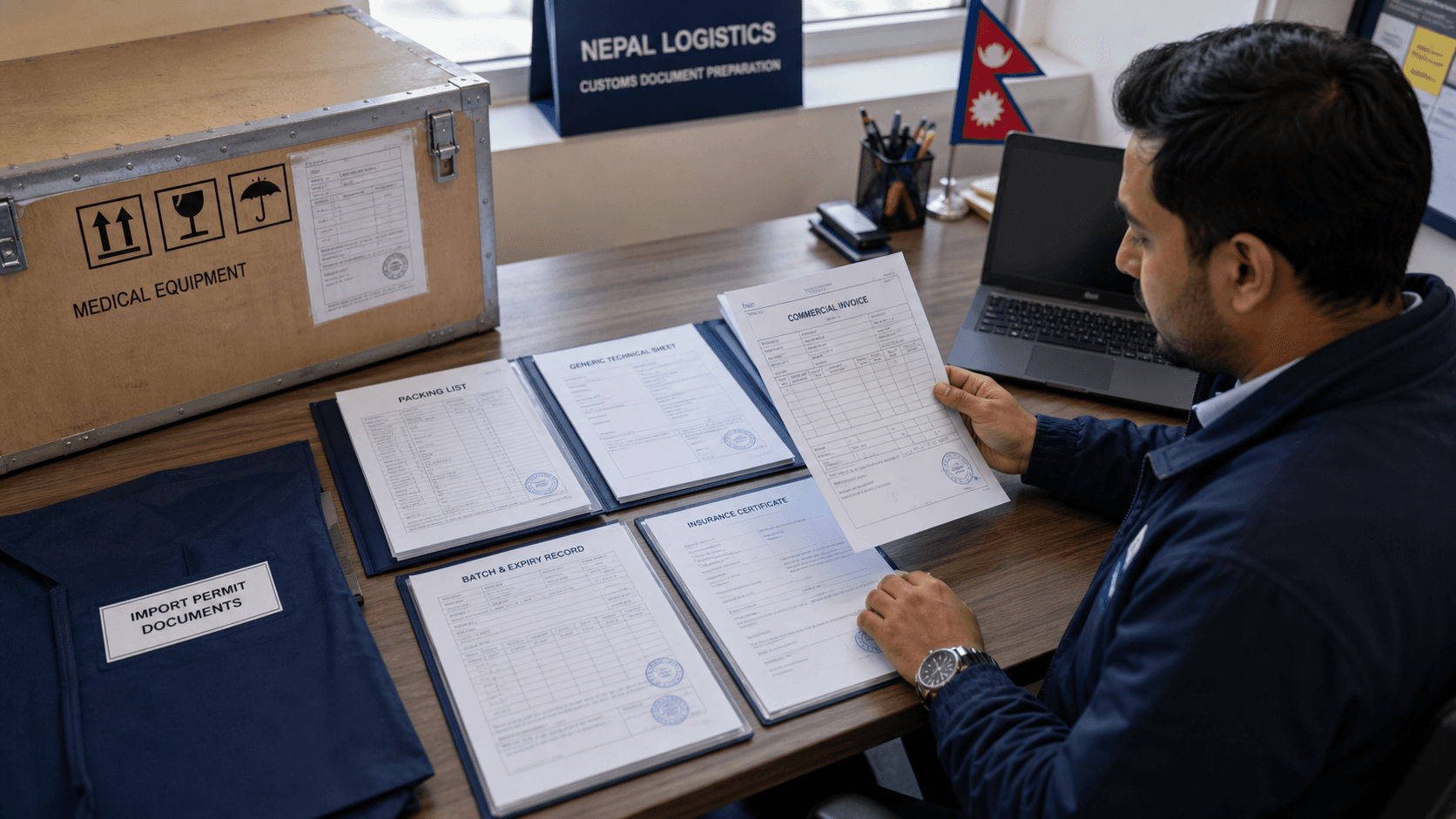
Is your medical shipment ready to move?
Share the exact product, regulatory status, packed dimensions, storage instructions, origin, destination and deadline. Sea Sky Cargo can review the freight and customs plan before dispatch.
Nepal customs and product-regulatory checks
Customs clearance and product approval are connected but separate. Nepal Customs may review the description, HS code, customs value, origin, duty and VAT, permit status and inspection requirement. The product regulator may require registration, recommendation, technical documentation or another approval before import.
Nepal's Department of Drug Administration describes itself as the national authority for medicines and medicine-related technology products. Its published medicine-registration guidance includes import-recommendation processes for certain products and materials, while its health-technology directive addresses equipment and medical-device controls. The exact requirement depends on the product and current implementation, so the importer should confirm it directly before shipment.
Use the Department of Customs for the current tariff and customs framework. The Department of Health Services is relevant to Nepal's public-health service system, but a health-sector consignee or programme does not replace the product-specific approval and customs process.
- Confirm the legal importer and its licence or registration status
- Check the current tariff classification and tax treatment
- Confirm product registration, recommendation or permit requirements
- Align invoice, packing list, labels, batch and expiry records
- Provide technical sheets for equipment, devices and unusual products
- Plan where sensitive cargo can wait during inspection or sampling
- Keep a qualified product contact available to answer customs questions
Sea Sky's customs clearance in Nepal support can coordinate the freight and customs file. It does not replace the importer, manufacturer, regulator, laboratory or healthcare professional responsible for product approval and use.
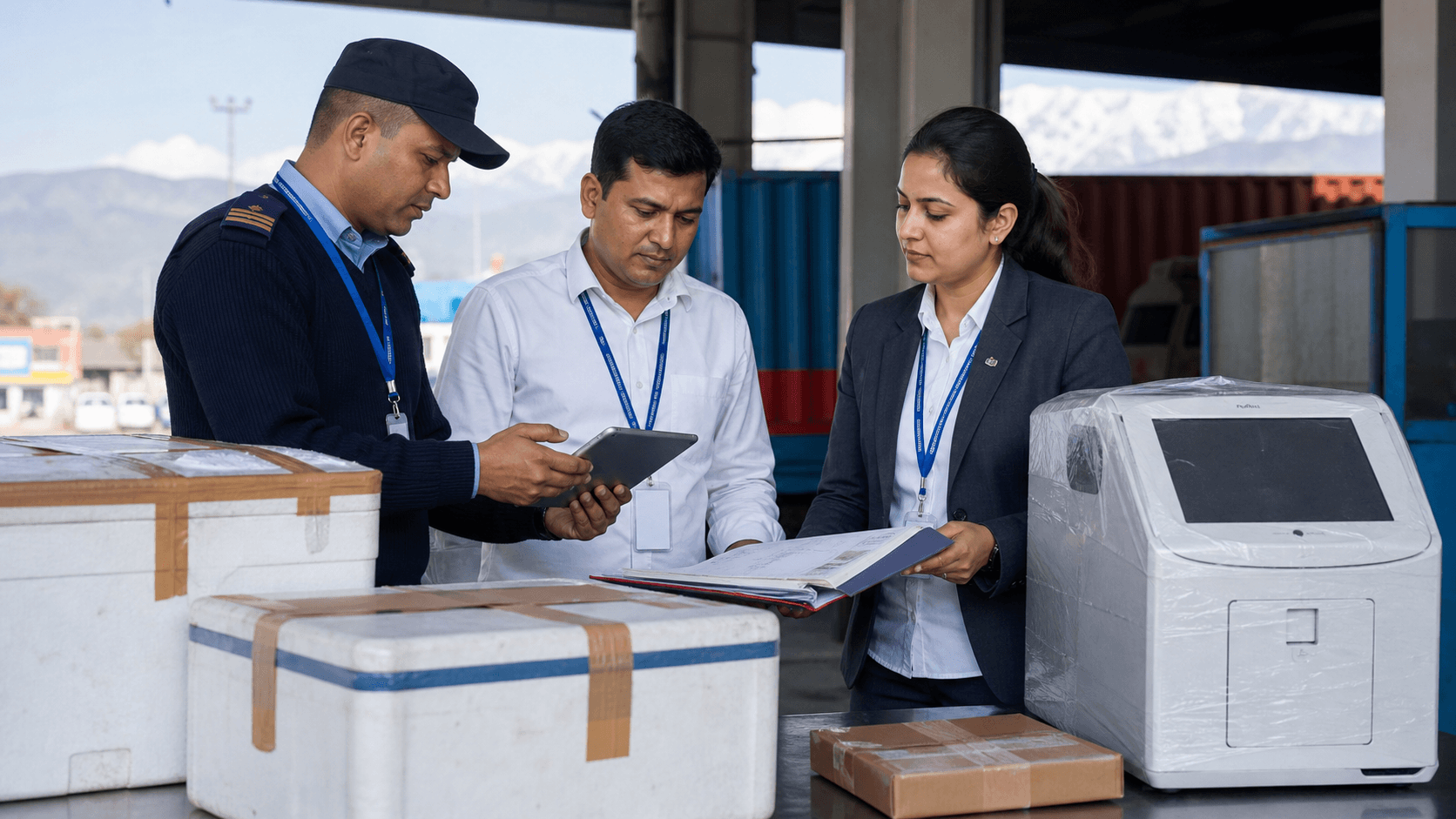
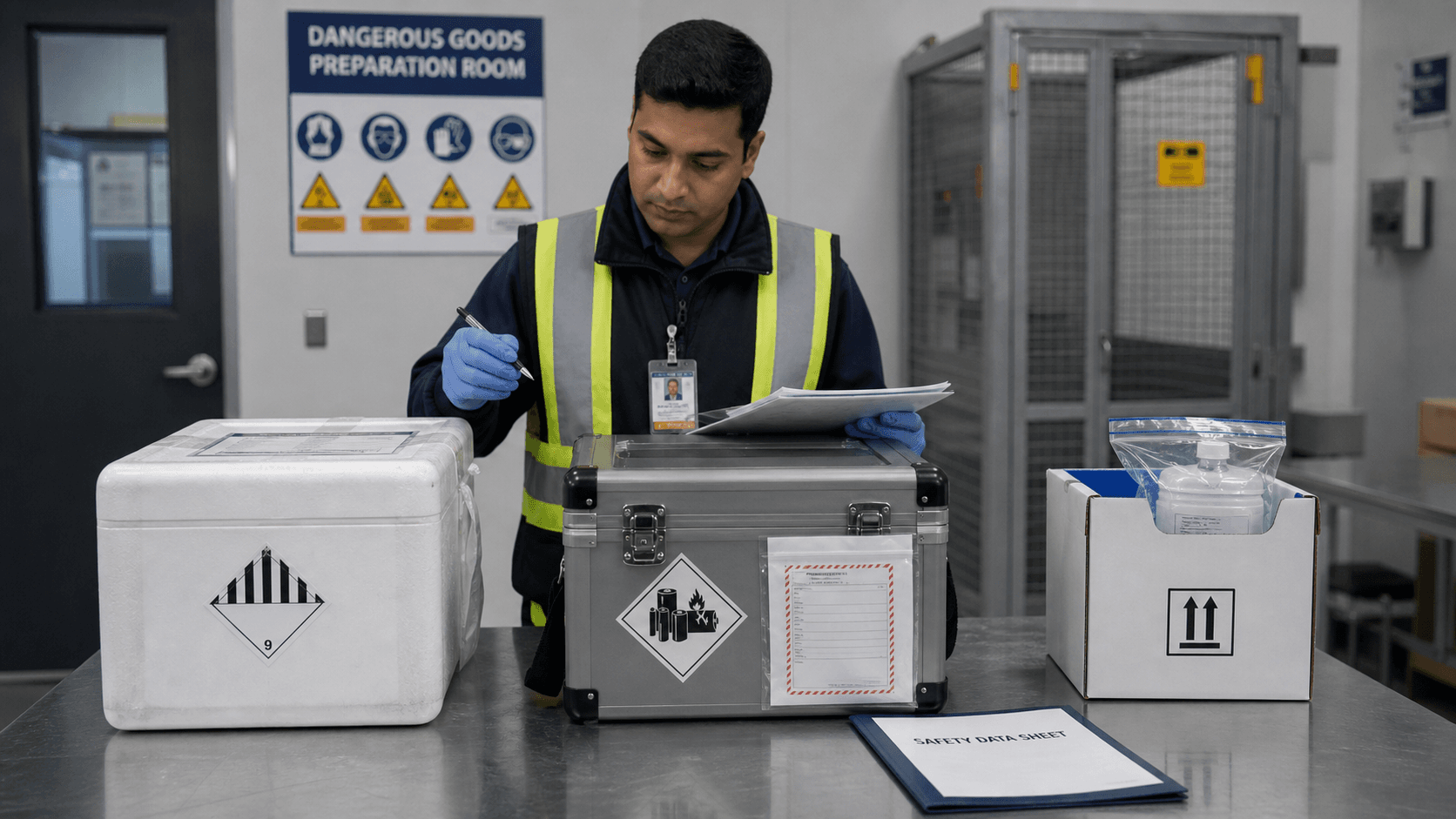
Dry ice, batteries, samples and dangerous-goods acceptance
Some medical shipments become dangerous goods because of what they contain or how they are kept cold. Dry ice is solid carbon dioxide and is regulated as hazardous material in air transport. Lithium batteries in equipment, certain chemicals, compressed gases, infectious substances and radioactive medical materials may also trigger specific rules. IATA's dangerous-goods documentation includes current checklists and infectious-substance guidance. Classification, packing and declarations should be completed by competent personnel under the current rules and airline variations. Never conceal a regulated component to protect the booking schedule. Sea Sky Cargo can coordinate an acceptance check and identify the need for a specialist provider, but it should not classify an unknown biological or chemical substance from a casual product description.
| Potential trigger | Action before booking |
|---|---|
| Dry ice | Confirm quantity, package ventilation, marks, labels, documents and carrier limits |
| Lithium batteries | Identify battery type, watt-hour or lithium content, installation status and test-summary availability |
| Biological or diagnostic samples | Obtain a competent classification and confirm whether infectious-substance rules apply |
| Chemicals or reagents | Review the safety data sheet and transport classification, not only the commercial label |
| Radioactive medical material | Use appropriately licensed specialists and obtain carrier and authority approval |
Packaging, security, chain of custody and insurance
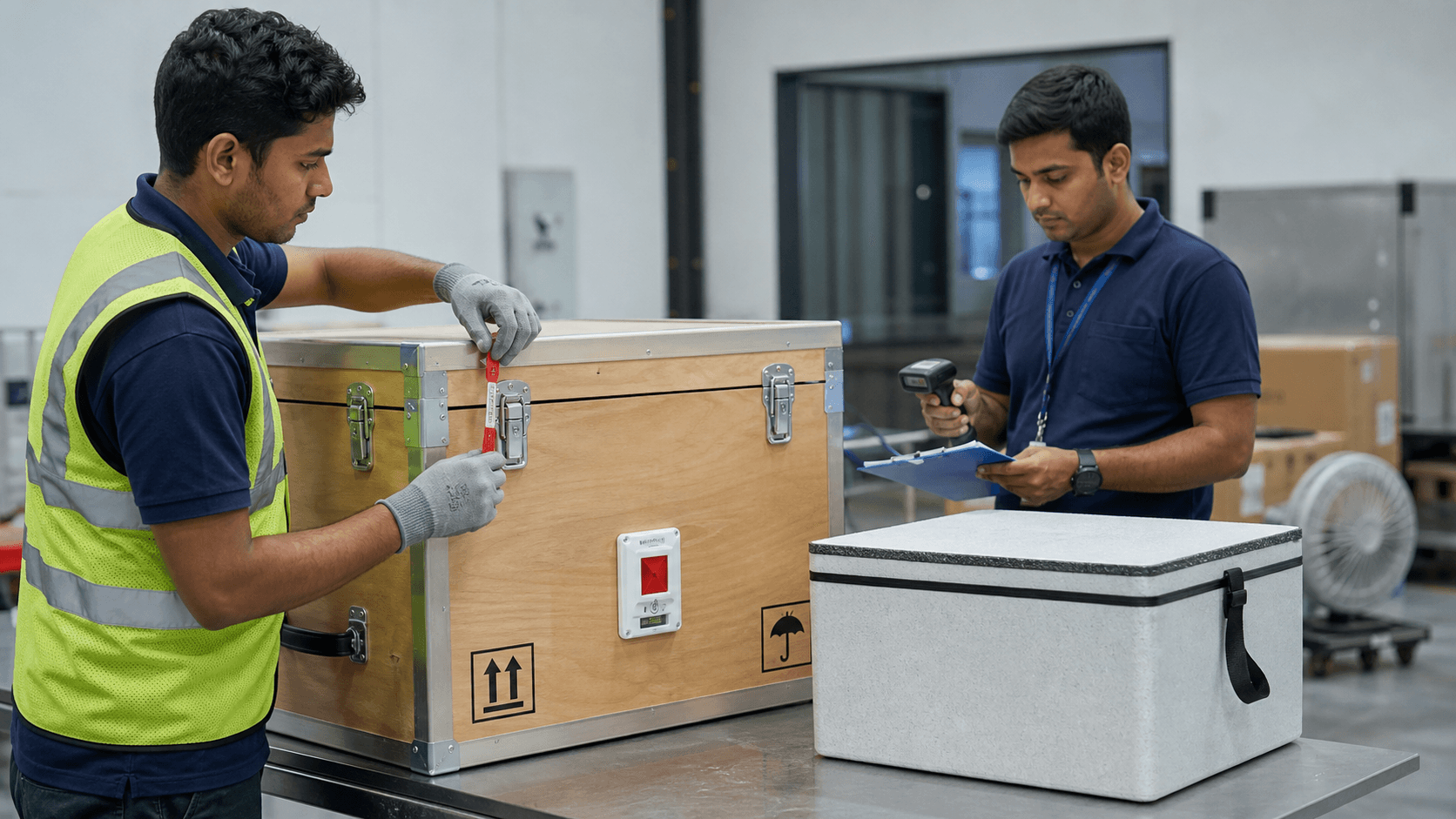
Life-logistics packaging must protect the product across pickup, terminal handling, customs examination, vehicle transfer and final receipt. Equipment may need custom crates and shock indicators; sterile or high-value consumables may need tamper evidence; temperature-sensitive products may need qualified passive or active systems.
- Use packaging matched to weight, fragility, orientation and route duration
- Keep labels readable without revealing unnecessary sensitive information
- Record package seals, serial numbers, batch details and visible condition
- Photograph the packed cargo, dimensions, weight and handover condition
- Limit unplanned opening and document every authorised inspection
- Use named handover contacts and signed receipt records
- Keep monitoring data and exception reports with the shipment file
- Confirm security arrangements for controlled or high-value products
Cargo insurance should reflect the actual product value, freight, route and agreed sales term. Ask about exclusions for delay, temperature variation, inadequate packaging, inherent vice and unattended storage. Carrier liability can be limited and does not automatically reimburse the commercial or clinical consequence of a damaged shipment.
For food, medicines and other temperature-sensitive products, Sea Sky's perishable cargo service provides additional handling context.
Common life-logistics mistakes and how to prevent them
Most failures begin before pickup. A missing product detail, unsuitable pack-out or unprepared receiver can turn a manageable transport delay into a quality or compliance problem. Urgency should improve preparation, not justify skipping it. Where patient safety or product integrity may be affected, pause the movement until the responsible product and compliance teams have confirmed the plan.
| Mistake | Business risk | Preventive action |
|---|---|---|
| Requesting a quote with a vague description | Wrong route, permit advice or carrier acceptance | Provide the exact product and technical record |
| Booking before approval is confirmed | Storage, return or customs-delay costs | Obtain product-specific confirmation before dispatch |
| Guessing the temperature range | Product damage or invalid excursion review | Use the manufacturer's approved instructions |
| Ignoring dry ice, batteries or samples | Airline rejection and safety non-compliance | Run a dangerous-goods acceptance check early |
| Arranging delivery after customs release | Cargo waits without suitable storage | Pre-book the vehicle and prepare the receiver |
| No exception authority | Confusion after damage or temperature excursion | Name the quality and operational decision-makers |

Pre-shipment checklist and Sea Sky Cargo support
Use this checklist before the cargo is handed to the carrier:
- Record the exact product, manufacturer, model or formulation and intended use
- Confirm the importer, consignee, regulator and final receiver
- Support the HS code with product and technical information
- Verify registration, recommendation, permit and licence requirements
- Confirm storage, handling, orientation and shelf-life requirements
- Declare dry ice, batteries, chemicals, gases or samples accurately
- Record package count, dimensions, weight, value and cargo-ready time
- Choose the route using urgency, acceptance, customs and final delivery
- Prepare the invoice, packing list, permits and product records
- Book customs handling, suitable storage and final delivery before arrival
- Name escalation contacts and the authority for exception decisions
- Confirm insurance and document the packed-cargo condition
Sea Sky Cargo can support life-logistics route planning, air and road coordination, Nepal customs preparation, document review and final-delivery planning. Where the cargo requires validated cold-chain systems, dangerous-goods specialists, licensed customs representation or regulatory approval, the quotation should identify those responsibilities and partner arrangements clearly.
Send the product description, HS code if known, packed dimensions, weight, value, storage instructions, origin, Nepal delivery point, deadline and document status through the get quote page. The more precise the cargo brief, the safer and more useful the route review will be.

Frequently asked questions
What are life logistics services? Life logistics coordinates freight, handling, documents, customs and delivery for products connected to healthcare, diagnosis, laboratories, emergency response and patient care.
Which medical cargo can Sea Sky Cargo support? Potential cargo includes hospital supplies, medicines, medical equipment, diagnostic products, laboratory materials and urgent healthcare shipments, subject to product approval, carrier acceptance and the agreed service scope.
Does every medical shipment need refrigeration? No. The manufacturer or product owner must specify the approved storage and transport conditions. Some healthcare goods move as normal ambient cargo, while others need strict temperature control.
Does medical cargo need an import permit in Nepal? Requirements depend on the product. Medicines, pharmaceutical materials, health-technology products and other regulated goods may need registration, recommendation, permission or technical documentation. Confirm with DDA and the responsible importer before dispatch.
Is air freight always best for healthcare cargo? Air freight is often useful for urgent, small or high-value shipments. The best plan still depends on carrier acceptance, customs readiness, package duration, connections and final delivery.
Can medical samples be sent by normal courier or cargo? Only after a competent classification. Biological samples, infectious substances, dry ice and chemicals can trigger dangerous-goods rules and carrier restrictions.
Who decides whether a product is usable after a temperature excursion? The responsible manufacturer, quality team or authorised product owner should decide using approved stability and excursion procedures. A freight forwarder or driver should not make that clinical or quality decision.
Can Sea Sky Cargo arrange final delivery to a hospital or laboratory? Sea Sky can plan airport-to-door, border-to-warehouse or domestic delivery where available. The quotation should state vehicle, handling, timing and receiving responsibilities.
Does Sea Sky Cargo provide regulatory approval? No. Sea Sky can support document review and coordination, while the importer, manufacturer and relevant authority remain responsible for product registration, approval and lawful use.
What details are needed for a life-logistics quote? Provide the exact product, regulatory status, storage requirements, package dimensions, weight, value, origin, destination, deadline, dangerous-goods components and available documents.

Plan the complete healthcare cargo journey
Sea Sky Cargo can coordinate route comparison, Nepal customs preparation, cargo handling and final-delivery planning under an agreed scope. Product approval and clinical suitability remain with the responsible manufacturer, importer and regulator.