Why Germany matters for international business cargo
Germany is a major European market for manufacturing, automotive supply chains, machinery, healthcare, retail, ecommerce and specialist consumer products. A shipment may be addressed to a buyer, distributor, factory, fulfilment centre, trade-fair contractor or final business customer anywhere in the country.
For Nepal exporters, potential Germany-bound cargo includes garments, pashmina, carpets, felt goods, handmade paper, handicrafts, tea, coffee, herbs, jewellery, product samples and small commercial orders. The market opportunity is real, but the shipment must satisfy both transport requirements and the rules for placing that particular product on the EU market.
- Business-to-business orders for German importers and distributors
- Samples and first orders used to test a buyer relationship
- Fashion, textile, felt and handmade product shipments
- Tea, coffee and packaged food products with the required controls
- Machinery parts, tools and industrial components
- Electronics, medical or laboratory goods with product compliance
- Trade-fair displays, prototypes and time-bound business cargo
Treat Germany as a product-and-route project, not simply a destination name. Before booking, identify the exact commodity, German importer, delivery postcode, commercial deadline and party responsible for customs duty, import VAT and product compliance.

How cargo moves from Nepal to Germany
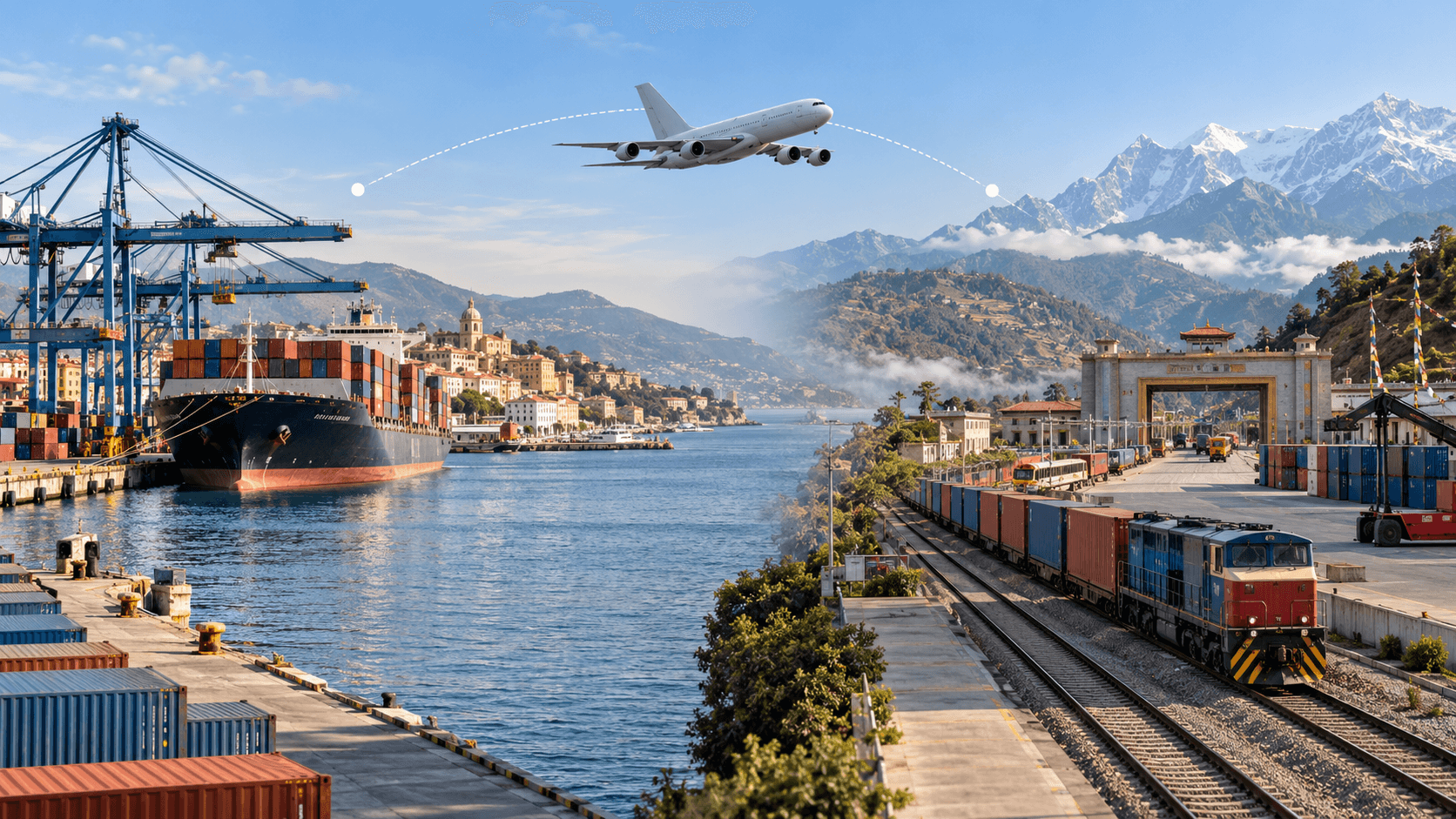
There is no single Nepal-to-Germany route for every shipment. Air cargo normally leaves through Tribhuvan International Airport and connects through an airline hub before reaching Frankfurt or another European cargo airport. Sea cargo first needs an inland movement from landlocked Nepal to a suitable seaport, followed by ocean freight and European inland delivery. The German delivery city changes the best gateway. Frankfurt, Cologne, Munich, Berlin, Hamburg, Stuttgart and a smaller industrial town can produce different trucking, terminal and appointment costs. Ask for the named gateway and final handoff instead of accepting a quotation that says only "Europe" or "Germany". For the basic booking sequence, use Sea Sky's international freight booking guide. If a European gateway option is being compared, the guides for shipping to the Netherlands and shipping to Denmark show why the first port or airport is not always the final market.
| Route stage | Air freight plan | Sea freight plan |
|---|---|---|
| Nepal origin | Pickup, export file, airport handling and airline acceptance | Pickup, export/transit file and road or rail-linked movement to a seaport |
| International gateway | Connection through the carrier's operating hub | Indian or other booked seaport and scheduled ocean service |
| EU entry | Frankfurt or another European air gateway | Hamburg, Bremerhaven or another EU port such as Rotterdam, depending on the service |
| Customs procedure | Import clearance at entry or customs transit to the nominated place | Import clearance at the first EU gateway or movement under customs transit |
| Germany delivery | Airport handling, release and road delivery | Port/CFS handling, release and truck or rail-linked inland delivery |
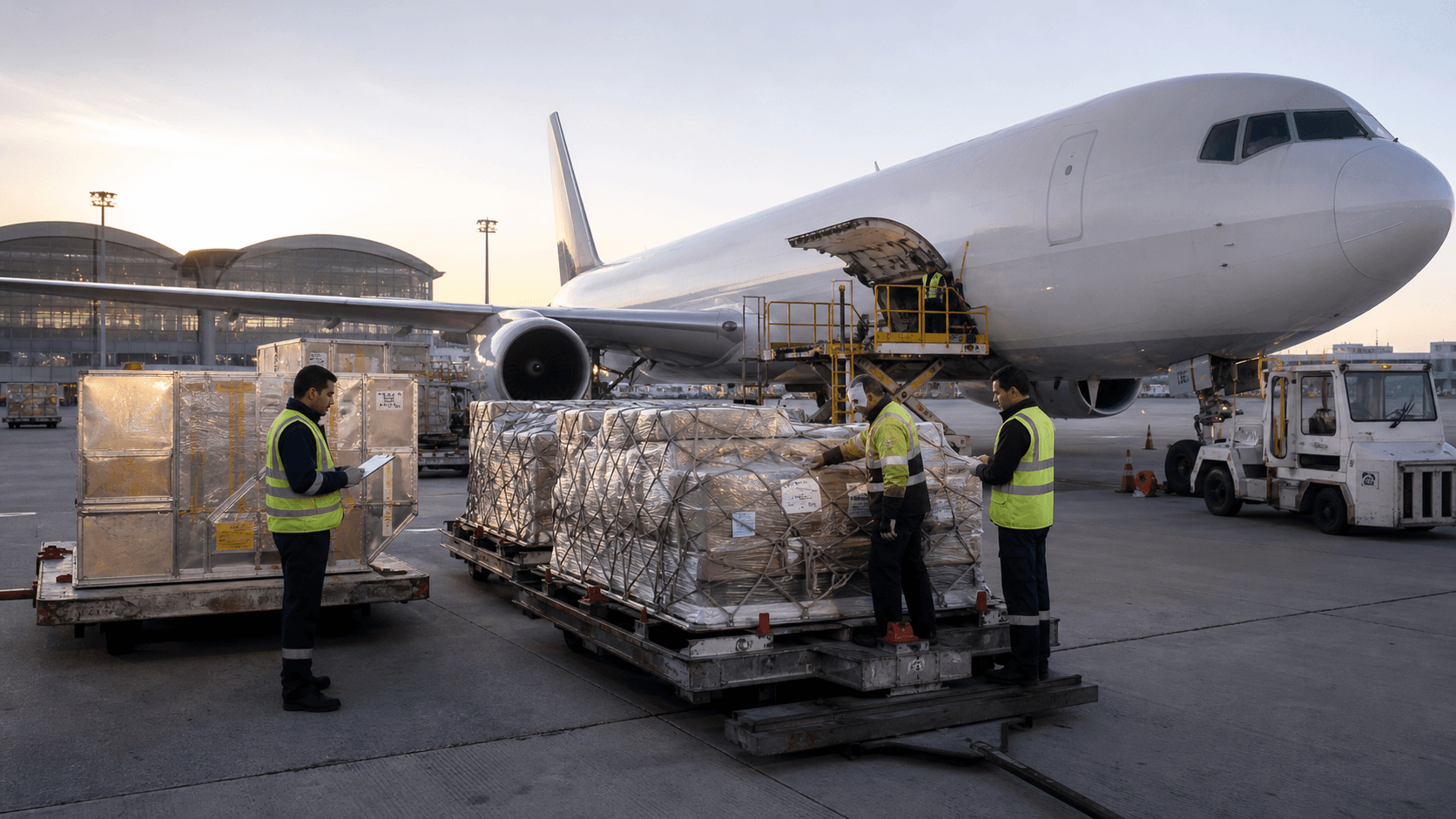
Air freight to Germany through Frankfurt and EU hubs
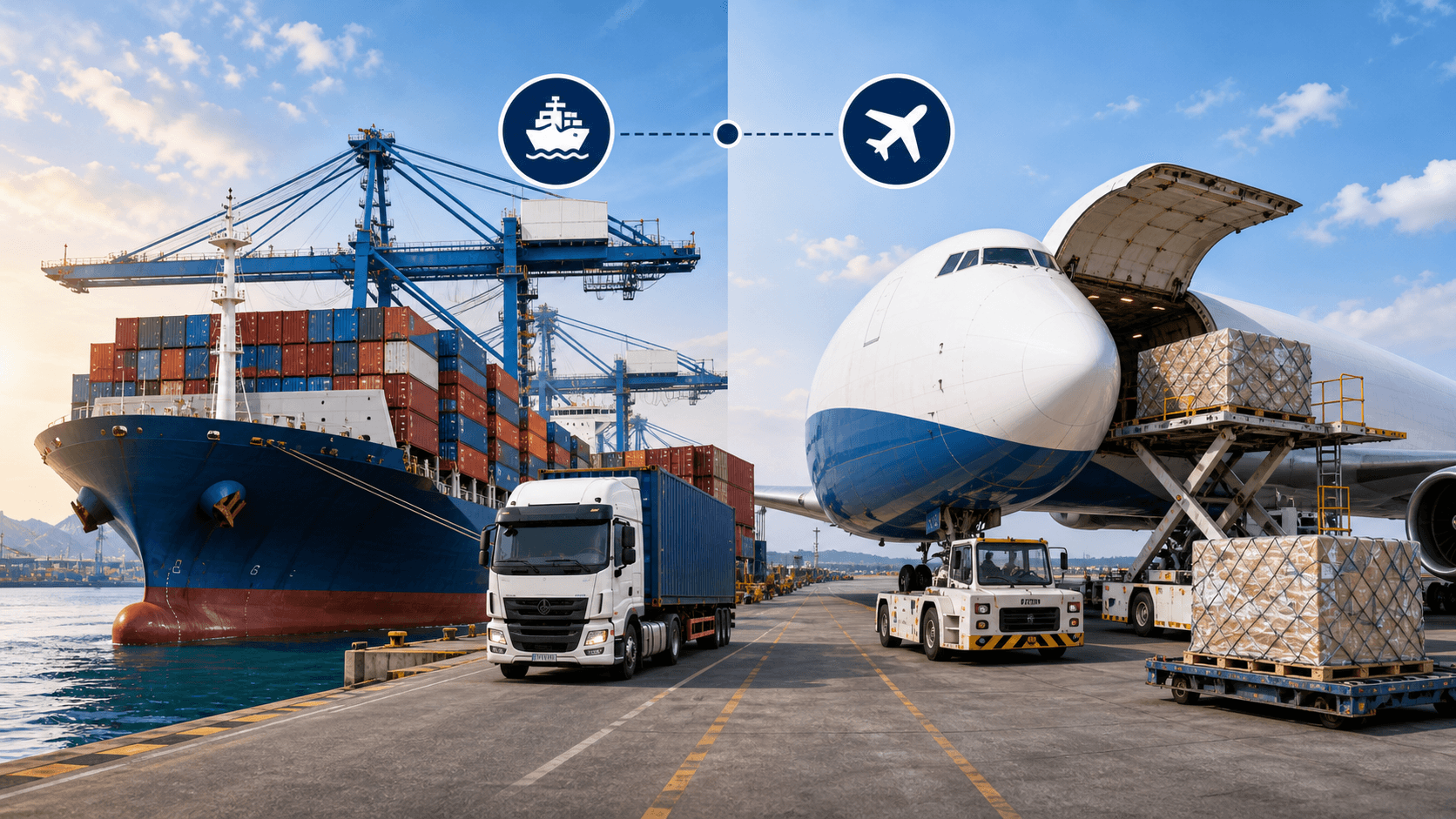
Air freight is usually the first comparison for urgent, lightweight, high-value or time-sensitive cargo. It can suit samples, documents, fashion orders, electronics, spare parts, medical or laboratory goods and commercial shipments whose delivery deadline is worth more than the freight saving from sea transport.
Frankfurt Airport is Germany's main international cargo hub and describes its cargo location as a leading European airfreight centre. A Nepal shipment does not need to travel on one direct aircraft to use Frankfurt: the actual booking may connect through the airline's network hub and may also enter Europe through another airport before road delivery into Germany.
Airlines normally charge the greater of actual weight and volumetric weight. The final packed dimensions therefore matter as much as the scale weight. Oversized cartons, non-stackable pieces, dangerous goods, lithium batteries, liquids, temperature-sensitive cargo and high-value shipments need acceptance checks before delivery to the airport.
- Confirm packed dimensions and gross weight for every piece
- Check airline acceptance before moving regulated or unusual cargo
- Build connection time and destination handling into the delivery promise
- Confirm whether the quote is airport-to-airport or includes pickup and final delivery
- Prepare complete house-level shipment data for EU pre-arrival filing
Sea Sky's air freight service can compare practical routing, chargeable weight, handling and document readiness using the actual shipment details.
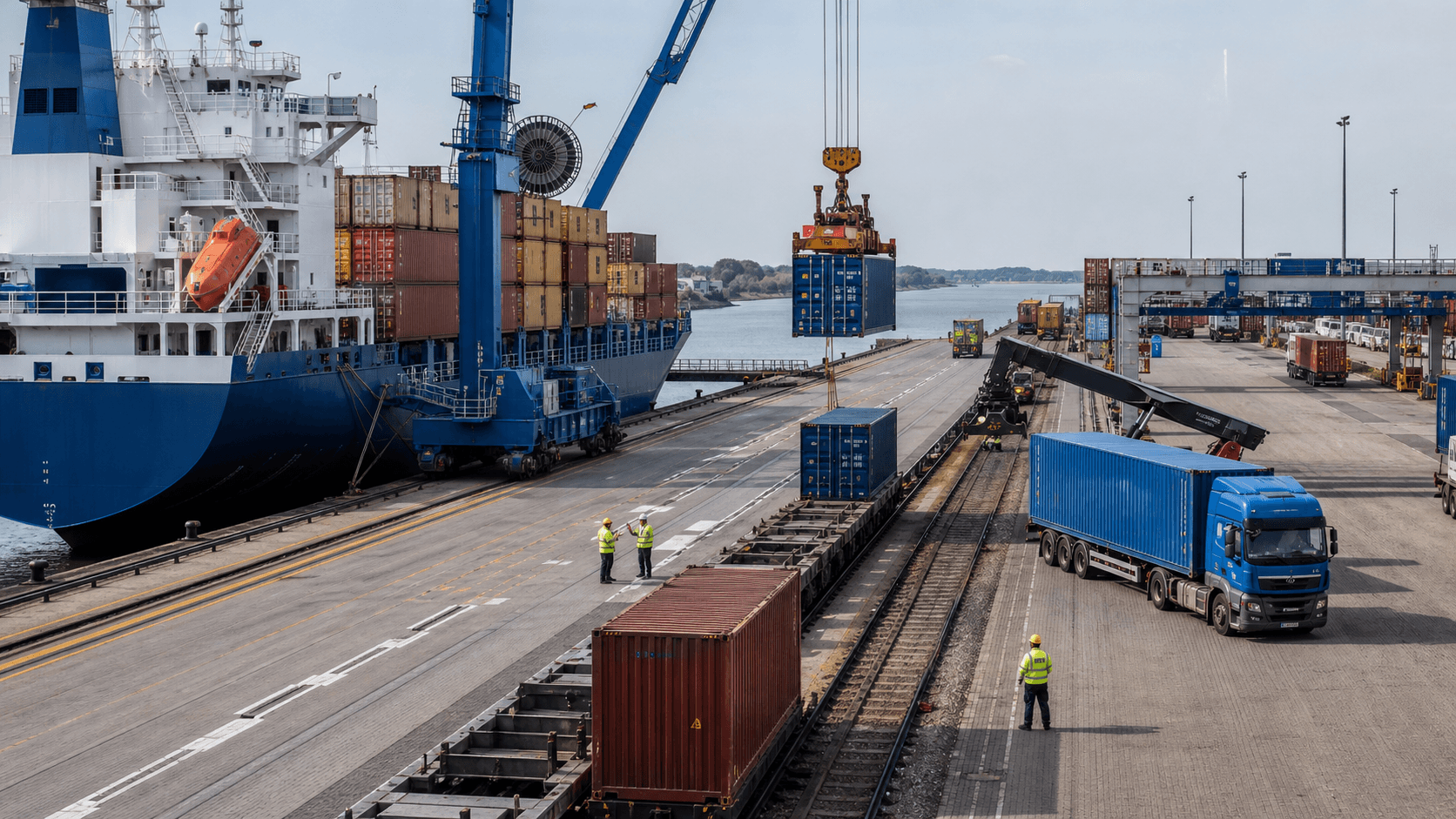
Sea freight to Germany by FCL or LCL
Sea freight is normally stronger for large, heavy or cost-sensitive commercial cargo that can tolerate a longer and less predictable end-to-end journey. It can suit garments, carpets, large handicraft orders, furniture, machinery, industrial supplies, raw materials and palletised inventory. A full container load gives one shipper dedicated container space. Less than container load combines separate consignments in a shared container and adds consolidation and deconsolidation handling. The cheaper choice depends on volume, density, stackability, handling charges, schedule and final delivery rather than a universal CBM cutoff. Germany-bound ocean freight can use Hamburg or Bremerhaven, but a carrier may also offer a competitive service through another EU gateway followed by customs transit and inland transport. The Port of Hamburg intermodal network illustrates how containers connect by rail, road and inland waterways into Germany and the European hinterland. Use Sea Sky's sea freight service and LCL shipping guide to compare the complete movement rather than only the ocean line-haul rate.
| Sea-freight question | Why it changes the plan |
|---|---|
| FCL or LCL? | Changes container control, cargo handling, minimums and destination fees |
| Which origin seaport? | Changes Nepal inland transit, cut-offs, cost and sailing options |
| Which EU gateway? | Changes port charges, customs procedure and Germany inland delivery |
| Where is customs clearance? | Determines importer/broker coordination and whether customs transit is needed |
| What is the free-time plan? | Affects storage, demurrage, detention and delivery risk |
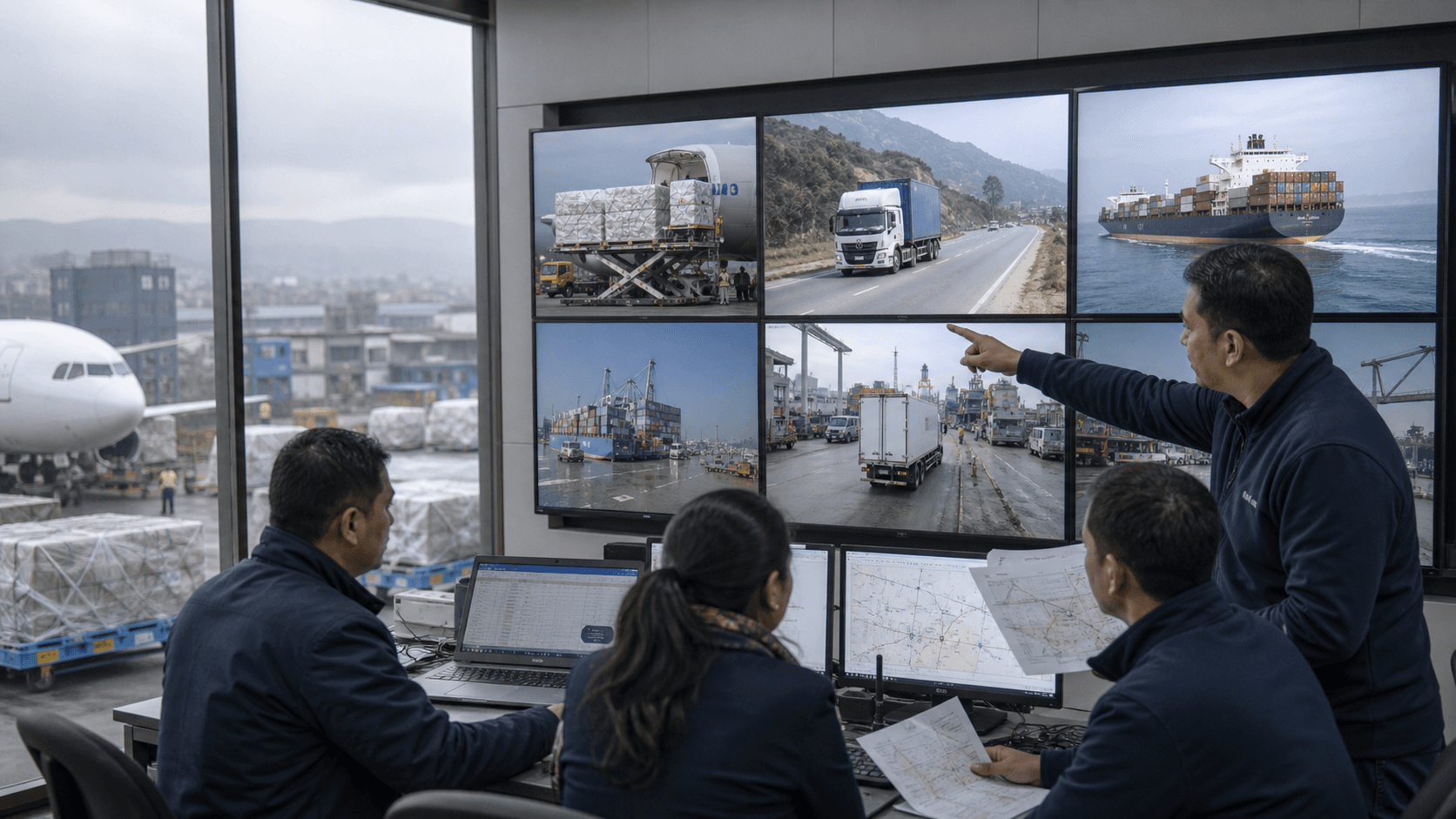
Air vs sea freight: make a business decision
The cheapest transport line is not always the cheapest business decision. Inventory value, buyer deadline, production stoppage, product shelf life, storage exposure and the cost of a missed sales window should sit beside the freight price. Ask for a realistic range of milestones instead of treating a transit estimate as a guaranteed delivery date. Origin cut-off, airline or vessel schedule, connection, customs review, terminal release and final delivery appointment all affect the actual result.
| Cargo situation | Usually compare first | Decision reason |
|---|---|---|
| Samples or buyer approval pieces | Air freight | Fast feedback can unlock the commercial order |
| Urgent spare parts or production inputs | Air freight | The cost of downtime may exceed the freight premium |
| Small high-value shipment | Air freight | Shorter transit and reduced inventory time may matter |
| Large retail or wholesale order | Sea freight | Container economics normally improve with volume |
| A few non-urgent pallets | LCL sea and consolidated air | Compare minimums, chargeable weight and handling |
| Fragile or non-stackable cargo | Case-by-case air, FCL or specialist service | Handling risk can outweigh the base rate |
| Split launch order | Air plus sea | Send urgent opening stock by air and replenishment by sea |

Documents needed for shipping from Nepal to Germany
The Germany importer and customs representative need a shipment file that describes the actual goods. Vague descriptions such as "samples," "parts" or "handicrafts" are not enough by themselves. The commercial name, material, function, model, quantity and value should support the selected HS/CN classification. If preferential tariff treatment is claimed for qualifying Nepal-origin goods, the exporter and importer should confirm the current rule of origin and proof requirement. The EU's updated GSP continues Everything But Arms access for graduating LDCs during a transition period, but preference is not automatic without qualifying origin and correct evidence. Sea Sky's REX guide for Nepali exporters explains the practical starting point. For Nepal-side support, Sea Sky can coordinate customs clearance and export documents before the shipment is handed to the airline or ocean consolidator.
| Document or data | What to verify before dispatch |
|---|---|
| Commercial invoice | Seller, buyer, consignee, detailed goods, quantity, currency, value, Incoterm and payment terms |
| Packing list | Package count, packing type, dimensions, net/gross weight and shipping marks |
| Air waybill or bill of lading data | Names, addresses, places, packages, weight, description and freight terms match the commercial file |
| HS/CN classification support | Catalogue, composition, use, model and technical data support the code |
| Nepal export declaration | Export value, product, package and destination data align with the invoice |
| Origin proof | The current preference, product rule and REX/origin statement requirement are confirmed |
| Product certificate or permit | Food, plant, wood, cosmetic, chemical, medical or technical requirements are cleared |
| Insurance evidence | Insured value, route, packages, beneficiary and coverage period match the shipment |
| Germany importer file | EORI, broker authority, tax details and final delivery contact are ready |

Need to check the Germany shipment file?
Share the product, HS code, packed dimensions, weight, invoice value, origin, German delivery point and deadline. Sea Sky Cargo can compare the route and review the origin-side documents before dispatch.
German customs, EORI and ICS2 data readiness
Germany applies the Union Customs Code and EU tariff framework. The customs declaration can be reviewed for classification, origin, customs value, restrictions, duty, import VAT and product compliance before release. The German importer or its appointed customs representative should confirm who will lodge the import declaration and who will pay the assessed amounts.
An EORI number is normally mandatory for businesses conducting customs activities in the EU. Confirm the importer's EORI and broker authority before departure, especially when the seller is quoting DDP or another arrangement that could place destination obligations on a party without the required EU setup.
ICS2 is the EU pre-arrival safety and security system. Goods transported to or through the EU need a complete Entry Summary Declaration under the applicable filing model, and accurate data is required at master and lowest house levels. The forwarder, carrier, consolidator and customer must therefore agree who supplies and files each data element before the transport cut-off.
- Use precise commodity descriptions instead of generic words
- Provide six-digit HS data and any additional code detail requested for the EU filing
- Keep shipper, consignee and buyer/seller details complete and consistent
- Confirm package count, gross weight and transport document references
- Resolve EORI and customs-representation questions before arrival
- Provide product permits and compliance evidence early when required
Use German Customs for Germany-specific import guidance, the European Commission ICS2 page for pre-arrival data requirements and Access2Markets to check current tariffs, rules of origin and product requirements by commodity code.
Sea Sky Cargo can review and coordinate the origin-side file, while the Germany importer and appointed destination customs representative remain essential for confirming the final declaration, tax treatment, compliance and release instructions.

Product compliance checks for Germany-bound cargo
Customs release and permission to sell a product are related but different questions. The EU importer is responsible for checking that products placed on the market meet the applicable safety, labelling, traceability and technical rules. CE marking is required only for product groups covered by legislation that mandates it; it should not be added to unrelated goods. The EU product compliance guidance explains the importer role and the need to verify technical documentation, labels, traceability and safety information. Requirements depend on the exact product, not merely the industry name, so the buyer's compliance team should approve the file before production and shipment.
| Cargo type | Checks to complete before freight booking |
|---|---|
| Textiles, garments, pashmina and felt | Fibre composition, textile labelling, chemicals/restricted substances and buyer specifications |
| Tea, coffee, herbs and packaged food | Ingredients, food labelling, health or plant controls, testing and importer approval |
| Wooden crafts or wood packaging | Species/material restrictions, treatment evidence, ISPM 15 packaging marks where applicable and CITES review if relevant |
| Cosmetics and wellness products | Responsible-person, notification, ingredient, safety assessment and labelling requirements |
| Electronics, batteries and machinery | Applicable CE legislation, technical file, battery/dangerous-goods status, WEEE or energy obligations |
| Medical or laboratory goods | Product classification, regulatory status, importer role and temperature/handling controls |
| Samples and trade-fair cargo | Customs procedure, value, temporary-import possibility, return plan and sale restrictions |

Packaging, cargo handling and insurance
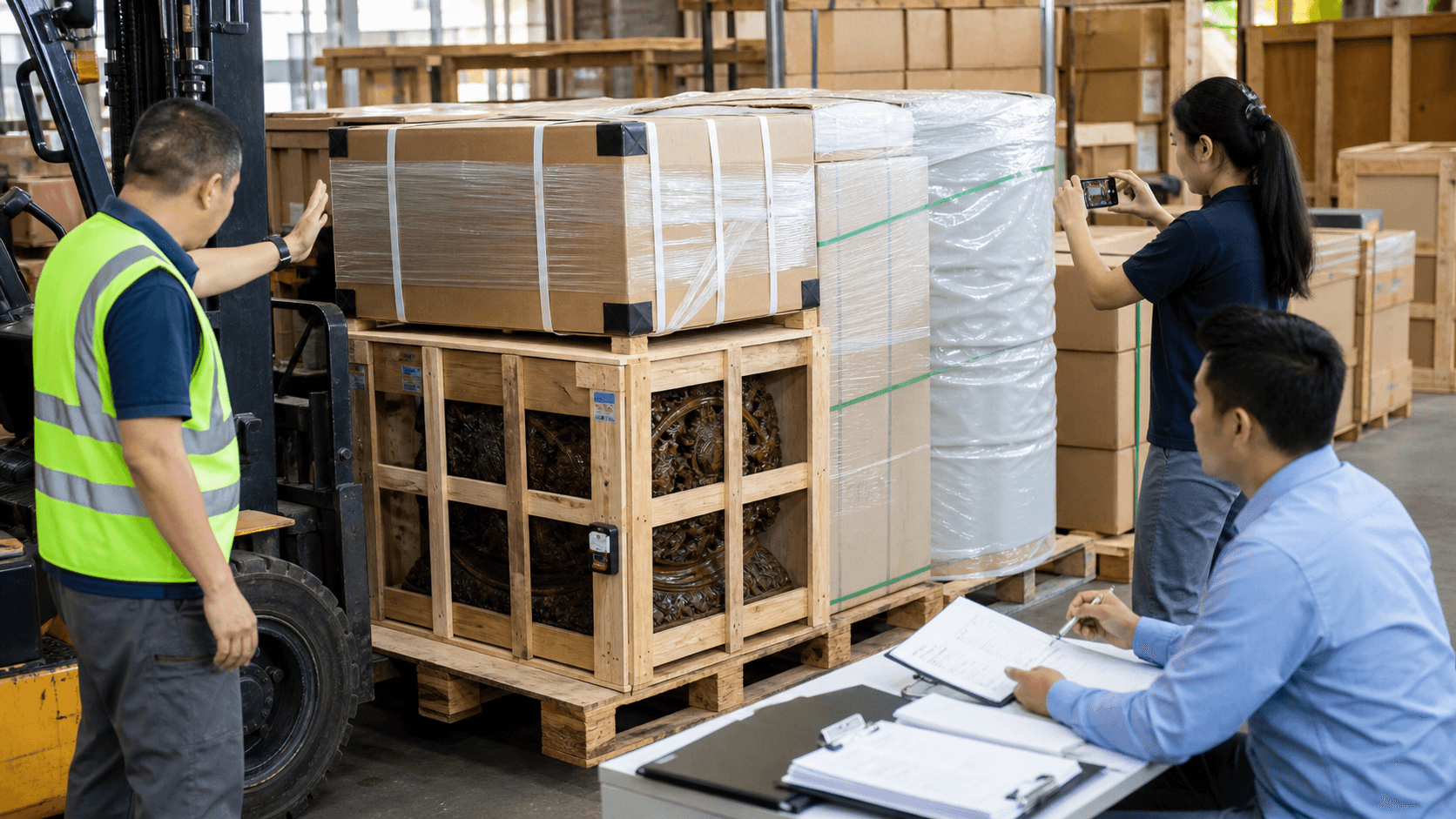
Germany-bound cargo can pass through Nepal pickup, export handling, airline or CFS processing, transfer hubs, an EU terminal, customs examination and road delivery. Packaging must survive the complete route, not only the first vehicle.
- Use export-quality cartons or crates matched to product weight
- Palletise loose commercial cartons when the route and receiver support it
- Use edge protection, internal cushioning, strapping and moisture barriers where needed
- Keep package marks consistent with the packing list and transport booking
- Protect fragile surfaces and prevent movement inside each carton or crate
- Confirm stackable or non-stackable status honestly
- Check treatment and marking requirements for solid-wood packaging
- Photograph package condition, labels, dimensions and weight before handover
Insurance should match the sales term and the real route. Ask who arranges the policy, which value is insured, where cover begins and ends, which risks or commodities are excluded, and how a claim would be documented. Carrier liability can be limited and is not a substitute for cargo insurance.
Sea Sky's freight and cargo insurance guide explains the difference between operational responsibility, carrier liability and a cargo policy.
Landed cost, Incoterms and delivery responsibility
A Germany quotation should identify more than the airport or ocean freight. Businesses need the estimated cost from the agreed Nepal handover point to the agreed German delivery point, with every party's responsibility shown clearly. The Incoterm must match the commercial contract and operational ability of both parties. DAP does not make the seller responsible for German import clearance and taxes, while DDP can create significant customs, VAT and compliance obligations for the seller. Do not offer DDP merely because a buyer requests "door delivery"; confirm the lawful importer and destination setup first. Currency, exchange rate, customs value and tax-recovery assumptions should also be visible. A German business may recover import VAT when the legal and tax conditions are satisfied, but that accounting treatment belongs with the importer and its tax adviser, not the freight quotation.
| Cost or responsibility | Question to settle |
|---|---|
| Nepal pickup and export | Who pays collection, export handling, documents and clearance? |
| International freight | Is the rate airport/port only, consolidated, all-in or subject to surcharges? |
| EU terminal charges | Which handling, security, CFS, delivery-order or storage items are included? |
| Customs and tax | Who is importer of record and who pays duty, import VAT, excise or broker charges? |
| Germany inland delivery | Is delivery to the postcode included, and are appointment, tail-lift, labour or waiting charges possible? |
| Insurance | Which party buys the cover and what route/value is insured? |
| Delay exposure | Who handles storage, demurrage, detention, examination or failed-delivery costs? |

Germany cargo checklist and Sea Sky Cargo support
Use a pre-booking review to connect the buyer, product, route and documents before cargo moves:
- Confirm the exact product, material, use, model and HS/CN code
- Confirm the German importer, EORI, customs representative and delivery contact
- Record package count, dimensions, gross weight and stackability
- Choose air, FCL, LCL or a split air/sea order using total business cost
- Confirm the actual origin and EU gateways plus the customs-clearance point
- Prepare invoice, packing list, transport data and Nepal export documents
- Check origin preference and REX evidence where applicable
- Obtain product-compliance approval from the Germany buyer/importer
- Confirm Incoterm, duty/VAT responsibility, insurance and final delivery scope
- Build schedule buffer around cut-offs, connections, customs and delivery appointments
Sea Sky Cargo can compare air and sea freight, review the Nepal-side shipment file, coordinate export handling and work with the agreed overseas network for destination handoff. The exact service scope, destination partner, customs representation and delivery responsibility should be shown in the quotation.
Share the supplier or pickup location, product description, dimensions, weight, value, cargo-ready date, Germany postcode and deadline through the get quote page. A route-specific quotation is more useful than a generic price per kilogram or CBM.

Frequently asked questions
What is the best way to ship cargo from Nepal to Germany? Use air freight for urgent, smaller or high-value cargo and compare sea freight for larger, heavier or cost-sensitive orders. The final choice should use packed dimensions, delivery deadline and complete landed movement.
Is there a direct cargo route from Nepal to Germany? Some bookings may use direct segments, but businesses should expect route options to depend on carrier schedules. Air freight commonly connects through airline hubs, while sea freight needs inland transit from Nepal to a seaport before the Europe leg.
Which German airport handles international air cargo? Frankfurt is Germany's main international cargo hub, but the booked service may use another EU airport followed by road transport. Confirm the actual gateway on the quotation.
Which seaport is used for shipping to Germany? Hamburg and Bremerhaven are major German options, while some services enter through another EU gateway such as Rotterdam and continue under customs transit or inland transport. The best port depends on carrier service and delivery location.
What documents are needed for Nepal-to-Germany cargo? Common requirements include a commercial invoice, packing list, transport document data, Nepal export declaration, HS/CN classification support, origin evidence where applicable, insurance and any product-specific certificate or permit.
Does the German importer need an EORI number? Businesses involved in EU customs activities normally need an EORI. The importer and customs representative should confirm the exact setup before dispatch.
What is ICS2 and why does the exporter need to care? ICS2 is the EU pre-arrival safety and security system. The carrier or filing party needs accurate shipment data, so vague descriptions or incomplete house-level details can delay acceptance or arrival processing.
Can Nepal-origin goods receive EU tariff preference? Qualifying goods may benefit under the applicable EU GSP/EBA arrangement when origin rules and proof requirements are met. Check the current product-specific position in Access2Markets before quoting duty savings.
Can Sea Sky Cargo arrange door-to-door delivery in Germany? Sea Sky can plan and quote destination handoff or delivery through the agreed network where available. The quotation must state the Incoterm, importer, customs representative, tax responsibility and exact delivery scope.
How long does shipping to Germany take? Timing depends on origin readiness, carrier routing, cut-offs, connections, customs, terminal release and final delivery. Request milestone ranges for the actual cargo instead of relying on a generic transit claim.
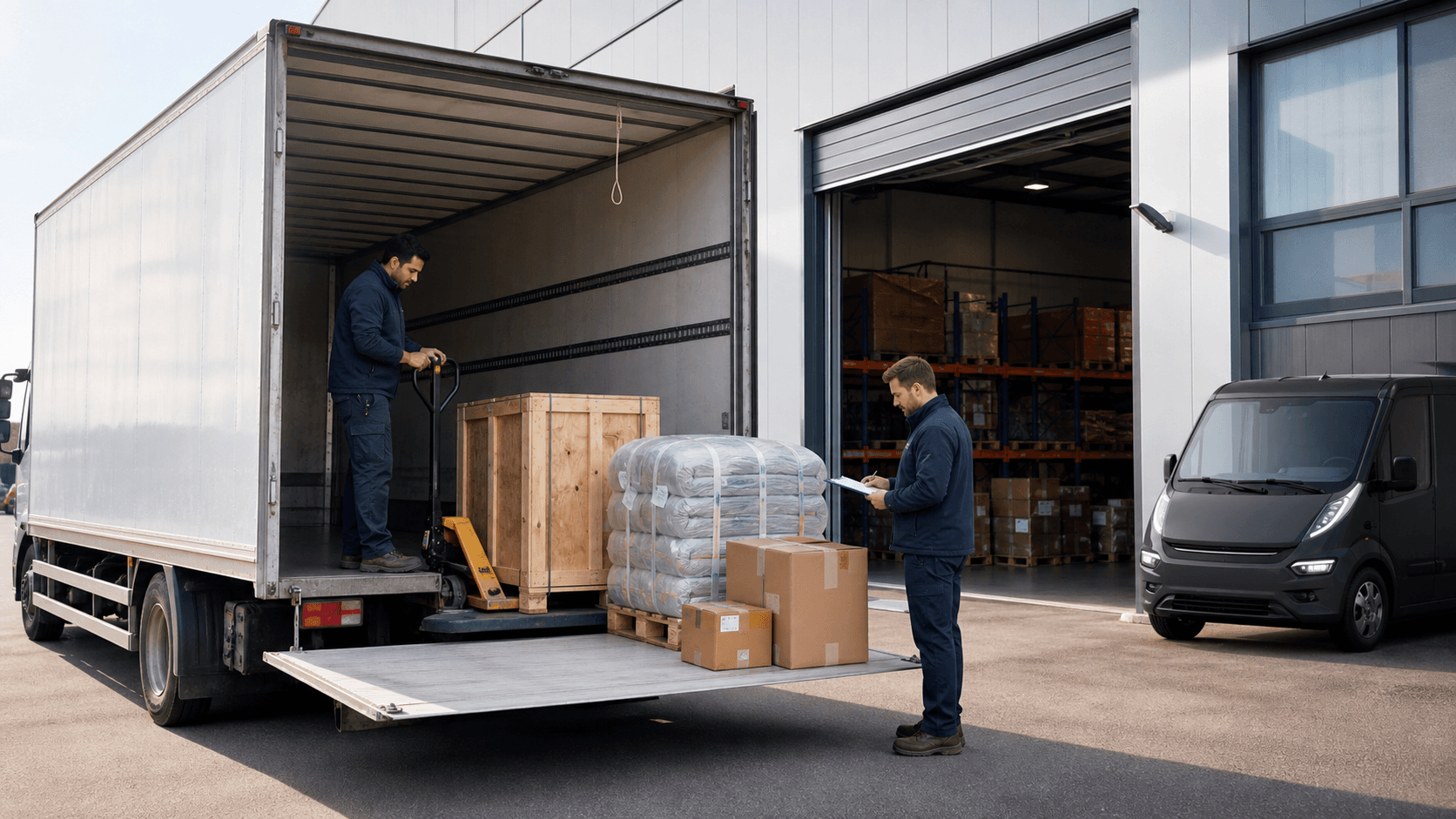
Price the complete Germany route before booking
Sea Sky Cargo can compare air and sea freight, coordinate Nepal export preparation, review cargo documents and plan the handoff to a Germany destination partner or customs representative under the agreed scope.