What air freight in Nepal actually includes
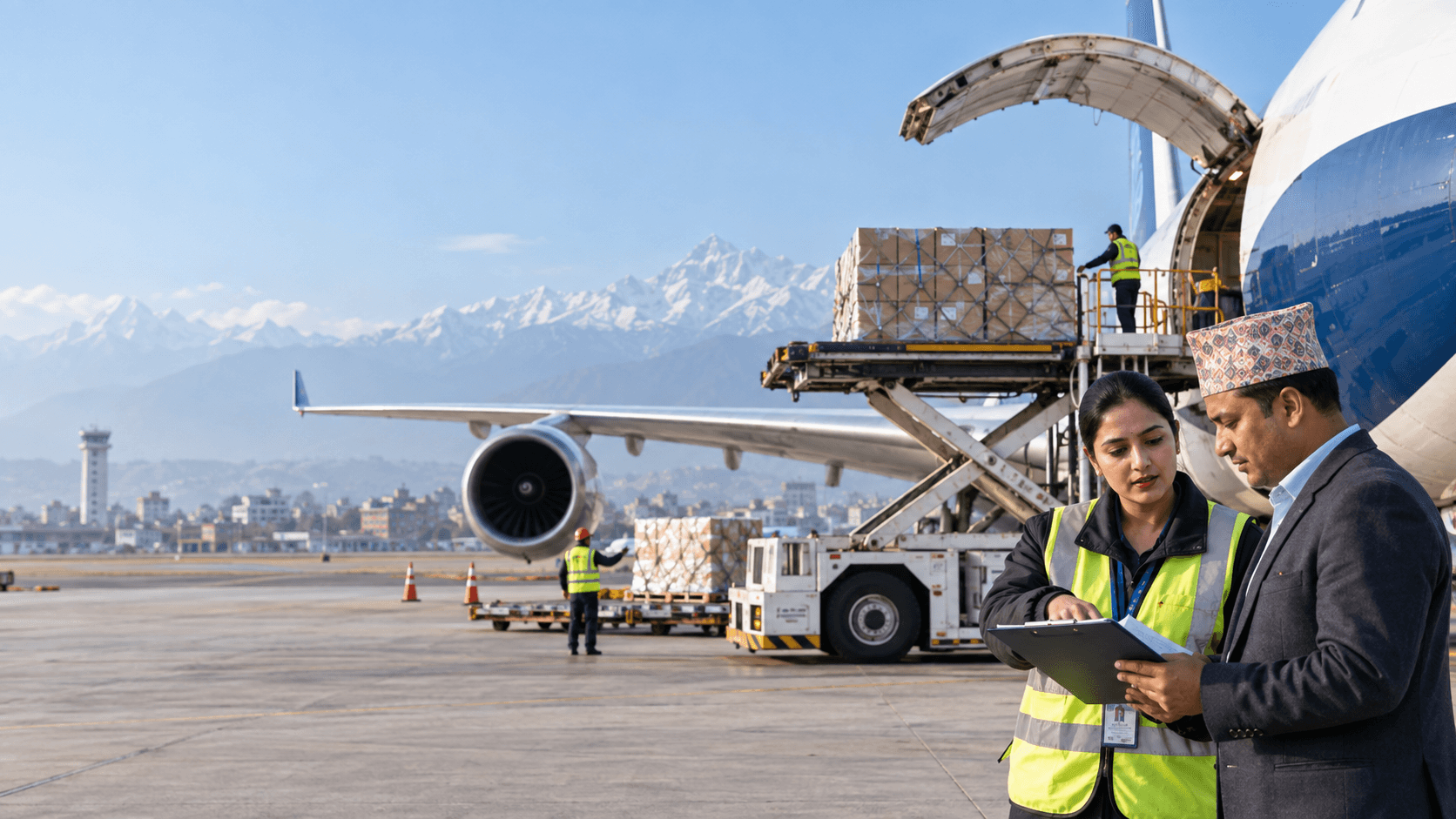
Air freight moves commercial cargo by aircraft, either in a dedicated freighter or in the lower cargo hold of a passenger aircraft. It is usually selected when speed, cargo value, shelf life or the business cost of delay matters more than obtaining the lowest transport rate.
Buying airline space is only one part of a complete shipment. Depending on the written scope, an air freight service may include supplier pickup, packing guidance, measurement, airline booking, security screening, export handling, an air waybill, customs coordination, airport collection and final delivery.
A freight forwarder coordinates the shipper, airline, ground handler, customs professionals, consignee and delivery provider. The forwarder can plan and communicate the shipment, but it does not control airline schedules, security acceptance or Customs decisions.
Before comparing prices, decide whether you need airport-to-airport, door-to-airport, airport-to-door or complete door-to-door service. A low airport-to-airport rate can become expensive when pickup, terminal handling, storage, clearance and delivery are added later.
Sea Sky's air freight service page gives an overview of route and handling support for general and special cargo.
How air freight forwarding works step by step
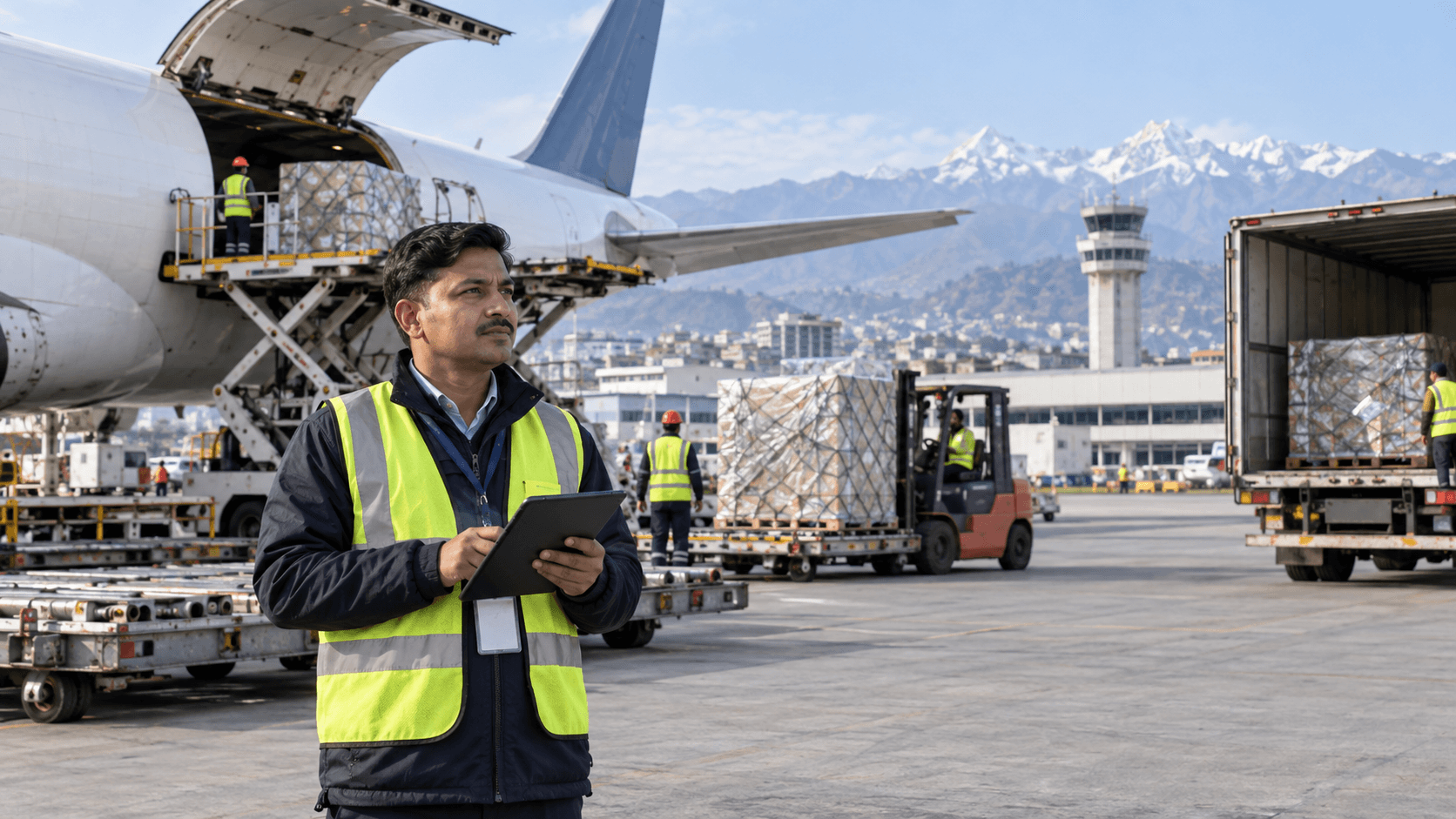
The exact route depends on whether the cargo is an import or export, the origin and destination airports, airline capacity, commodity restrictions and the required delivery date. Most commercial air shipments follow this sequence:
- Share the commodity, package count, packed dimensions, gross weight, value, origin, destination and cargo-ready date.
- Confirm any batteries, liquids, chemicals, medicine, food, plants, temperature limits or other special characteristics before quoting.
- Compare feasible airlines, connections, service scopes and estimated schedules.
- Prepare suitable packaging, labels, permits and commercial documents.
- Book capacity, arrange pickup and deliver the cargo for terminal acceptance and screening.
- Complete origin procedures and issue the air waybill after the shipment data is confirmed.
- Monitor departure, connections and arrival while preparing destination clearance.
- Pay the applicable charges, obtain release and arrange final delivery.
Use a specific commodity description. Words such as 'parts', 'samples' or 'accessories' may be too vague for the carrier or Customs to assess the goods. State what the product is, what it is made of, how it will be used and whether it contains a battery, liquid, chemical or controlled ingredient.
Route proposals are estimates, not guarantees. Capacity changes, missed connections, weather, security checks, document queries and regulatory holds can affect the final schedule. The wider freight forwarding in Nepal guide explains how these parties and transport legs fit together.
Packing, screening and airline acceptance
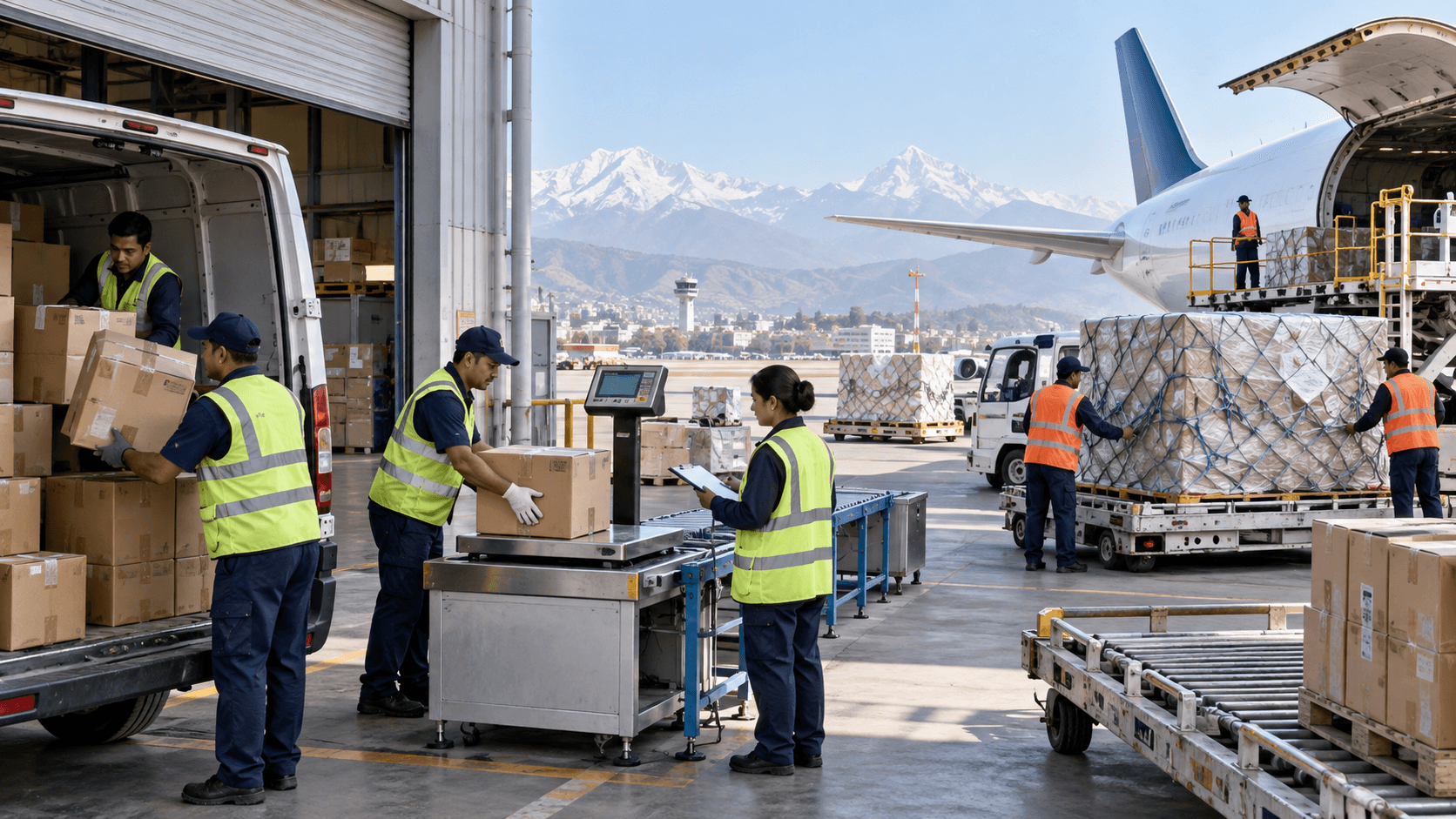
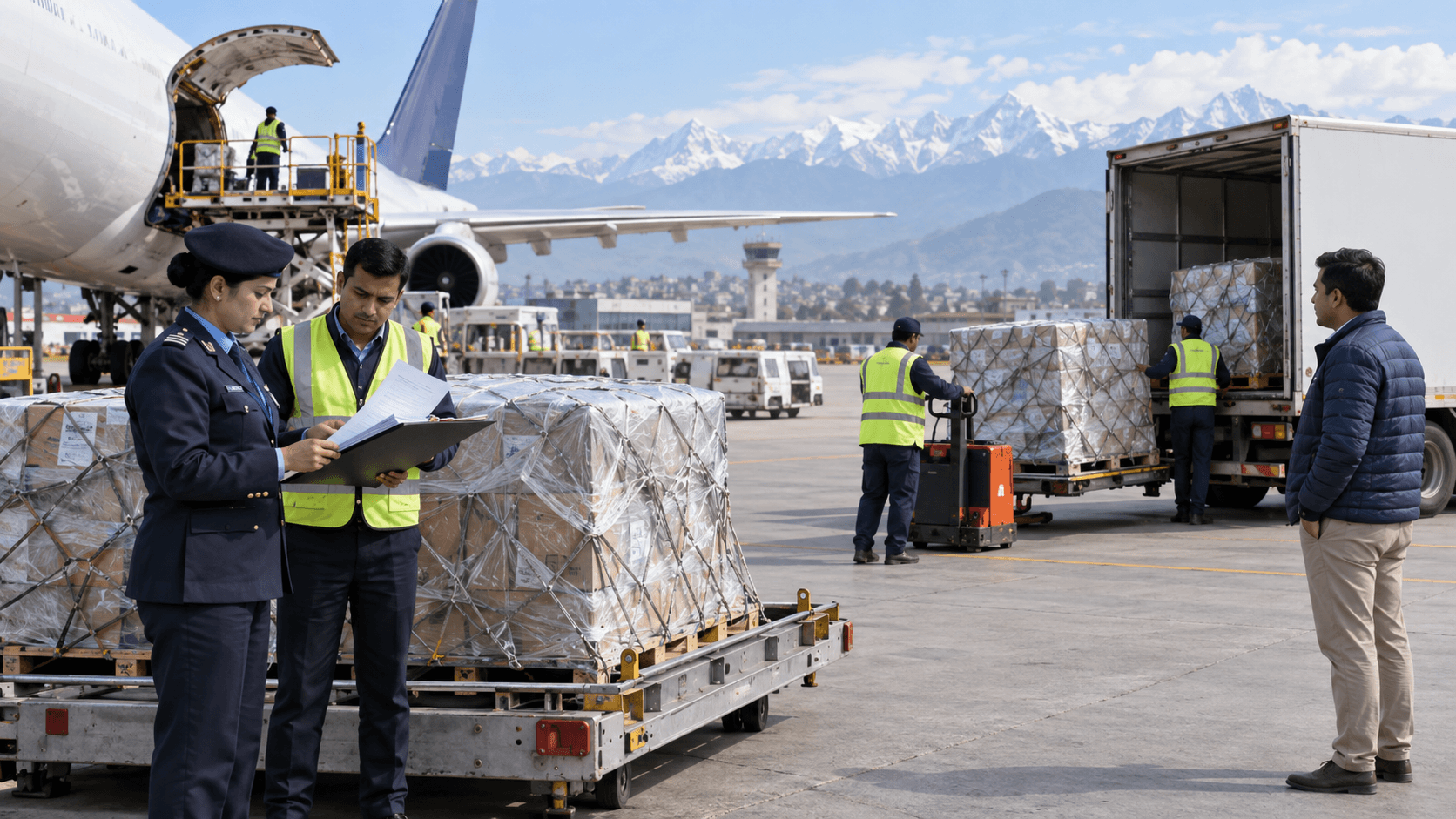
Air cargo is handled several times before loading, so packaging must protect the goods during pickup, weighing, screening, warehouse movement, pallet building and transit. The package must also fit aircraft and handling limits for the booked route.
Before pickup, make sure cartons or crates are sealed, strong enough for the product, clearly marked and free of loose straps or protrusions. Package counts, dimensions and gross weights should match the booking and documents. If the final packed details change, the forwarder may need to obtain a revised rate or booking.
Cargo can be subject to security screening, document checks, weighing and an acceptance inspection. The carrier or ground handler may reject, hold or request repacking when the cargo is damaged, leaking, incorrectly declared, poorly packed or inconsistent with the booking.
Batteries, chemicals and other dangerous goods require special attention. IATA's current guidance makes classification, packing, marking, labelling, documentation and shipper responsibility central to safe air transport. Carrier and route-specific variations can also apply, so declare these goods before the quotation is accepted.
Perishables, medicine, fragile equipment and high-value cargo may need temperature control, validated packaging, monitoring devices, priority handling or restricted connection times. These requirements should appear in the written scope rather than being assumed.
When air freight makes business sense
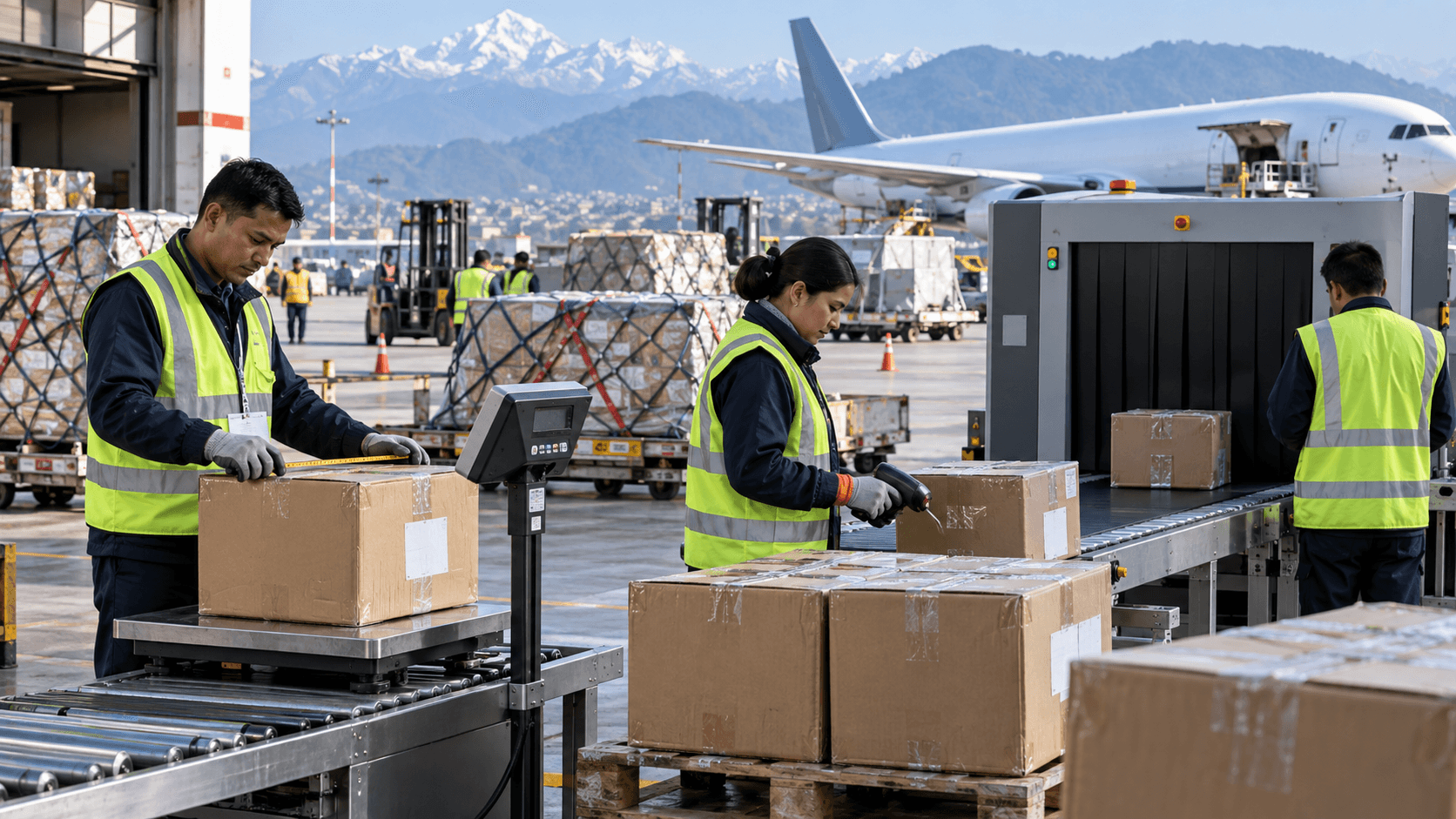
Air freight is usually a business decision rather than simply a faster mode. Compare the premium for air transport with the financial effect of running out of stock, stopping a production line, missing a customer deadline or losing a perishable product.
Air freight is often suitable for:
- Urgent spare parts and production components
- Compact, high-value commercial goods
- Medicine, healthcare products and approved temperature-sensitive cargo
- Fresh or perishable products with limited shelf life
- Samples, launch inventory and deadline-driven orders
- Small consignments that do not justify an ocean container
- Recovery shipments after a delayed or incomplete order
Air freight is usually less economical for dense, heavy, bulky or low-value goods that can tolerate a longer lead time. In that case, sea, road or a combined service may reduce the landed cost.
Do not compare modes using transit time alone. Include booking lead time, supplier pickup, export handling, connections, clearance, storage risk and final delivery. A well-planned connecting flight may be more realistic than an unavailable direct service.
What affects air freight cost in Nepal
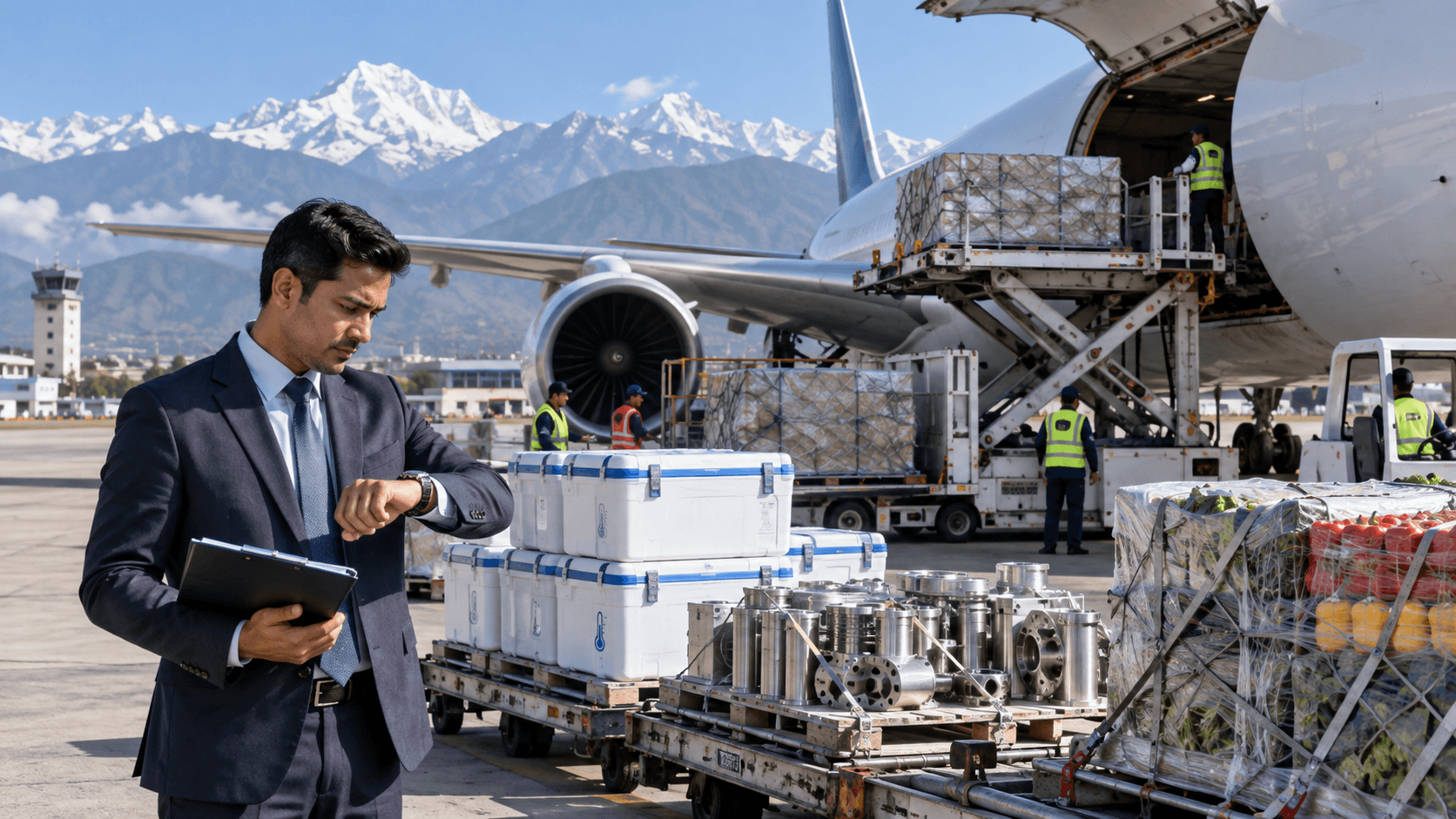
The airline rate is only one line in the final shipment cost. A useful quotation separates the main freight charge from origin, destination and regulatory costs so the importer or exporter can see what is included.
Common air freight cost factors include:
- Origin, destination, route, connection points and current airline capacity
- Chargeable weight, package dimensions and whether cargo can be stacked
- Pickup distance, delivery distance, access and vehicle requirements
- Commodity type, declared value and special handling needs
- Fuel, security, terminal, documentation and handling surcharges
- Dangerous-goods, perishable, temperature-controlled or oversized acceptance requirements
- Customs support, permits, inspections, duties, VAT and other government charges
- Storage, demurrage-like terminal exposure, re-screening or repacking caused by delay
- Cargo insurance and the agreed Incoterm or service scope
Ask whether the quotation is airport-to-airport or includes pickup, export formalities, destination handling, Customs coordination and delivery. Also ask which amounts are firm, which are estimates and which may be billed at actual cost.
Duties and taxes are normally separate from the freight charge. Product classification, customs value and the applicable rules determine government assessment. Use the import duty calculation guide for planning, then confirm the live position before dispatch.
Cargo insurance is separate from carrier liability and should be considered before the risk begins. The freight and cargo insurance guide explains insured value, exclusions and claims evidence.

Quoting Nepal-bound cargo for a client?
Share the route, cargo type, timing and open questions. Sea Sky can check the destination path before you promise a rate.
Actual, volumetric and chargeable weight
Aircraft space is limited by both weight and volume. For this reason, an airline may price a shipment using chargeable weight rather than only the number shown on a scale.
- Actual weight is the physical gross weight of the packed shipment.
- Volumetric weight converts the space occupied by the shipment into a weight value.
- Chargeable weight is generally the higher of actual and volumetric weight, subject to the carrier's tariff, divisor and rounding rules.
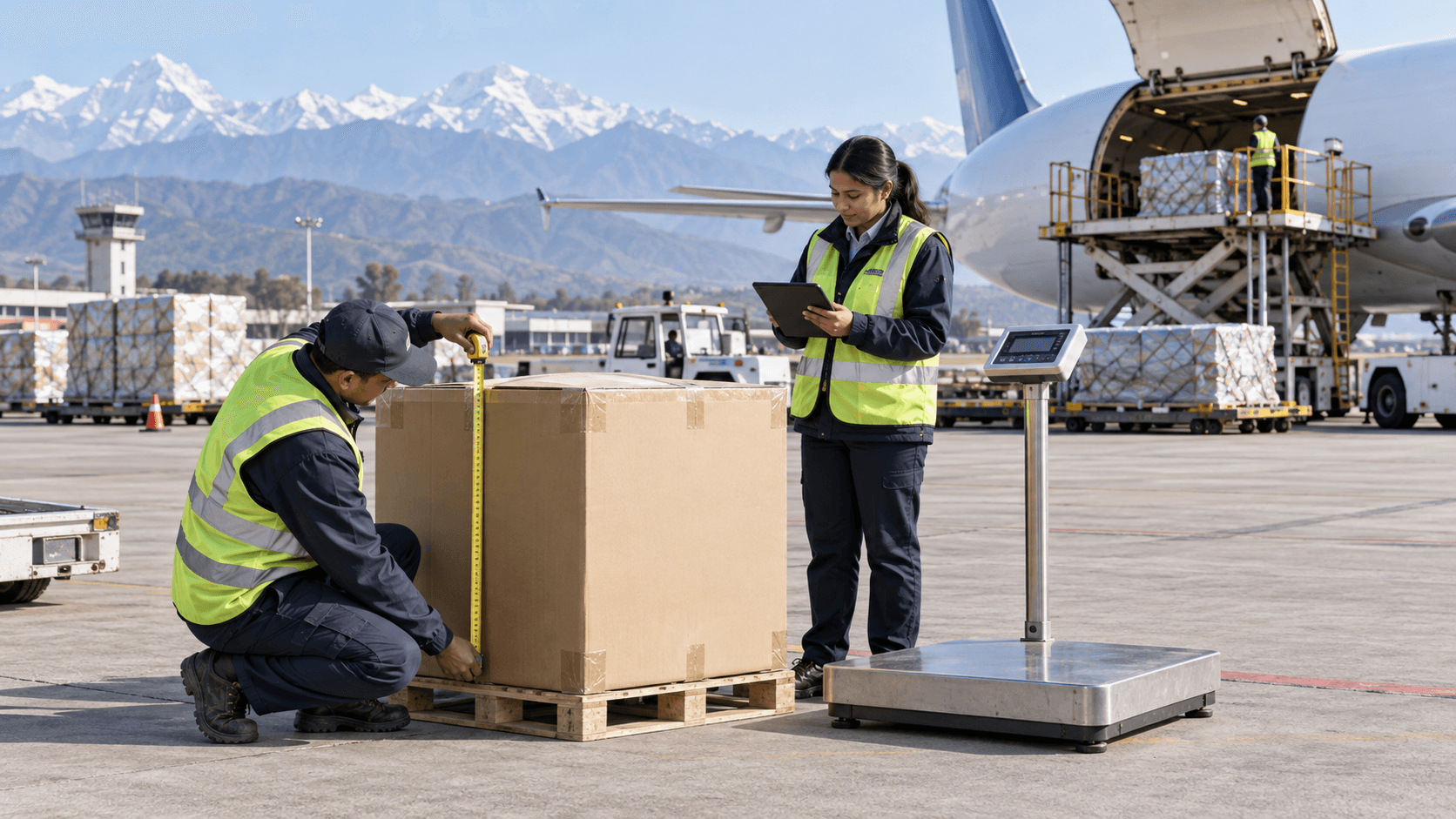
A common planning formula is: length x width x height in centimetres, divided by the applicable airline divisor. The divisor is not universal, so use the carrier's confirmed calculation for the quotation.
For example, one carton measuring 100 x 80 x 60 cm has a volume of 480,000 cubic centimetres. Using an illustrative divisor of 6,000 gives a volumetric weight of 80 kg. If the actual gross weight is 55 kg, the planning chargeable weight may be 80 kg. If the actual weight is 95 kg, the higher actual weight may apply.
This example is not a tariff. Carriers may use different divisors, minimum charges and rounding. Measure the final external dimensions, including pallets, skids, padding and projections. A few centimetres added during packing can materially change the chargeable weight.
For larger palletized shipments, the air cargo containers and ULD guide explains how aircraft compatibility and handling affect planning.
Documents required for air freight
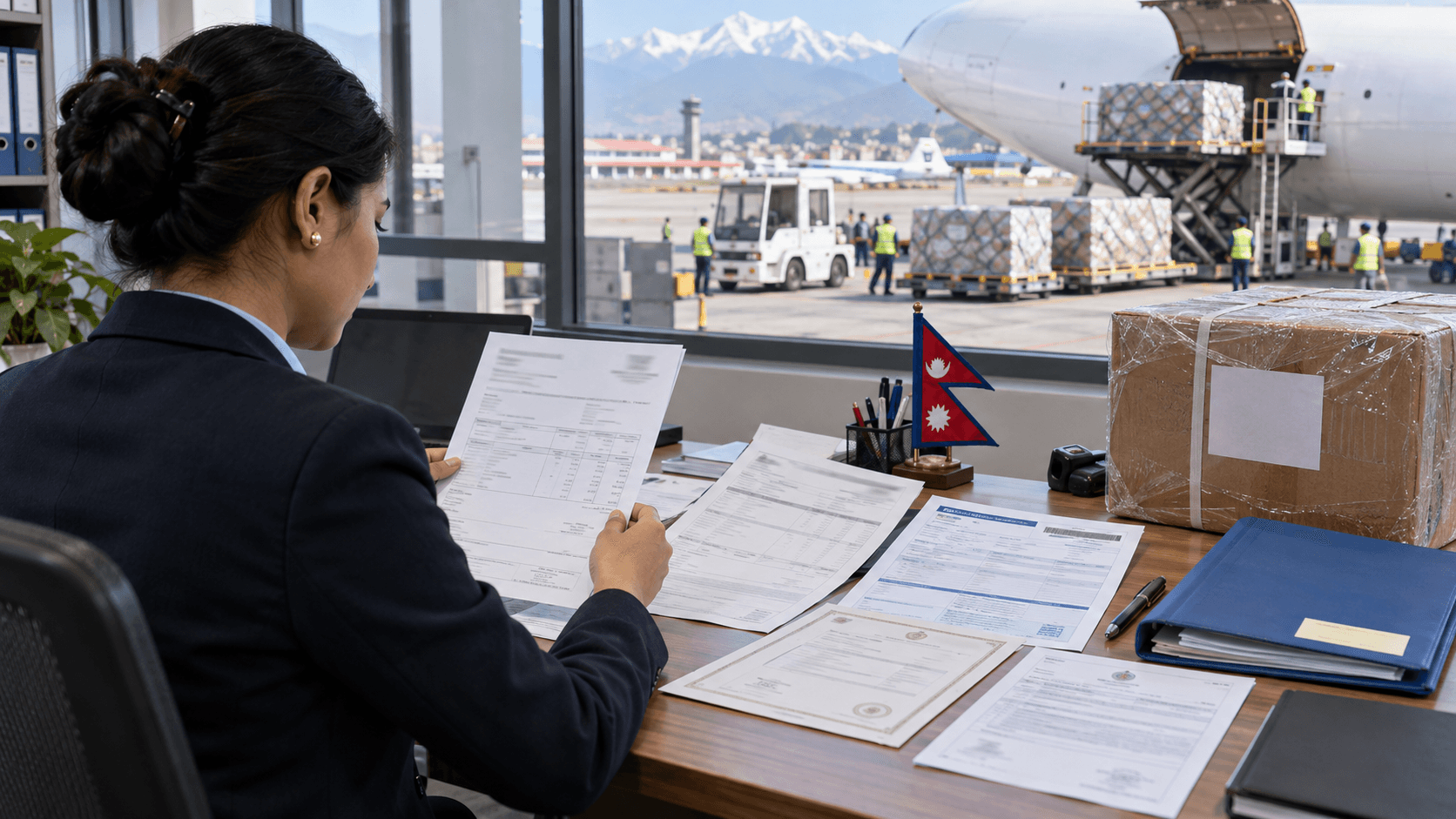
Document requirements depend on the commodity, value, origin, destination, trade direction and the authorities involved. Prepare the file before cargo reaches the airport; a document query after arrival can create storage cost and delivery delay.
Common records may include:
- Commercial invoice with seller, buyer, precise goods description, quantity, value, currency and Incoterm
- Packing list with package count, contents, dimensions, net weight and gross weight
- Air waybill recording the shipper, consignee, route and transport details
- Import or export registration and trade credentials where applicable
- Certificate of origin when required by the destination or trade arrangement
- Product licences, permits, test reports or health and safety certificates
- Dangerous-goods declaration and supporting data when applicable
- Insurance certificate or policy when cargo insurance is arranged
- Customs declaration and authorization documents for the appointed representative
The names, addresses, quantities, values, package counts and product descriptions should be consistent across the invoice, packing list, air waybill and permits. Do not reduce the description to a generic label merely to save space.
An air waybill is a core transport record, but it does not replace the commercial invoice, packing list or product-specific approvals. The airline and Customs may ask for different evidence because they assess different risks.
Incorrect classification can affect permits, duties and release. The wrong HS code guide explains why the importer should validate the product description and classification before dispatch.
Customs clearance, arrival and final delivery
Destination clearance begins before the aircraft arrives. The consignee and appointed customs professional should receive the invoice, packing list, air waybill, product details, permits and authorization early enough to identify missing information.
Nepal Customs' electronic process includes air-cargo manifest data at Tribhuvan International Airport. Advance data can support pre-arrival processing, but it does not guarantee release. Customs retains authority over classification, valuation, admissibility, inspection, assessment and the final decision.
A typical arrival file may involve:
- Matching the manifest and air waybill to the consignee and declaration
- Confirming product classification and customs value
- Submitting licences, certificates or product approvals
- Responding to document questions or physical inspection
- Paying assessed duties, VAT, terminal and handling charges
- Obtaining release and coordinating airport collection
- Arranging final delivery with the correct vehicle and access plan
Delays can arise from inconsistent values, vague product descriptions, missing permits, an unavailable consignee, late payment, inspection or a mismatch between cargo and documents. Respond quickly because airport storage can increase while the shipment waits.
For delivery outside Kathmandu Valley, confirm distance, road access, vehicle size, unloading responsibility and receiver availability before arrival. The forwarder's scope should state where its responsibility ends and which destination partners or customs professionals perform regulated work.
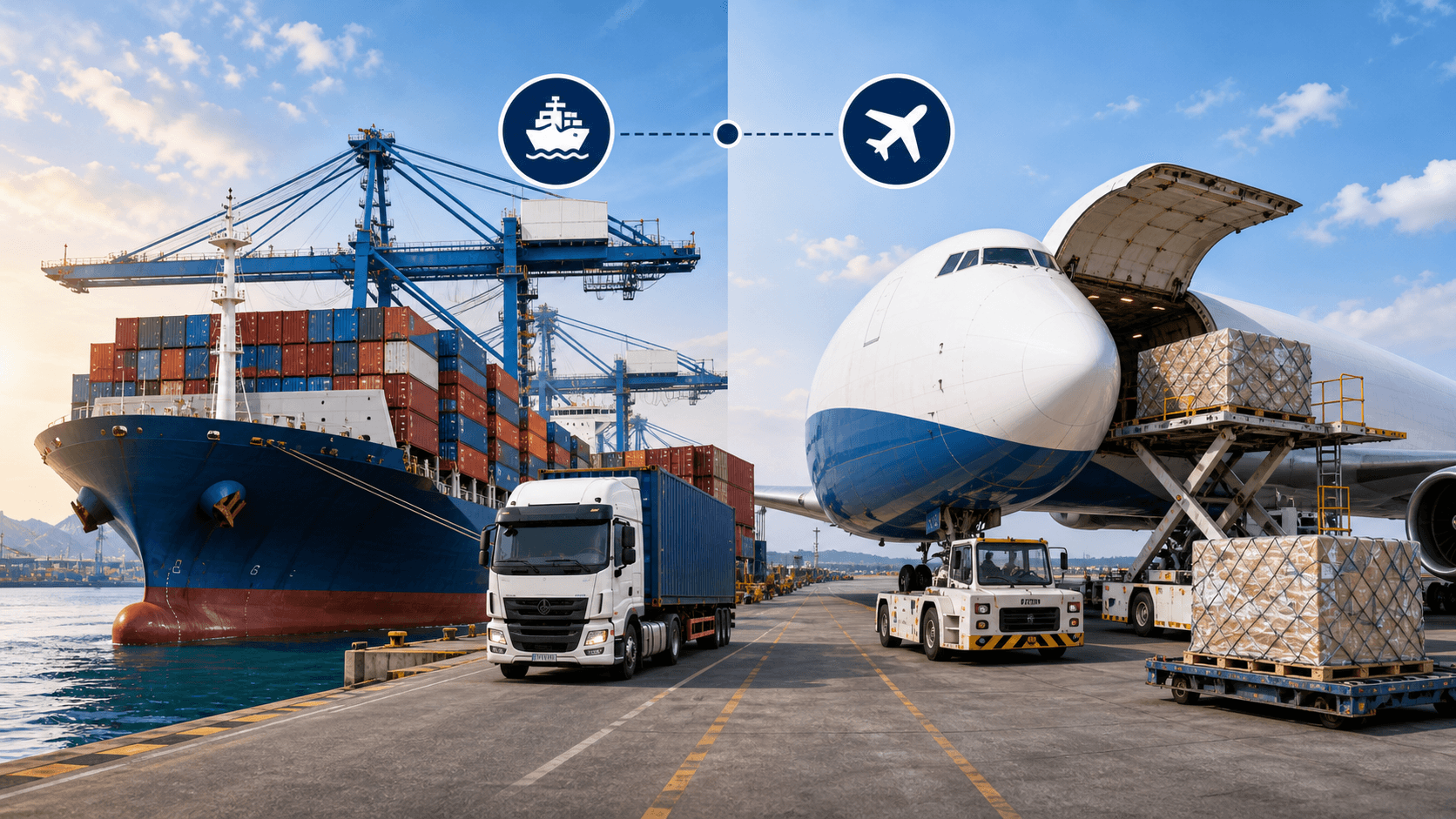
Air freight vs sea freight
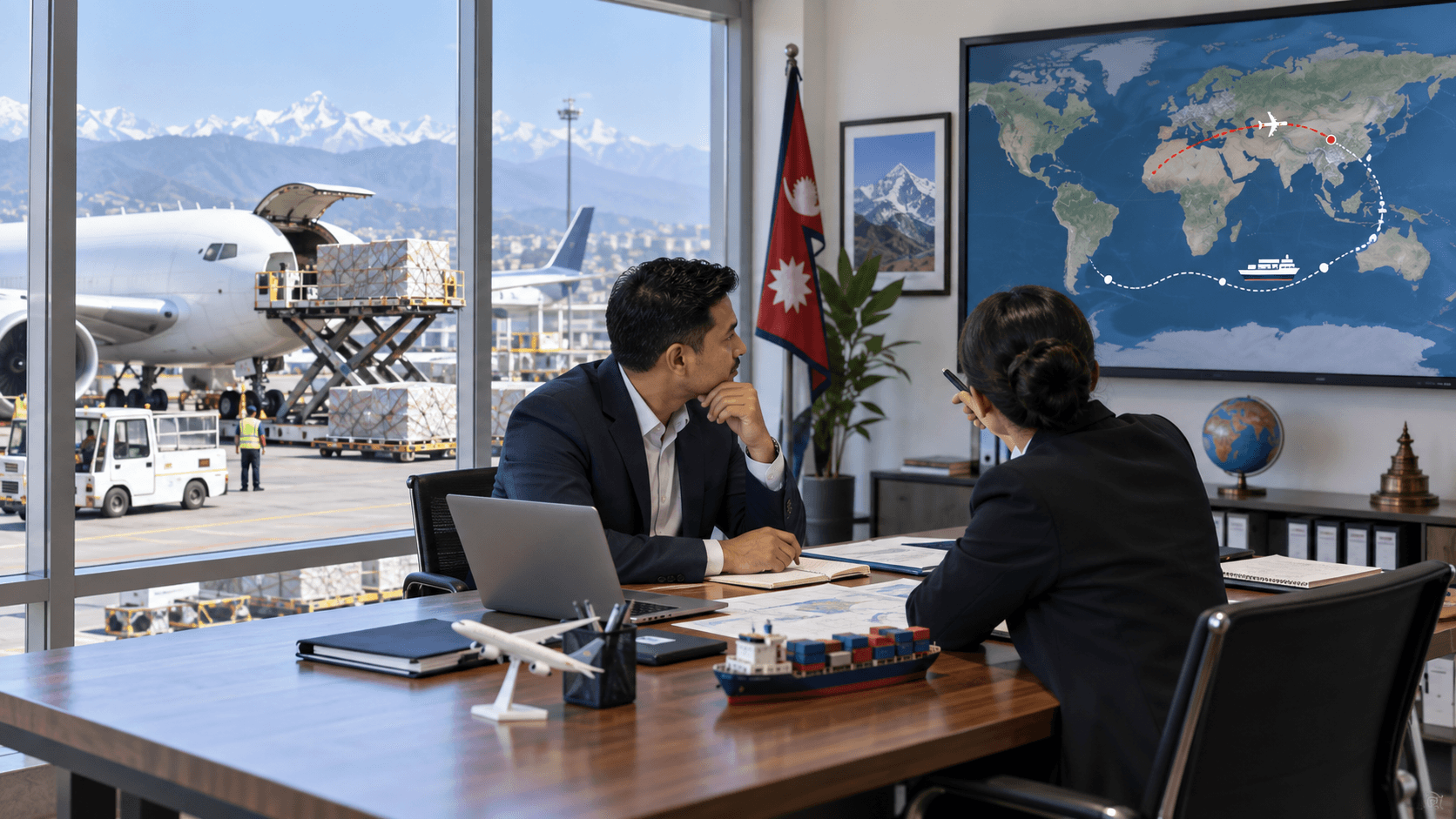
Air and sea freight solve different business problems. The right choice depends on the complete landed-cost and inventory plan, not a general rule that one mode is better.
- Speed: air is generally faster; sea requires longer port, sailing and inland transit time.
- Pricing basis: air commonly uses chargeable weight; sea commonly uses container, cubic volume or shipment-specific ocean pricing.
- Best fit: air suits urgent, compact, valuable or time-sensitive cargo; sea suits larger, heavier and less urgent volumes.
- Handling: air has strict airport acceptance and security requirements; sea involves port, container and inland transit planning.
- Capacity: aircraft door and hold limits matter for air; container, vessel and road constraints matter for sea.
- Risk planning: both modes need suitable packaging, accurate documents, insurance decisions and destination clearance.
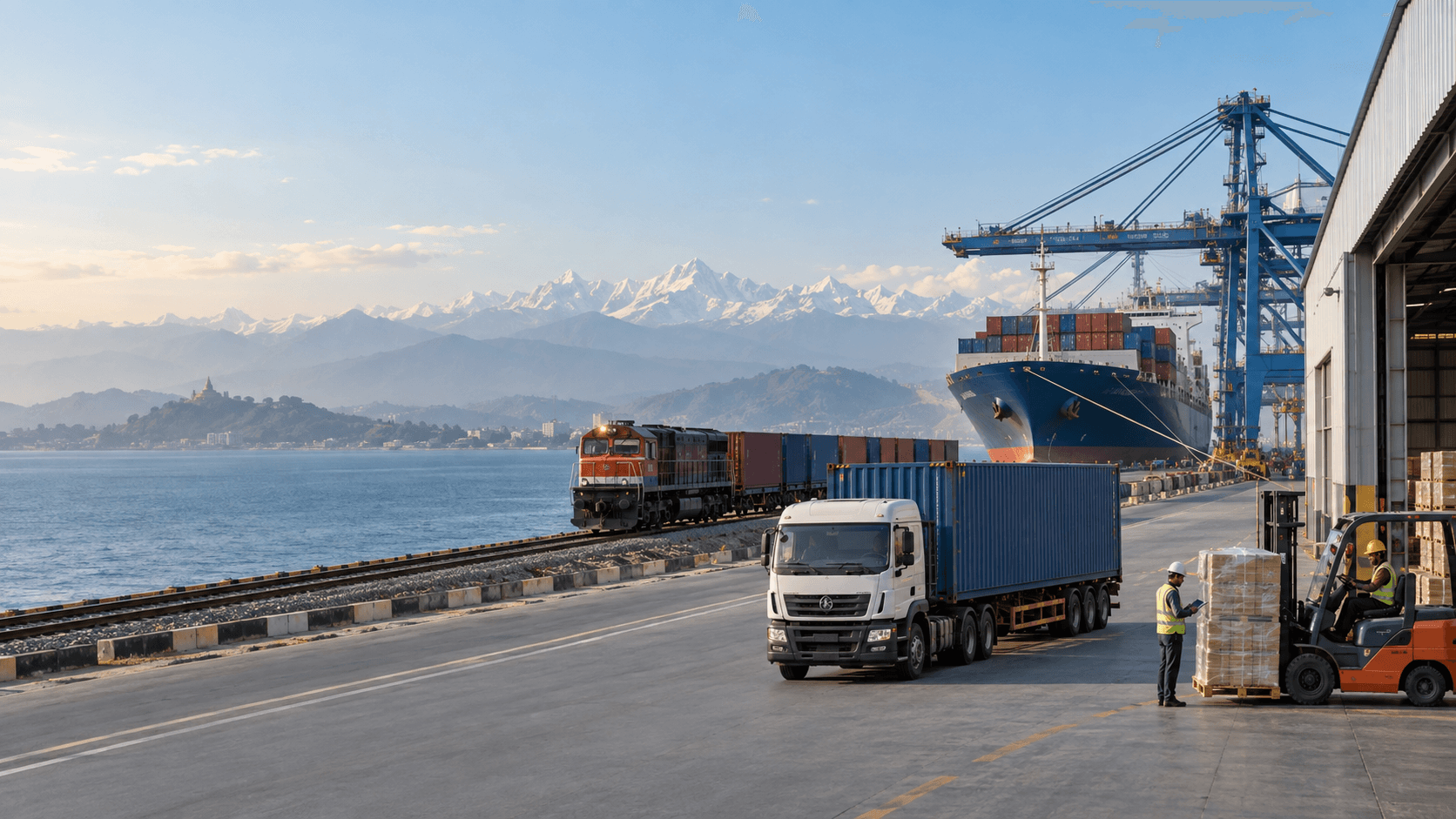
A split-shipment strategy can be useful: send the urgent quantity by air to protect sales or production, then move the replenishment balance by sea. Compare the extra handling and documentation before dividing the order.
For high-volume and cost-sensitive goods, review Sea Sky's ocean freight service and the detailed sea freight guide.
How Sea Sky helps and air freight FAQs
Sea Sky Cargo can review the cargo, compare available air routes, check packed dimensions, clarify the quotation scope, coordinate booking and handling, and prepare the operational file for Customs and final delivery. Airline acceptance, capacity, schedules and Customs decisions remain with the relevant carrier and authority.
For a route-specific quotation, provide the origin and destination addresses, commodity, use and material, number of packages, final dimensions, actual gross weight, value, Incoterm, cargo-ready date, required delivery date and any battery, liquid, temperature or permit information.
How much does air freight cost in Nepal? There is no reliable flat rate for every shipment. Cost depends on route, capacity, chargeable weight, cargo type, handling, pickup, clearance, delivery and the inclusions written in the quotation.
How is chargeable weight calculated? It is generally the higher of actual gross weight and volumetric weight, subject to the carrier's divisor, minimums and rounding rules.
Which documents are needed for air cargo? Commercial cargo commonly needs an invoice, packing list and air waybill. The product and route may also require registrations, permits, certificates, dangerous-goods records, insurance evidence and Customs declarations.
Is air freight faster than sea freight? It is generally faster in transit, but the complete delivery time still includes pickup, booking, screening, connections, clearance and final delivery.
Can a freight forwarder clear Customs? A forwarder can coordinate with authorized customs professionals, review the operational file and communicate with the parties. Customs authorities make the final assessment and release decision.
Can batteries, food or medicine move by air? Some can, but acceptance depends on product classification, quantity, packaging, documentation, permits, airline rules and route restrictions. Declare the product before booking.
What causes unexpected air freight charges? Common causes include incorrect dimensions, reweighing, changed chargeable weight, special handling, storage, inspections, repacking, destination fees and a quotation that excluded clearance or delivery.
Ready to plan an urgent import or export? Share the complete shipment facts through the air freight quote form before booking.

Before you quote Nepal-bound cargo, get the free partner kit.
Built for freight forwarders handling FCL, OOG, heavy or project cargo into Nepal and South Asia. Use it to check routes, documents, handoffs and risk points before quoting your client.